

Daily Dose Of Jazz…
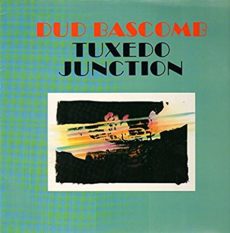
Wilbur Odell “Dud” Bascomb was born on May 16, 1916 in Birmingham, Alabama, the youngest of a family of ten children, and brother of tenor saxophonist Paul Bascomb. He played piano as a child but settled on trumpet, first playing with Erskine Hawkins at the Alabama State Teachers’ School, now Alabama State University in 1932. It was here that Hawkins led the Bama State Collegians band. Remaining with Hawkins until 1944, he soloed with him on many of his most well-known recordings.
Eventually he moved on to play in his brother’s septet, that became a big band later in the decade. He played briefly with Duke Ellington in 1947. During the 1950s Bascomb played for three years at Tyle’s Chicken Shack in New Jersey, leading a quintet which counted Lou Donaldson among its members.
He toured Japan three times with Sam Taylor and Europe with Buddy Tate in the 1960s, in addition to touring and recording with James Brown. He recorded sparingly as a leader and his Savoy Records sessions in 1959-60 were not issued until 1986.
Trumpeter Dud Bascomb passed away on December 25, 1972 in New York City. He was inducted into the Alabama Jazz Hall of Fame in 1979.

#preserving genius
More Posts: trumpet
Daily Dose Of Jazz…
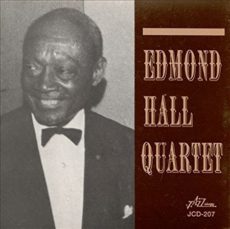
Edmond Hall was born on May 15, 1901 in Reserve, Louisiana, into a musical family. His father, Edward, played the clarinet in the Onward Brass Band, joined by Edmond’s maternal uncles, Jules Duhe on trombone, Lawrence Duhe on clarinet, and Edmond Duhe on guitar. The Hall brothers, Robert, Edmond, and Herbert, all became clarinetists, but Edmond was first taught guitar by his uncle Edmond. When Hall finally picked up the clarinet, he played it within a week.
Tired of working as a farm-hand, by 1919 he left for New Orleans where he signed up with the band of Bud Rousell, then with trombonist Jack Cary and blues cornetist Chris Kelley. His first big break came in late 1920, when he went to a dance at Economy Hall, saw Buddy Petit and discovered his clarinet player had left the band and the following Saturday Hall was sitting in with Petit’s band as a replacement until 1922.
Arriving in Pensacola, Florida in 1923, there was a series of band as he joined Lee Collins, then Mack Thomas, the Pensacola Jazzers, where Hall met the young trumpeter Charles “Cootie” Williams, on to “Eagle Eye” Shields, the Alonzo Ross DeLuxe Syncopators, finally in 1928 with pianist Arthur “Happy” Ford.
1929 saw Edmond moving back to New York he joined Charlie Skeet’s band, followed by Claude Hopkins and an invitation to play the Savoy Ballroom. By 1935 he left Hopkins and took residency in Billy Hicks’ Sizzling Six. Hall’s new sound on the clarinet led him to recording with the big stars and in 1937 he had his first recording session with Billie Holiday, sitting alongside tenor saxophonist Lester Young. Leaving Hicks he stepped into Café Society, joining Joe Sullivan’s band in late 1937. In between the regular job at the Cafe Society he recorded with Bud Freeman, Teddy Wilson, Charlie Christian, Henry “Red” Allen, J.C. Higginbotham, Art Tatum, Big Joe Turner, Hot Lips Page, Zutty Singleton, Meade Lux Lewis, Big Sid Catlett, Josh White, Ida Cox, Coleman Hawkins, Helen Ward, Vic Dickenson, Sidney de Paris, Wild Bill Davison, Eddie Heywood, Roy Eldridge and Jack Teagarden among others.
In 1941 Edmond led his first recording session as a leader, joined Teddy Wilson’s outfit, and made recordings as Edmond Hall’s Blue Note Jazzmen, the Edmond Hall Sextet, the Edmond Hall Celeste Quartet, Edmond Hall’s Star Quintet, Ed Hall and the Big City Jazzmen, and Edmond Hall’s Swingtet. Very popular among the musicians and critics and was frequently invited to the New York Town Hall Concerts led by Eddie Condon.
By 1944 Hall began fronting his own band, becoming a draw for Café Society. More recording dates followed for the famous Commodore Records and Blue Note labels. While business at the Café Society was exceedingly good, Hall appeared at Town Hall Concerts in between. Hall relocated successfully with his band to the Café Society Uptown and would also play for World War II servicemen.
Throughout his career he would perform with pianist George Wein, Louis Armstrong’s All Stars, tour Europe, settle in Los Angeles, California to shoot the film High Society with Grace Kelly and Bing Crosby, and appear on the Ed Sullivan Show. In 1952, Hall, Buzzy Drootin and Ralph Sutton appeared as the Ralph Sutton Trio in Saint Louis, where they played the Encore Lounge for several weeks and were the first mixed trio there. He received the Esquire Magazine Silver Award for clarinet, a certificate for nomination as one of the outstanding jazz artists of 1961 from Playboy Magazine and was awarded as the best Clarinetist by the English Melody Maker.
Clarinetist and bandleader Edmond Hall, who also played alto and baritone saxophones and is perhaps best known for the 1941 chamber jazz song Profoundly Blue, which is regarded as a pre-World War II jazz classic, passed away on February 11, 1967 in Boston, Massachusetts.
Sponsored By

Voices From The Community

#preserving genius
Daily Dose Of Jazz…
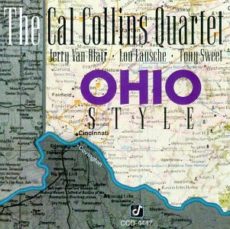
Cal Collins was born on May 5, 1933 in Medora, Indiana and first played the mandolin professionally as a bluegrass musician in the early 1950s. After service in the Army, a move to Cincinnati, Ohio that lasted twenty years, saw him switching to jazz guitar after hearing swing guitarists Charlie Christian, Irving Ashby, and Oscar Moore.
Benny Goodman hired him in 1976 at the age of 43 and he spent three years with the orchestra and then three years making albums for Concord Records. As a sideman, Cal worked with Scott Hamilton, Warren Vache, Rosemary Clooney, Ross Tompkins, Woody Herman, John Bunch, and Marshal Royal.
By the early 1980s, Collins returned to Cincinnati and slowed down his career. He joined the Masters of the Steel String Guitar Tour in 1993 with Jerry Douglas and Doc Watson and recorded his last album in 1998.
Guitarist Cal Collins, who recorded from eleven albums as a leader, passed away of liver failure on August 27, 2001
Sponsored By

#preserving genius
More Posts: guitar
Daily Dose Of Jazz…
April Barrows was born on April 28, 1954 in Milford, Connecticut and grew up in the San Francisco Bay area where she moved with her family when she was five. The first music she heard came from listening to her mother’s collection of boogie-woogie 78s by such pianists as Meade “Lux” Lewis, Albert Ammons and Pinetop Smith. Singing along with the records and imitating the sounds she learned the formats. She became a record collector herself as a teenager and was always interested in older styles.
She played violin for a few years and in high school sang and played rhythm guitar. Barrows performed duets with a country singer, frequently performing roots music, and learned both steel guitar and electric bass. For a time she had a regular day job as a chemist but her main dream was to become a professional musician.
In the late ’70s she spontaneously quit her job and headed for Nashville where her talents were quickly recognized. She played electric bass in a variety of bands for the next six years working with the Judds’ first band, the Memphis Horns, Vassar Clements, and even Woody Herman. In 1985 she switched her focus and became a songwriter and while she had success writing country, bluegrass, and blues songs, her true love was writing and performing her own new swing tunes.
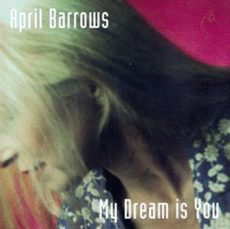
In addition to her jazz inspirations of Ella Fitzgerald, the Boswell Sisters, Mildred Bailey, Louis Armstrong, Ivie Anderson, Bing Crosby, Ruth Etting, Annette Hanshaw and Cliff Edwards, she listened to Bob Dylan, country music and rock of the ’60s. While continuing in the commercial field, she has recorded as a leader, her debut release of original swing tunes on My Dream Is You followed by her sophomore project All You Need Is the Girl. Vocalist, guitarist and composer April Barrows is currently working on a third project with clarinetist Evan Christopher and cornetist Duke Heitger, and continues to compose and perform.
Sponsored By
#preserving genius
More Posts: electric bass,guitar,vocal
Daily Dose Of Jazz…
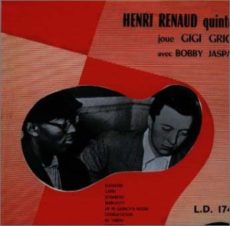
Henri Renaud was born April 20, 1925 in Villedieu-sur-Indre, France. His styles was evolutionary over the decades he was musically active and represented the swing, bebop and cool styles. His international renown came when he served as an ensemble-organizing point-man for visiting jazz performers from the United States.
Moving to Paris in 1946, Renaud established a career as a jazz pianist and joined tenor-saxophonist Jean-Claude Fohrenbach’s combo. During 1949 and 1950 he accompanied Don Byas, James Moody and Roy Eldridge. In 1952 he performed at various times with Lester Young, Sarah Vaughan and Clifford Brown.
Henri would go on to record several times with Brown as well as with Milt Jackson, J. J. Johnson, Al Cohn, Oscar Pettiford, Max Roach, Frank Foster and Bob Brookmeyer. In 1954, he visited the United States and recorded during that time.
He became an executive for French CBS’ jazz division in 1964 and for the most part stopped performing, though he occasionally worked as a film composer. Pianist Henri Renaud passed away in Paris, France on October 17, 2002.
Sponsored By
#preserving genius
More Posts: piano