

Daily Dose Of Jazz…
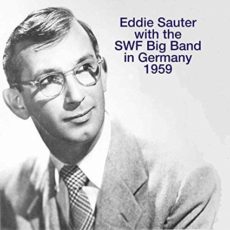
Edward Ernest Sauter was born December 2, 1914 in Brooklyn, New York and studied music at Columbia University and the Juilliard School. He began as a drummer and then played trumpet professionally, most notably with Red Norvo’s orchestra, eventually becoming Norvo’s full-time arranger.
Eddie went on to arrange and compose for Artie Shaw, Tommy Dorsey, Woody Herman and Benny Goodman, earning a reputation for intricate, complex, and carefully crafted works such as Benny Rides Again, Moonlight on the Ganges and Clarinet a la King.
From 1952 to 1958 he co-led the Sauter-Finegan Orchestra and between 1957 and 1959 he was Kurt Edelhagen’s successor as leader of the SWF Orchestra in Baden-Baden, Germany. By 1961, he was working with tenor saxophonist Stan Getz on Focus, a unique collaboration of string compositions, and featuring drummer Roy Haynes on I’m Late, I’m Late, the only selection to feature a non-string instrument other than Getz. They collaborated again during Sauter’s work composing the score for the 1965 film Mickey One, starring Warren Beatty.
He would venture into composing for television including the third season theme to Rod Serling’s Night Gallery. He also orchestrated a number of Broadway musicals, most notably 1776, but also The Apple Tree and It’s a Bird…It’s a Plane…It’s Superman. His composition World Without Time is used as the theme music for the public affairs show The Open Mind.
Composer, arranger, drummer and trumpeter Eddie Sauter, who was prominent during the swing era, passed away of a heart attack in New York City on April 21, 1981.

Dose A Day-Blues Away

Daily Dose Of Jazz…
Jack T. Perciful was born on November 26, 1925 in Moscow, Idaho and began playing the piano at the age of seven. During his high school years he was already part of the University of Idaho Jazz Band. From 1943 he served in the military in California, and from 1945 to 1946 in the Army orchestras in Japan.
Returning to the U.S. after his discharge he continued his studies at the University of Idaho, earning a Master in Music Education. After a few years, of giving music lessons, he moved into the music business, initially in Spokane, Washington. 1952 saw Jack in Los Angeles, California playing piano initially working as a studio musician, but also played with Dicky Wells, Ernie Andrews and Charlie Barnet.
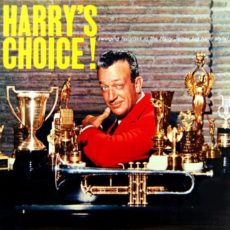
Harry James brought Perciful into his big band in Las Vegas, Nevada as a pianist and arranger, contributing to a total of 25 albums. He toured with the band throughout Europe, Latin America and Japan. As a sideman he appeared in 1970 on the album Two More Tenors: Boots and Corky by Boots Randolph and Corky Corcoran. After 18 years with the James outfit, he moved Olympia, Washington in 1974 and played at one of the local clubs, Tumwater Conservatory, accompanying soloists like Ernestine Anderson, and played with Bert Wilson and other local musicians. 1989 to 1991 he was a member of the Buddy Catlett Trio.
In subsequent years, he was on several albums on the Pony Boy label recording with Lance Buller and Charlie May. Perciful also appeared on the Ed Sullivan and Johnny Carson shows, performed with James in the Jerry Lewis film The Ladies’ Man in 1961 and in 2008 he was inducted into the Seattle Jazz Hall of Fame. Pianist and arranger Jack Perciful, who never recorded as a leader, passed away on March 13, 2008.
Sponsored By

More Posts: piano
Daily Dose Of Jazz…
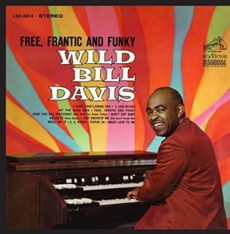
Wild Bill Davis was born November 24, 1918 in Glasgow, Missouri and originally played guitar and wrote arrangements for Milt Larkin’s Texas-based big band during 1939–1942. The band included Arnett Cobb, Illinois Jacquet, and Tom Archia on horns. After leaving the Larkin orchestra, he worked in Chicago, Illinois as a pianist, recording with Buster Bennett in 1945. He played a crucial role as the pianist-arranger in Louis Jordan’s Tympany Five from 1945 to 1947 at the peak of their success.
Leaving Jordan and Harlem, he returned to Chicago for a time, recording again with Bennett, working with Claude McLin and after switching from piano to organ, Davis moved back to the East Coast. In 1950, he began recording for Okeh Records, leading an influential trio of organ, guitar, and drums. Originally slated to record April in Paris with the Count Basie Orchestra in 1955 but could not make the session, Basie used his arrangement for the full band and had a major hit.
During the Sixties, in addition to working with his own groups, Wild Bill recorded several albums with his friend Johnny Hodges, leading to tours during 1969–1971 with Duke Ellington. In the 1970s he recorded for the Black & Blue Records label with a variety of swing all-stars, and he also played with Lionel Hampton, appearing at festivals through the early 1990s.
Pianist, organist and arranger William Strethen Davis, whose stage name was Wild Bill, passed away in Moorestown, New Jersey on August 17, 1995. He recorded some four-dozen albums as a leader and co-leader and another dozen as a sideman with Ray Brown, Sonny Stitt, Gene “Mighty Flea” Conners, Billy Butler, Floyd Smith and Eddie “Lockjaw” Davis among others. Prior to the emergence of Jimmy Smith in 1956, he was the pacesetter among organists and best known for his pioneering jazz electronic organ recordings.
Uplift Someone’s World
Daily Dose Of Jazz…
Mel Wanzo was born Melvin F. Wanzo, November 22, 1930 in Cleveland, Ohio. At the age of twenty-two he served in the 36th Army Band with the Adderley Brothers and Junior Mance during the Korean conflict from 1952-54. After his discharge he returned home and joined Joe Cooper’s All-Stars at the Ebony Lounge, that hosted most of the national acts coming through the city.
By 1956 he was gaining experience playing with Choker Campbell’s band who baked such R&B-oriented singers as Joe Turner and Ruth Brown in the Fifties, after which he worked mainly with big bands. Leaving Campbell, he studied at Cleveland Institute of Music and then joined the studio band at WEWS TV.
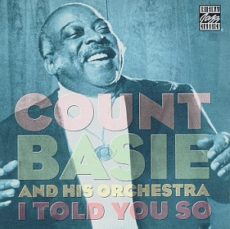
The latter-day big band trombonist played with the Glenn Miller Orchestra under the direction of Ray McKinley from 1966-1968. Woody Herman in the ’60s before joining Count Basie, with whom he worked from 1969-1980. He also recorded with the Capp-Pierce Juggernaut in 1981.
Wanzo rejoined the Basie band after its leader’s death in 1984. He continued with the group during the ’80s and ’90s under leaders Thad Jones, Frank Foster, and Grover Mitchell.
As an educator he was a mentor to the Wayne State University Trombone Ensemble from 1997 to 2002, and the Jazz Lab I Band beginning 2000. For the over forty years he has spent on the road he has performed with Duke Ellington, Ella Fitzgerald, Frank Sinatra and Sarah Vaughan among other jazz luminaries.
Trombonist Mel Wanzo, who has had command performances for the Queen of England, King of Thailand, the President of Finland and has performed at six Grammy Awards retired from the Basie band, moved to Detroit and remained active until his passing away on September 9, 2005.
Sponsored By

Voices From The Community
More Posts: trombone
Daily Dose Of Jazz…
Alvin Burroughs was born on November 21, 1911 in Pittsburgh, Pennsylvania. He played in Kansas City, Missouri with Walter Page’s Blue Devils in 1928-29 and then joined Alphonse Trent’s territory band before moving to Chicago, Illinois around 1930.
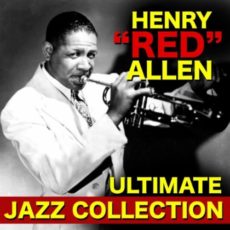
Through the Thirties he went on to play with Hal Draper’s Arcadians, Horace Henderson and Earl Hines with whom he recorded extensively. By the 1940s Burroughs worked with Bill Harris, Milt Larkin, Benny Carter and Red Allen, in addition to leading his own groups. He was in George Dixon’s quartet in 1950 when he died of a heart attack.
Swing drummer Alvin Burroughs, who never recorded as a leader, passed away on August 1, 1950.
Give A Gift Of Jazz – Share
More Posts: drums