

Daily Dose Of Jazz…
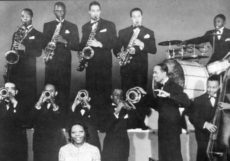
Ben Thigpen was born Benjamin F. Thigpen on November 16, 1908 in Laurel, Mississippi. He played piano as a child and was trained by his sister Eva. He played in South Bend, Indiana with Bobby Boswell in the 1920s before moving to Chicago, Illinois to study under Jimmy Bertrand.
Chicago saw Ben playing with many noted Chicago bandleaders and performers, including Doc Cheatham. He played with Charlie Elgar’s Creole Band from 1927 to 1929 but never recorded with them. Following this he spent time in Cleveland, Ohio with J. Frank Terry, and then became the drummer for Andy Kirk’s Clouds of Joy, where he stayed from 1930 to 1947.
Much of his work is available on collections highlighting the piano work of Mary Lou Williams, who also played in this ensemble. After his time performing and recording with Kirk, his career was not well documented and it appears that he never recorded as a leader. He did however, lead his own quintet in St. Louis, Missouri, recorded with Mary Lou Williams, Booker Collins and Ted Robinson and also recorded Dixieland with Singleton Palmer in the 1960s.
Drummer Ben Thigpen, father of Ed Thigpen, who followed in his footsteps, passed away on October 5, 1971.

Take A Dose On The Road

More Posts: drums
Daily Dose Of Jazz…
Johnny Windhurst was born John Henry Windhurst on November 5, 1926 in New York City, New York and was a self-taught trumpeter known for his solos. He considered Bix Beiderbecke, Wild Bill Davison, and Bunny Berigan among his influences and his feathery vibrato and mobility was mixed with the delicate playing style of Bobby Hackett.
At 15 he played his first public performance at Nick’s in New York City and made his professional debut during the spring of 1944 at one of Eddie Condon’s concerts at the Town Hall in New York City. At 18 years old, he was chosen to replace Bunk Johnson by Sidney Bechet to play at the Savoy Cafe in Boston, Massachusetts. Windhurst was initially recruited to the band to play the cornet and this engagement launched his career as a trumpeter.
He went on to play with Art Hodes and James P. Johnson at the Jazz at Town Hall concert in 1946. He then moved to the midwest and after a brief stint in the Chicago jazz scene he returned to the Savoy Cafe as a member of Edmond Hall’s band. Johnny eventually moved west to experience the West Coast jazz scene in California. His inability to read music had him declining gigs with Benny Goodman and Woody Herman while emphasizing his preference of informal jamming. Over the years, he played with musicians Louis Armstrong, Nappy Lamare, Walt Gifford, Edmond Hall and Eddie Condon. He led his own band, Riverboat Five, through Columbus, Ohio and Boston for several years, refraining from playing the most popular east coast venues and nightclubs to play college campuses and other small venues.
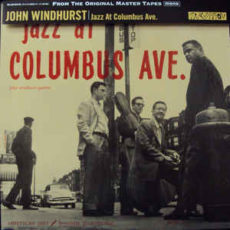
During the 1950s Windhurst worked with Ruby Braff in one of the groups known as Jazz at Storyville, performed at Condon’s club and performed with George Wettling, Jack Teagarden, Barbara Lea and took a stage role with actor Conrad Janis in an off-broadway musical titled, Joy Ride. He only made one recording with his swing quartet, the John Windhurst Quartet that included Buell Neidlinger as a sideman, titled Jazz at Columbus Avenue.
Throughout the 1960s and 70’s he opted to perform primarily in obscure venues in out-of-the-way corners of the USA. Despite his range of talent and success, Windhurst was seemingly content to hide from the big-time spotlight. He eventually moved upstate to Poughkeepsie with his mother, where he finished his career in a dixieland band at Frivolous Sal’s Last Chance Saloon. Several years later, after receiving an invitation to play the Manassas jazz festival in 1981, Windhurst passed away of a heart attack on October 2, 1981 in Dutchess County, New York.
Sponsored By

www.whatissuitetabu.com
More Posts: trumpet
Daily Dose Of Jazz…
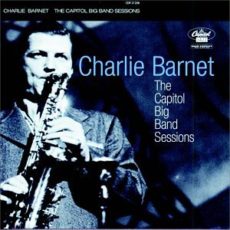
Charlie Barnet was born Charles Daly Barnet on October 26, 1913 in New York City. His parents divorced when he was two and he was raised in well-to-do surroundings by his mother and her grandparents. His grandfather was Charles Frederick Daly, a vice-president for the New York Central Railroad, banker and businessman. He attended various boarding schools, both in the New York and Chicago areas, learning to play piano and saxophone as a child. He was often found leaving school to listen to music and to try to gain work as a musician.
By sixteen, Barnet had done road work with a Jean Goldkette satellite band and was in New York, where he joined Frank Winegar’s Pennsylvania Boys on tenor saxophone. Always restless, by 1931 he had relocated to Hollywood and appeared as a film extra while trying to interest local bandleaders in hot music, which was increasingly unpopular due to the Great Depression. By late 1932 he was 18 and returning east, where he persuaded a contact at CBS’ artist bureau to try him out as an orchestra leader.
Charlie began recording in 1933, during an engagement at New York’s Park Central Hotel, but was not a great success for most of the 1930s. Regularly breaking up his band and changing its style by early 1935 he attempted to premiere swing music at New Orleans’ Hotel Roosevelt. However, Louisiana’s Governor Huey Long, disliking the new sound, had the band run out of town, arranged with Joe Haymes to take several of his now-jobless sidemen, and he went to Havana, Cuba as an escort to well-to-do older women.
1936 saw another swinging Barnet edition featuring the up-and-coming vocal quartet The Modernaires but this too quickly faded from the scene. The height of Barnet’s popularity and his first really permanent band came between 1939 and 1941. It was a period that began with his hit version of the Ray Noble tune Cherokee arranged by Billy May. 1944 saw him with another big hit with Skyliner. During his swing period his orchestra included Buddy DeFranco, Roy Eldridge, Neal Hefti, Lena Horne, Barney Kessel, Dodo Marmorosa, Oscar Pettiford, Art House, Maynard Ferguson, Doc Severinsen, Clark Terry and trumpeter Billy May was his arranger before joining Glenn Miller in 1940.
He was one of the first bandleaders to integrate his band; the year is variously given as 1935 or 1937. He was an outspoken admirer of Count Basie and Duke Ellington. Ellington recorded the Charlie Barnet composition In a Mizz. In 1939, Basie lent Barnet his charts after Barnets’ had been destroyed in a fire at the Palomar Ballroom in Los Angeles, California. Throughout his career he was an opponent of syrupy arrangements, however, in the Billy May song The Wrong Idea, he lampooned the “sweet” big band sound of the era.
Barnet penned an autobiography The Swinging Years where he noted the orchestra was a notorious party band where drinking and vandalism were not uncommon. He had several hits across America and in Europe during the late 1940s, thanks to the U.S. Armed Forces Network powerful twin 100 kW transmitters stationed in Munich, Germany.
By 1947, he started to switch from swing music to bebop and in 1949 he retired, apparently because he had lost interest in music. He was able to retire when he chose because he was one of the few heirs in a very wealthy family. He occasionally returned from retirement for brief tours but never returned to music full-time. Tenor, alto and soprano saxophonist, composer and bandleader Charlie Barnet passed away from complications of Alzheimer’s disease and pneumonia on September 4, 1991 in San Diego, California.
Jazz Is Global – Share
More Posts: saxophone
Daily Dose Of Jazz…
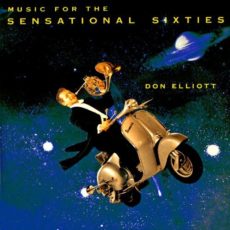
Don Elliott was born October 21, 1926 in Somerville, New Jersey and played mellophone in his high school band and played trumpet for an army band. After study at the University of Miami he added vibraphone to the list and recorded with Terry Gibbs and Buddy Rich before forming his own band.
From 1953 to 1960 he won the DownBeat readers poll several times for miscellaneous instrument-mellophone. Known as the “Human Instrument”, Don additionally performed jazz as a vocalist, trombonist, flugelhornist and percussionist. He pioneered the art of multitrack recording, composed countless prize-winning advertising jingles, prepared film scores, and built a thriving production company.
Elliott scored several Broadway productions including James Thurber’s The Beast in Me and A Thurber Carnival, in the latter of which he performed with his quartet. He also provided one of the voices for the novelty jazz duo the Nutty Squirrels. He lent his vocal talents to such motion picture soundtracks as The Getaway starring Steve McQueen, $ (Dollars) starring Warren Beatty, and The Hot Rock starring Robert Redford, as well as composing the score to The Happy Hooker starring Lynn Redgrave.
Elliott owned and operated one of the very first multitrack recording studios in New York City and in Weston, Connecticut and recorded over 60 albums and 5,000 advertising jingles throughout his career. A longtime associate of Quincy Jones, he contributed vocal work to many of Jones’ film scores. As sideman he performed and recorded with Phil Bodner, Miles Davis, Lee Konitz, Jackie McLean, Paul Desmond, Billy Taylor, Billy Eckstine, Bill Evans, Urbie Green, Michel Legrand, George Shearing, Marty Bell, Bob Corwin, Louis Bellson and Mundell Lowe among others.
Trumpeter, vibraphonist, vocalist, and mellophone player Don Elliott, whose recording Calypso Jazz is considered by some jazz enthusiasts to be one of the definitive calypso jazz albums, passed away of cancer on July 5, 1984 in Weston, Connecticut.
Dose A Day-Blues Away
More Posts: mellophone,trumpet,vibraphone,vocal
Daily Dose Of Jazz…
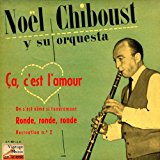
Noël Chiboust was born on October 14, 1909 in Thorigny-sur-Marne , Département Seine-et-Marne, France. He began his career as a violinist with Ray Ventura and during the early Thirties played trumpet in the Michel Warlop Orchestra. By 1936 he was involved in the concert series la semaine à Paris, by the Hot Club de France. At this time in his career he also joined the André Ekyan Orchestra until 1938, then played in the Swing Band of Philippe Brun followed by an early 1940s stint with Alix Combelle.
Around the mid 1930s he recorded with Django Reinhardt , Stéphane Grappelli , Bill Coleman and Coleman Hawkins, joined Eddie Brunner in 1938 at Cabaret Bagatelle. The late 1930s saw him giving up the trumpet and joining the tenor saxophone and clarinet sections when he joined the Marcel Bianchi Orchestra.
From 1940 he recorded under his own name for the French label Swing releasing a few 78s. Starting in 1944 he performed with an orchestral cast including Hubert Rostaing, and with Jack Diéval and Lucien Simoen at Club Schubert. From 1947 to 1950 he had an engagement at Cabaret le Drap d’Or.
He turned his attention to popular music as well as the rock and roll to and by 1959 released several EPs and singles for Polydor Records with songs like Telstar, Dynamite Charleston and Yes Sir That’s My Baby.
Trumpeter, tenor saxophonist, clarinetist, arranger, composer and band leader in the field the swing and popular music era Noël Chiboust passed away on January 17, 1994.

Miami