

Daily Dose Of Jazz…
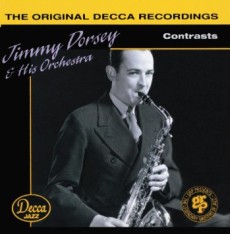
James Dorsey was born on February 29, 1904 in Shenandoah, Pennsylvania. Known as “JD”, he played trumpet in his youth and appeared on stage with J. Carson McGee’s King Trumpeters in 1913 at age nine. He switched to alto saxophone two years later, then learning to double on the clarinet.
With his brother Tommy playing trombone, he formed Dorsey’s Novelty Six, one of the first jazz bands to broadcast. In 1924 he joined the New York City based California Ramblers with Paul Whiteman and Red Nichols, did freelance radio and recording work throughout the 1920s and joined the Ted Lewis band, with whom he toured Europe.
He went on to work with Rudy Vallee and other bandleaders, continued with the Dorsey Brothers Orchestra, appeared on seventy-five radio broadcasts, breaking with his brother changed the band to the Jimmy Dorsey Orchestra with Bobby Byrne, Ray McKinley, Donald Matteson, Skeets Herfurt, and vocalists Bob Eberly and Kay Weber, later hiring Helen O’Connell.
In the fifties he rejoined his brother under the auspices of Tommy Dorsey and His Orchestra featuring Jimmy Dorsey, appeared on Jackie Gleason’s show and got their own weekly variety program Stage Show, produced by Gleason.
Jimmy took over leadership of the orchestra after Tommy’s death but only survived a few months passing away from throat cancer at age 53 in New York City on June 12, 1957.
Jimmy received a gold record for the Herst/Sharpe composition So Rare, made Latin flavored records that topped the charts in 1941, appeared in several movies including their own bio-pic The Fabulous Dorseys, composed the classic tune I’m Glad There Is You, as well as a host of others collaborating with Jimmy Van Heusen, Sonny Burke, Frankie Trumbauer and Babe Russin to name a few.
Saxophonist Jimmy Dorsey is considered one of the most important and influential alto saxophone players of the Big Band and Swing era, had several #1 hits, honored with a U.S. postal stamp, had his recording of Brazil (Aquarela do Brasil) into the Grammy Hall of Fame, and was inducted into the Big Band and Swing Hall of Fame.

Daily Dose Of Jazz…
Warren Vaché, born February 21, 1951 in Rahway, New Jersey came from a musical family. His father was a bassist, author of several jazz books and a critic, while his mother was a secretary at Decca Records. He began playing piano in the third grade but soon switched to trumpet so he could play in the fourth grade band and his father immediately bought him a cornet.
Over the years Warren has looked to Louis Armstrong, Roy Eldridge, Bobby Hacket, Fats Navarro, Tom Harrell and Ruby Braff as his sources of inspiration. Throughout high school and while attending Montclair State College he played gigs from dance to weddings and all kinds of receptions.
Part of his formal training by studying under Pee Wee Erwin and continued with him playing in polka, Dixieland, big dance and Broadway pit bands, as well as small jazz groups and large free-wheeling combos.
His first professional job was with the Billy Maxted band in Detroit in 1972. From there he ventured on to play th Broadway production of Mr. Jazz, work with George Wein and finally landing in Benny Goodman’s band. There he played with Hank Jones, Urbie Green, Zoot Sims and Slam Stewart.
He became part of the Condon’s house band, had his debut release, First Time Out on the Monmouth label, but Concord Records gave him his biggest exposure working with Scott Hamilton, John Bunch, Jake Hanna and Cal Collins. He has also worked with Bucky Pizzarelli and Howard Alden.
Swing master cornet, flugelhorn and trumpeter Warren Vaché currently maintains a full schedule of recording, worldwide festivals appearances, Broadway and club dates.

Give The Gift Of Knowledge
More Posts: cornet,flugelhorn,trumpet
Daily Dose Of Jazz…
Manny Klein was born Emmanuel Klein on February 4, 1908. Not much is known about his youth and trumpet education but he began with Paul Whiteman in 1928. Active throughout the 1930s, he played with several major bands of the era including the Jimmy Dorsey, Tommy Dorsey and Benny Goodman.
By 1937 Klein had moved to California and worked with Frank Trumbauer’s orchestra and in early 1940 he appears on Artie Shaw And His Orchestra recordings. During this period he also did soundtracks and though received no credit, played trumpet for the film From Here To Eternity, and worked with musicians associated with West Coast cool jazz in the 1950s.
A versatile player who could play in almost any setting, including first trumpet in an orchestra, classical and pop, appearing on several Dean Martin recordings during the 1960s, and played piccolo trumpet on Hugh Montenegro’s hit version of the main theme to the film, The Good, the Bad and the Ugly.
Regarded as one of the most proficient players of his, or any generation, he possessed an uncanny ability to mimic the styles of many other prominent trumpeters, namely Bunny Berigan and Ziggy Elman. Trumpeter Manny Klein, most associated with swing, passed away at the age of 86 in Los Angeles, California on May 31, 1994.
Give A Gift Of Jazz – Share
More Posts: trumpet
Daily Dose Of Jazz…
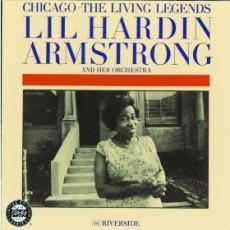
Lil Hardin Armstrong was born Lillian Hardin on February 3, 1898 in Memphis, Tennessee and grew up with her grandmother learning hymns, spirituals and classics on the piano, but she was drawn to pop music and later blues. Her initial piano instruction came from her third grade teacher, Miss Violet White, followed by enrollment in Mrs. Hook’s School of Music, but it was while attending Fisk University that she was taught a more acceptable approach to the instrument.
In 1918, Lil moved to Chicago and landed a job as a sheet music demonstrator at Jones Music Store for $3 a week. Shortly afterward bandleader Lawrence Duhé offered her $22.50 she joined him. From cabaret to the De Luxe Café to Dreamland playing behind Alberta Hunter and Ollie Powers. Replace by King Oliver’s Creole Jazz Band, he asked her to stay, which led to an engagement in San Francisco, back to Chicago playing eventually with Oliver again.
Hardin met Louis Armstrong when Oliver sent for him and subsequently were married in 1924. She took him shopping and taught him how to dress more fashionably, and finally convinced him to strike out on his own. Moving to New York City he joined Fletcher Henderson, while she stayed in Chicago with Oliver and then leading her own band.
Hardin, Armstrong, Kid Ory, Johnny St. Cyr and Johnny Dodds comprised the Hot Five recordings for Okeh Records. She would go on to record sessions with the same group as a leader for Vocalion, Columbia Records and New Orleans Wanderers. In the late 1920s Hardin and Louis parted ways and she formed a band with a cornet player she considered Louis equal, Freddie Keppard. In the 1930s, she sometimes billed herself as Mrs. Louis Armstrong, led an All Girl Orchestra, then a mixed-sex big band, which broadcasted nationally over the NBC radio network.
The same decade she recorded a series of sides for Decca Records as a swing vocalist, recorded with Red Allen, and back in Chicago collaborated with Joe Williams, Oscar Brown Jr., Red Saunders and Little Brother Montgomery. Throughout the rest of her career she continued to perform and record, and began writing an autobiography that she never completed. A month after attending Louis’ funeral in New York City, she was performing at a televised memorial concert for Louis, Lil Hardin Armstrong collapsed at the piano and died on the way to the hospital.
Pianist, composer, arranger, singer and bandleader Lil Hardin Armstrong, second wife and recording collaborator of Louis Armstrong in the 1920s, passed away on August 27, 1971. Her compositions have been sampled and revived by many and was inducted into the Memphis Music Hall of Fame in 2014.
Inspire A Young Mind
Daily Dose Of Jazz…
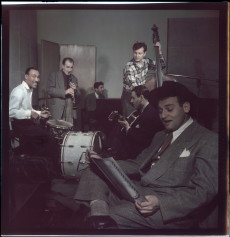
Jimmy “Craw” Crawford was born on January 14, 1910 in Memphis, Tennessee. For nearly 14 years from 1928 to 1942 he was the drummer of the Jimmie Lunceford big band. Playing with a strong, solid pulsation, his style became a classic trademark of the Lunceford sound and was a key factor in establishing the unique Lunceford beat.
In the 1950s, Crawford worked as a pit drummer on Broadway. He also recorded with numerous notable artists such as Ella Fitzgerald, Dizzy Gillespie, Count Basie, Sy Oliver, Bing Crosby, Benny Goodman, Kenny Burrell, Quincy Jones, Eddie Heywood and Frank Sinatra among others.
Swing era drummer Jimmy Crawford, who was notably Paul Motian’s favorite drummer, passed away on January 28, 1980 in New York City.
Give A Gift Of Jazz – Share
More Posts: drums