

Daily Dose Of Jazz…
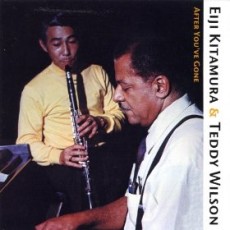
Eiji Kitamura 北村 英治 was born on April 8, 1929 in Tokyo, Japan. Devoting himself to clarinet, he was playing while still an undergrad at Keio University at in Tokyo. He made his debut at the age of 22.
Kitamura built a following in his country performing regularly on his television program. He first came to prominence in the United States at the 20th Anniversary Jam Session of the Monterey Jazz Festival in 1977. His following in Japan was built previous to this on his regular television program.
An interpreter of traditional jazz, the clarinetist prefers this genre over modern jazz. Much of his influence in his playing came from the swing of Benny Goodman and Woody Herman. He has recorded some two-dozen albums or more albums including a series of albums with Teddy Wilson as well as for CBS Sony, Concord and various Japanese labels over the course of his career.

Jazz Is Global – Share

More Posts: clarinet
Daily Dose Of Jazz..
Marty Marsala was born on April 2, 1909 in Chicago, Illinois. He began his professional career playing drums for bands led by Joe Bananas and Red Feilen in Chicago. During the 1920s he switched to the trumpet and following years as a freelance musician in Chicago, he soon joined his brother Joe’s band in New York playing trumpet from 1936 to 1941. In 1937 and 1938 he also worked with Bob Howard and Tempo King.
After working with the Will Hudson Orchestra, Marty then led a local band for a while before joining Chico Marx’s band from 1942 to 1943. The band was technically led by Ben Pollack but performed under Marx’s name.
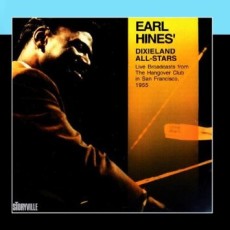
Marsala served briefly in the Army from 1944 to the end of World War II. After his discharge he toured between San Francisco and Chicago playing Dixieland with his brother again as well as Miff Mole, Tony Parenti and Sidney Bechet. He became especially popular in California during these years. In 1955 he moved permanently to San Francisco and began leading his own groups and recording with Kid Ory and Earl Hines.
By the 1960s his health had deteriorated and he retired from performing in 1965, never recording under his own name. Swing trumpeter Marty Marsala, best known for his two decades working with is brother from 1926-46, passed away on April 27, 1975.
Put A Dose In Your Pocket
More Posts: trumpet
Daily Dose Of Jazz…
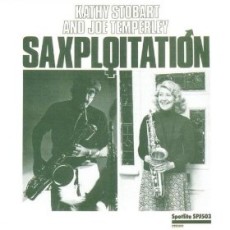
Kathy Stobart was born Florence Kathleen Stobart in the coastal town of South Shields, England on April 1, 1925. She first learned piano and alto saxophone as a child. After picking up her brother’s tenor saxophone and a month’s trial, she first played in Don Rico’s all-girl band at the age of 14 and then locally in Newcastle.
It wasn’t until her joining the Peter Fielding ballroom orchestra that her interest in jazz peaked. She met saxophonists Keith Bird and Derek Neville, who were then stationed at a local RAF camp. They bought her ten jazz records for my 17th birthday and Bird painstakingly took her through various harmonic exercises and saw to it that she succeeded him when he vacated a quartet job in London in late 1942.
Moving to London in the 1940s she began playing with Denis Rose, Ted Heath and Jimmy Skidmore. Later in the decade Stobart played with Art Pepper and Peanuts Hucko. Before the end of the Forties she played with and had a brief marriage with Art Thompson.
She toured with Vic Lewis in 1949 and led her own group in early 1950s, among its members was Derek Humble, Dill Jones and Bert Courtley, whom she married in 1951 until his death in 1969. Throughout the 1950s and 60s Kathy went into semiretirement to raise her family.
Returning to performing, from 1969 to 1977 she played with Humphrey Lyttelton. Following this she led her own groups, with Harry Beckett, John Burch and Lennie Best among others. Aside from this she played with Johnny Griffin, Al Haig, Earl Hines, Buddy Tate, Zoot Sims, Marian McPartland and Dick Hyman.
From 1992 she was paying with Lyttelton again adding flute, clarinet and baritone saxophone to her arsenal of instruments. Tenor saxophonist Kathy Stobart, who held lengthy teaching assignments at City Literature Institute in London, passed away on July 5, 2014.
Uplift Someone’s World
Daily Dose Of Jazz…
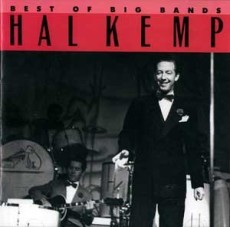
James Hal Kemp was born March 27, 1904 in Marion, Alabama. He studied and learned to play the saxophone and clarinet and while at the University of North Carolina at Chapel Hill he formed his own campus jazz group, the Carolina Club Orchestra. They recorded for English Columbia and Perfect/Pathé Records in 1924 and toured Europe that same summer under the sponsorship of bandleader Paul Specht.
Kemp returned to UNC in 1925 and put together a new edition of the Carolina Club Orchestra, featuring classmates and future stars John Scott Trotter, Saxie Dowell and Skinnay Ennis. By 1927 he turned professional and turned over the orchestra to Kay Kyser.
Basing his band in New York City, Hal’s group included Trotter, Dowell, and Ennis, and later joined by trumpeters Bunny Berigan and Jack Purvis. The sound was 1920s collegiate jazz and in the Thirties he toured Europe again and recorded regularly for Brunswick, English Duophone, Okeh and Melotone record labels.
During the height of the Depression in 1932 Kemp changed the orchestra’s style to a dance band. He incorporated an early version of the echo effect using large megaphones for the clarinets, muted trumpets and a double-octave piano. Vocalists with the band during the 1930s included Ennis, Dowell, Bob Allen, Deane Janis, Maxine Gray, Judy Starr, Nan Wynn and Janet Blair.
Hal’s band was one of the most popular bands in the 1930s and was often featured performing on NBC and CBS radio shows. The band also appeared in numerous motion-picture short subjects and was featured in the 1938 RKO film Radio City Revels. He had hits with There’s A Small Hotel, Lamplight, I Got A Date With An Angel, You’re The Top, Lullaby Of Broadway and Where or When.
On December 19, 1940, alto saxophonist, clarinetist, bandleader, composer and arranger Hal Kemp while driving from Los Angeles to a booking in San Francisco, his car collided head-on with a truck. Breaking a leg and several ribs, one of which punctured a lung, he developed pneumonia while in the hospital and died two days later in Madera, California. He was inducted into the Big Band and Jazz hall of Fame in 1992.
Dose A Day-Blues Away
Daily Dose Of Jazz…
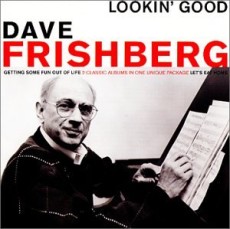
David Frishberg was born March 23, 1933 in Saint Paul, Minnesota. Resisting learning classical piano as a boy, he developed an interest in blues and boogie-woogie by listening to recordings of Pete Johnson and Jay McShann. As a teenager he played in the house band at the Flame in St. Paul where Art Tatum, Billie Holiday and Johnny Hodges appeared. After graduating from the University of Minnesota as a journalism major in 1955, he spent two years in the Air Force.
In 1957, Dave moved to New York City where he played solo piano at the Duplex in Greenwich Village. He first became known for his work with Carmen McRae, Ben Webster, Gene Krupa, Bud Freeman, Eddie Condon, Al Cohn and Zoot Sims.
He later found celebrity writing and performing his own, frequently humorous, songs, including his most famous My Attorney Bernie, and favorites I’m Hip, lyrics only, in collaboration with Bob Dorough, Blizzard of Lies, Do You Miss New York, Peel Me a Grape, Quality Time, Slappin’ the Cakes on Me, and Van Lingle Mungo, the lyrics of which entirely consist of the names of old-time baseball players.
Citing songwriter Frank Loesser as an influence, Frishberg has also worked strictly as a lyricist on a number of occasions collaborating with Johnny Mandel, Alan Broadbent, Al Cohn, Blossom Dearie, David Shire, Julius Wechter, Dan Barrett, Bob Brookmeyer, Gerry Mulligan and Johnny Hodges.
Dave’s tunes have been performed and/or recorded by Blossom Dearie, Rosemary Clooney, Shirley Horn, Anita O’Day, Michael Feinstein, Irene Kral, Diana Krall, Stacey Kent, John Pizzarelli and Mel Torme, among other.
He is also noted for composing the music and lyrics for I’m Just A Bill, the song about the forlorn legislative writ in the ABC Schoolhouse Rock series, as well as Walkin’ on Wall Street, a song that describes how the stock market works, and $7.50 Once a Week, a song about saving and balancing a budget.
Pianist, vocalist, composer and lyricist Dave Frishberg has recorded three albums as a leader, one solo project and has sat in the sideman chair with Jim Goodwin and Rebecca Kilgore on the Arbor Records label.
Uplift Someone’s World