

Daily Dose Of Jazz…
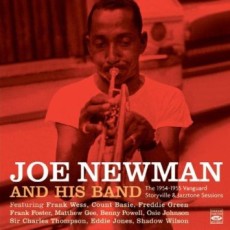
Joseph Dwight Newman was born on September 7, 1922 in New Orleans, Louisiana. A child of a pianist father, he had his first music lessons from David Jones. He continued his study of trumpet at Alabama State College where he also played, led and toured the school band, the Bama State Collegians.
By 1941 Joe joined Lionel Hampton for two years, before signing with Count Basie, a relationship that lasted for a total of thirteen years resulting in a number of small group recordings as leader, spent time with Illinois Jacquet, and then with J.C. Heard. He also played on Benny Goodman’s 1962 tour of the Soviet Union.
Leaving the Basie band in 1961, Newman helped found Jazz Interactions, of which he became president in 1967. Jazz Interactions was a charitable organization which provided an information service, brought jazz master classes into schools and colleges, and later maintained its own Jazz Interaction Orchestra, for whom Newman wrote.
In the 1970s and 1980s Newman toured internationally, recorded for various major record labels. He suffered a stroke in 1991, however, which seriously disabled him. Joe Newman, trumpeter, composer and educator best known for his years with Count Basie passed away on July 4, 1992.

Inspire A Young Mind
More Posts: trumpet
Daily Dose Of Jazz…
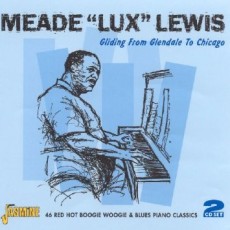
Meade Lux Lewis was born Meade Anderson Lewis on September 4, 1905 in Chicago, Illinois. As a child, he was greatly influenced by pianist Jimmy Yancey.
His 1927 rendition of “Honky Tonk Train Blues” for Paramount Records marked his recording debut and his best-known work. His early recordings included Adrian Rollini, Frankie Trumbauer, classical harpsichordist Sylvia Marlowe, theater organist George Wright and drummer Cozy Cole. His performance at John Hammond’s historic “From Spirituals to Swing” concert at Carnegie Hall in 1938 brought Lewis to public attention.
He went on to perform with Albert Ammons and Pete Johnson, played an extended engagement at Café Society, toured as a trio, and inspired the formation of Blue Note Records in 1939. Their success led to a decade long boogie-woogie craze with big band swing treatments by Tommy Dorsey, Will Bradley and others.
He became the first jazz pianist to double on celeste, recorded with Edmond Hall and Charlie Christian, also, then continued to Chicago and California. Lewis appeared in the movies “New Orleans”, “Nightmare” and “It’s A Wonderful Life” playing piano in the scene where George Bailey gets thrown out of Nick’s Bar.
Pianist and composer Meade Lux Lewis, who played the swing, blues and boogie-woogie styles, died in a car accident in Minneapolis, Minnesota on July 7, 1964.
Put A Dose In Your Pocket
More Posts: piano
Daily Dose Of Jazz…
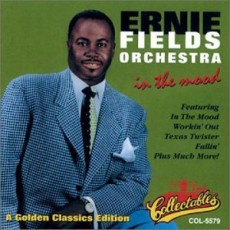
Ernie Fields was born Ernest Lawrence Fields on August 28, 1904 in Nacogdoches, Texas, though raised in Taft, Oklahoma. He attended Tuskegee Institute before moving to Tulsa. From the late 1920s, he led the Royal Entertainers, and eventually began touring more widely from Kansas City, Kansas to Dallas, Texas, and recording. Fields’ band became the first African-American band to play at Tulsa’s landmark Cain’s Ballroom.
A 1939 invite to New York by John Hammond to record for Vocalion. He began touring nationally, never became a star but continued to work steadily, recording for smaller labels, and gradually transforming his sound through a smaller band and a repertoire shift from big band and swing to R&B. During WWII he entertained troops both at home and abroad.
Continuing to straddle these styles into the 1950s, Ernie played swing standards such as “Tuxedo Junction” and “Begin The Beguine” in a rocking R&B style. In the late 1950s he moved to Los Angeles, California and joined the Rendezvous Records and ran the house band In 1959 this band had an international hit with an R&B version of Glenn Miller’s “In The Mood” that reached #4 on the Billboard chart, selling over a million copies. He would go on to record instrumentals under a variety of names including B. Bumble and the Stingers, The Marketts and The Routers.
After Rendezvous Records folded in late 1963, trombonist, pianist, arranger and bandleader Ernie Fields retired and returned to Tulsa. He died on May 11, 1997, at the age of 92.
Put A Dose In Your Pocket
More Posts: arranger,bandleader,piano,trombone
Daily Dose Of Jazz…
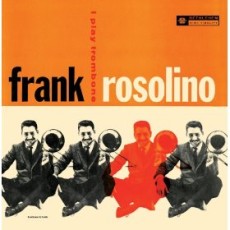
Frank Rosolino was born on August 20, 1926 in Detroit, Michigan. He studied the guitar with his father from the age of 9 and took up the trombone at age 14 while he was enrolled at Miller High School where he played with Milt Jackson in the school’s stage band and small group. Having never graduated, he joined the 86th Division Army Band during World War II.
Perhaps most influential of all was the street education Frank received after returning to Detroit following his period in the Army during which he sat in at the Mirror Ballroom or the Bluebird where other to-be-renowned musicians also congregated, the Jones brothers – Hank, Thad and Elvin, Tommy Flanagan, Kenny Burrell, Paul Chambers and later at the 3 Deuces on 52nd Street in New York City with Charlie Parker.
During this period Rosolino was also performing with the big bands of Bob Chester, Glen Gray, Tony Pastor, Herbie Fields, Gene Krupa and Stan Kenton. Leaving the Kenton outfit he settled in Los Angeles where he performed with Howard Rumsey’s Lighthouse All-Stars from 1954–1960 in Hermosa Beach.
Throughout the 1960s and 1970s, between nightclub engagements, Rosolino was active in many Los Angeles recording studios where he performed with such notables as Frank Sinatra, Sarah Vaughan, Tony Bennett, Peggy Lee, Mel Torme, Michel Legrand and Quincy Jones among others.
He can also be seen performing in “Sweet Smell of Success” in 1957 with Burt Lancaster and Tony Curtis, and in 1958 with Shelly Manne’s group in the film “I Want To Live!” starring Susan Heyward and also. He was also a regular on The Steve Allen Show, The Tonight Show and The Merv Griffin Show. A talented vocalist, renowned for his wild form of scat-singing, Frank recorded one vocal album, “Turn Me Loose!” featuring both his singing and trombone playing. He can also be seen performing in the half hour syndicated program Jazz Scene USA, hosted by Oscar Brown, Jr.
It was during the 1970s that he performed and toured with Quincy Jones and the Grammy Award winning group Suoersax. He recorded some two-dozen sessions as a sideman and a dozen as a leader. Trombonist and vocalist Frank Rosolino committed suicide on November 26, 1978 after shooting his two sons.
Put A Dose In Your Pocket
Daily Dose Of Jazz…
Harold “Doc” West was born on August 12, 1915 in Wolford, North Dakota. He learned to play piano and cello as a child before switching to drums. By the 1930s he was playing in Chicago with Tiny Parham, Erskine Tate and Roy Eldridge. Towards the end of the decade he filled in for Chick Webb when he was unable to lead his own orchestra.
The early 1940s Doc played with Hot Lips Page and on the emerging bebop scene at Minton’s Playhouse in New York City alongside Dizzy Gillespie, Charlie Parker, Tiny Grimes and Don Byas. He played with Oscar Pettiford in 1944 and stood in for Jo Jones occasionally in Count Basie’s orchestra.
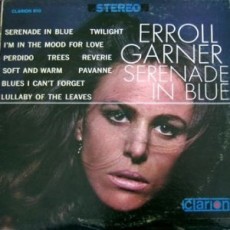
He appears on recordings led by Slam Stewart, Leo Watson, Wardell Gray, Billie Holiday, Big Joe Turner, Jay McShann and Erroll Garner, leaving a small but impressive catalogue as a sideman. Drummer Doc West passed away on May 4, 1951 in Cleveland, Ohio while on tour with Roy Eldridge.
Take A Dose On The Road