

Daily Dose Of Jazz…
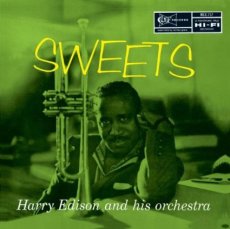
Harry “Sweets” Edison was born on October 10, 1915 in Columbus, Ohio but spent his early childhood in Kentucky, getting his first introduction to music by his uncle. Moving back to Columbus at age 12, he started playing trumpet with local bands.
In 1933, he became a member of the Jeter-Pillars Orchestra in Cleveland, went on to play with the Mills Blue Rhythm Band followed by Lucky Millinder. In 1937 he moved to New York joining Count Basie’s Orchestra playing alongside Buck Clayton, Lester Young (who named him Sweets), Buddy Tate and Jo Jones among others.
Edison came to prominence in the Basie band as a soloist and as a composer and arranger for the band. He spent 13 years with Basie until the band was temporarily disbanded in 1950. He then pursued a varied career as leader of his own groups, freelancing with other orchestras and traveling with Jazz At The Philharmonic.
In the early 1950s, he settled on the West Coast and became a highly sought-after studio musician, making important contributions to recordings by such artists as Billy Holiday, Frank Sinatra and Ella Fitzgerald. In 1956 he recorded the first of three albums with tenor great Ben Webster.
Through the 60s and 70s Harry worked in many orchestras on TV shows, including Hollywood Palace and The Leslie Uggams Show, specials with Sinatra; prominently featured on the sound track and album of Lady Sings The Blues, was musical director for Redd Foxx, toured Europe and Japan.
Jazz trumpeter Harry “Sweets” Edison, the first tribute Honoree from the Los Angeles Jazz Institute, and twice Los Angeles Jazz Society’s tribute Honoree in 1983 and 1992, passed away on July 27, 1999.

Put A Dose In Your Pocket
More Posts: trumpet
Daily Dose Of Jazz…
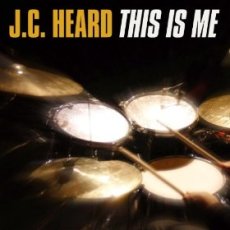
J. C. Heard was born James Charles Heard on October 8, 1917 in Dayton, Ohio. A very supportive drummer, versatile enough to fit comfortably into swing, bop and blues settings, he landed his first important professional job with Teddy Wilson in 1939. This kicked off a long and fruitful career.
By 1946 he was recording with top bop musicians such as Charlie Parker, Dizzy Gillespie and Dexter Gordon. Heard would go on to lead his own groups and in the Fifties spent a few years in Japan. Late in the decade he returned to New York and freelanced, even reuniting with Teddy Wilson in ’61.
Throughout his career J. C. would play, record and tour with Lena Horne, Coleman Hawkins, Cab Calloway, Benny Carter, Erroll Garner, Jazz At The Philharmonic, Pete Johnson, Sir Charles Thompson and Roy Eldridge among others.
In 1966 J.C. Heard moved to Detroit, worked as a bandleader and a mentor to younger musicians into the mid-’80s and passed away on September 27, 1988 in Royal Oak, Michigan.
Take A Dose On The Road
More Posts: drums
Daily Dose Of Jazz…
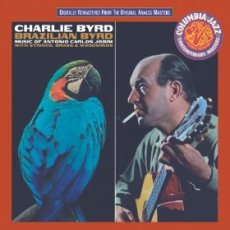
Charlie Lee Byrd was born on September 16, 1925 in Suffolk, Virginia but grew up in Chuckatuck, Virginia and his father taught him to play the acoustic steel guitar at age 10. He went on to Virginia Polytechnic Institute, served in the Army and played in the Special Services band in Paris. Returning to New York he studied composition at Hamett National Music School, taking up classical guitar.
Charlie moved to Washington, D.C. in 1950 and studied classical guitar with Sophocles Papas, then with Andre Segovia. By 1957 he teamed up with bassist Keter Betts and started gigging around D.C. for two years, joined Woody Herman for a State Department goodwill tour.
Byrd was first introduced to Brazilian music by his friend radio host Felix Grant who was well known in Brazil in 1960. A subsequent tour of Brazil and he returned home with recordings from Joao Gilberto and Antonio Carlos Jobim. He met with Stan Getz who convinced Creed Taylor, then at Verve Records to produce the album, recording “Jazz Samba” in 1962 in a building adjacent to All Souls Unitarian Church because of the excellent acoustics found there. And his love affair with Brazilian music began.
Over the course of his career he has toured the world, performed at numerous festivals, played with such jazz legends as Les McCann, Zoot Sims, Vince Guaraldi, his brother bassist Joe Byrd, Chuck Redd, Herb Ellis, Barney Kessel and the list goes on.
Charlie Byrd died of lung cancer on December 2, 1999 at his home in Annapolis, Maryland. He was deemed a Maryland Art Treasure in 1997 and knighted by the government of Brazil as the Knight of the Rio Branco.
Take A Dose On The Road
More Posts: guitar
Daily Dose Of Jazz…
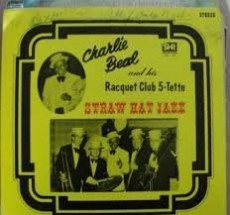
Charles Herbert Beal was born on September 14, 1908 in Redlands, California. He played freelance piano in the Los Angeles, California area before joining Les Hite’s band in 1930. Moving to Chicago, Illinois in 1932, he got a gig playing solo piano at the Grand Terrace in addition to working with Earl Hines, Carroll Dickerson, Jimmie Noone, Erskine Tate and Frankie Jaxon.
From 1933 to 1934 Beal accompanied and recorded extensively with Louis Armstrong. After departing from Armstrong he worked with Noble Sissle and then relocated to New York City late in 1934. There he did solo residencies and played with Adrian Rollini, Buster Bailey and Eddie South before moving to Canada for a time. After his return to the U.S. he served in the Army during World War II and upon his discharge he settled in Los Angeles again. There he played solo at the Jococo Room and found his way back into Armstrong’s ensemble in 1946.
From 1948 to 1956 he worked in Europe, returned to the States and spent three years as a member of the house trio at Embers in New York City. Later in his life he eventually returned to southern California, playing at the Racquet Club in Palm Springs. Pianist Charlie Beal passed away on July 31, 1991 in San Diego, California.
Inspire A Young Mind
More Posts: piano
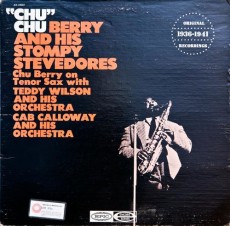
Daily Dose Of Jazz…
Chu Berry was born Leon Brown Berry on September 13, 1908 in Wheeling, West Virginia. Following in his piano playing stepsister’s footprints, Chu became interested in music at an early age, playing alto saxophone at first with local bands. It wasn’t until he heard Coleman Hawkins was he inspired to take up the tenor.
Most of Berry’s abbreviated career was spent in the sax sections of major swing bands of Sammy Stewart, Benny Carter, Teddy Hill, Fletcher Henderson and Cab Calloway. He recorded with Count Basie, Bessie Smith, Mildred Bailey, The Chocolate Dandies, Teddy Wilson, Billie Holiday and Lionel Hampton among others.
Although Berry based his style on Hawkins’ playing, the older man regarded Berry as his equal, saying, “‘Chu’ was about the best.” His mastery of advanced harmony and his smoothly-flowing solos on up-tempo tunes influenced such young innovators as Dizzy Gillespie and Charlie Parker and Chu was one of the jazz musicians who took part in the jam sessions at Minton’s Playhouse in New York that led to the development of bebop.
Collaborating with lyricist Andy Razaf, he composed “Christopher Columbus”, a tune that was the last important hit recording of the Fletcher Henderson orchestra. From 1937 to 1941 he would be associated with Cab Calloway until his death from complications stemming from a car accident. On October 30, 1941, tenor saxophonist Chu Berry passed away. He was just 33 years old. Author Jack Kerouac immortalized him in the beginning of his novella “The Subterraneans”.
Give A Gift Of Jazz – Share
More Posts: saxophone