

Daily Dose Of Jazz…
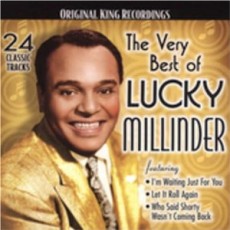
Lucky Millinder was born Lucius Venable Millinder on August 8, 1910 in Anniston, Alabama but was raised in Chicago, Illinois. While a teenager in the 1920s he worked in clubs, ballrooms, and theatres in Chicago as a master of ceremonies and dancer. He first fronted a band in 1931 for an RKO theater tour, and in 1932 took over leadership of Doc Crawford’s orchestra in Harlem, New York City, as well as freelancing elsewhere.
The Thirties saw Lucky touring Europe with his own orchestra and playing residencies in Monte Carlo and Paris, returning to New York to lead the Mills Blue Rhythm Band, discovering Rosetta Tharpe, teaming with Bill Doggett’s group, established a residency at the Savoy Ballroom and signed a contract with Decca Records, in which Dizzy Gillespie sat in the trumpet seat.
Millinder would record “Trouble In Mind” in 1941 with Rosetta Tharpe, as well as his #1 hit “When The Lights Go On Again (All Over The World)” followed by “Apollo Jump” and “Sweet Slumber”. But by the mid-1940s the band was drifting towards what would be known as rhythm and blues and was comprised of saxophonist Bull “Moose” Jackson, Tab Smith, Eddie “Lockjaw” Davis and pianist Sir Charles Thompson and singer Wynonie Harris. Their recording of “Who Threw The Whiskey In The Well” became the group’s biggest hit in 1945, staying at #1 on the charts for 8 weeks. Vocalist Ruth Brown replaced Wynonie for a short period until her solo career took flight.
Throughout the decade the band continued to remain popular and toured all the large R&B auditoriums, changed labels a few times until their last big hit was “I’m Waiting Just for You” with Annisteen Allen in 1951. A year later Lucky was working as a radio deejay, continued to tour and took over the leadership of the Apollo Theater band for a while. Retiring from performing he recorded his final sessions in 1960 and became active in music publishing, and in public relations for a whiskey distillery.
Swing and rhythm and blues bandleader Lucky Millinder, never learned to read or write music, nor play an instrument and rarely sang, it is said it was his showmanship and musical taste made his bands successful. He passed away from a liver ailment in New York City on September 28, 1966. Twenty years later he would posthumously be inducted into the Alabama Jazz Hall of Fame.

Jazz Is Global – Share
More Posts: bandleader
Daily Dose Of Jazz…
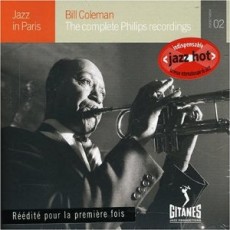
Bill Coleman was born William Johnson Coleman on August 4, 1904 in Paris, Kentucky. In 1909 his family moved from Kentucky to Cincinnati and his first musical explorations were on clarinet and C melody saxophone, but he eventually settled on trumpet. He studied with Cincinnati trumpeter Theodore Carpenter and played in an amateur band led by trombonist J.C. Higginbotham. He began professional work in Cincinnati with bands led by Clarence Paige, Wesley Helvey and then Lloyd and Cecil Scott.
In 1927 he traveled to New York City and played with the Scott brothers to New York City, and continued to work with them until 1929, when he joined the orchestra of pianist Luis Russell. His first recording session was with Russell and he soloed on the tune “Feelin’ the Spirit”. Over the next couple of years he floated between Russell and Scott participating in recording sessions with each of them. By 1933 Bill was on his first European tour with Lucky Millinder, then in October returned to New York, worked with the bands of Benny Carter and Teddy Hill and sat in on a recording session with Fats Waller and laying down a number of memorable sides.
Coleman returned to Europe, played a residency in Paris with entertainer and vocalist Freddy Taylor, recorded with guitarist Django Reinhardt and made several freelance sessions under his own name. In late 1936 he traveled to Bombay, India playing with Leon Abbey’s Orchestra, then back to Paris to join saxophonist William T. Lewis. Returning to the States found him playing with Benny Carter, Teddy Wilson, Andy Kirk, Ellis Larkins, Mary Lou Williams, Sy Oliver, John Kirby, Lester Young, Billie Holiday and Coleman Hawkins.
Due to racial segregation Bill Coleman returned to France in 1948 and lived out his days there touring and performing in clubs and concert halls all over Europe. In 1974 he received the Ordre National du Merite and in 1978, he performed at the first Jazz in Marciac festival (along with tenor saxophonist Guy Lafitte, later becoming an honorary president of the festival organization.
Jazz trumpeter Bill Coleman passed away in Toulouse, France on August 24, 1981. His sound and phrasing were immediately recognizable with a style of the swing era musicians.
Dose A Day – Blues Away
More Posts: trumpet
Daily Dose Of Jazz…
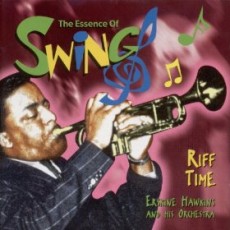
Erskine Ramsay Hawkins was born on July 26, 1914 in Birmingham, Alabama and was named after a local industrialist who was rewarding parents with savings accounts for doing so. He played trumpet in the Industrial High School band directed by Fess Whatley, a teacher who trained numerous African-American musicians that went on to populate the orchestras of Duke Ellington, Lucky Millinder, Louis Armstrong and Skitch Henderson.
Dubbed “The 20th Century Gabriel”, Hawkins composed the jazz standard “Tuxedo Junction” in 1939 with saxophonist and arranger Bill Johnson. It became a hit during World War II rising on the national charts to #7 performed by his orchestra and #1 played by Glenn Miller’s. While a bandleader Erskine featured several female vocalist like Ida James, Delores Brown and Della Reese.
From 1967 to 1989 Hawkins played the lobby bar and show nightclub at The Concord Resort Hotel in Kiamesha Lake, New York. He was inducted in 1978 into the Alabama Jazz Hall of Fame. Erskine Hawkins, trumpeter and bandleader, died in Wilmington, New Jersey on November 11, 1993, at the age of 79.
Give A Gift Of Jazz – Share
Daily Dose Of Jazz…
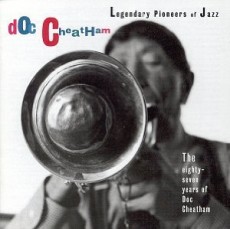
Adolphus Anthony Cheatham, better known as Doc Cheatham was born on June 13, 1905 in Nashville, Tennessee. Growing up without jazz, he was introduced by early recordings and touring bands of the late 1910s. Abandoning family plans to be a pharmacist to play music, he retained the name Doc and started with the soprano and tenor saxophone in addition to trumpet in the African American Vaudeville theatre.
He toured the TOBA circuit (Theatre Owners Booking Association) accompanying blues singers but it wasn’t until his move to Chicago and hearing King Oliver that his focus turned to jazz. A year later Louis Armstrong added his influence on Doc’s playing. Cheatham went on to play with Ma Rainey, worked in the big bands of Bobby Lee, Wilbur de Paris, Chick Webb, Sam Wooding, Cab Calloway, Fletcher Henderson, Benny Carter, Claude Hopkins and Teddy Wilson through the 30s and 40s.
By the late 40s into the 50s Doc play in New York City Latin bands of Ricardo Ray, Marcelino Guerra, Perez Prado and Machito. In the 60s he led his own band for five years then worked with Benny Goodman. In the 70s he began singing after scatting during a Paris recording session, was well received and he continued to sing for the rest of his life.
Cheatham created his best work after the age of 70, winning a Grammy with Nicholas Payton and Butch Thompson for the Verve Record release of “Doc Cheatham and Nicholas Payton”. Trumpeter, singer and bandleader Doc Cheatham continued playing until two days before his passing on June 2, 1997, eleven days shy of his 92nd birthday.
Dose A Day – Blues Away
More Posts: trumpet
Daily Dose Of Jazz…
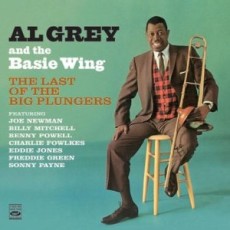
Al Grey was born in Aldie, Virginia on June 6, 1925 but grew up in Pottstown, Pennsylvania. After serving in the Navy during WWII, where he started playing trombone, he joined Benny Carter’s band, later moving to Lionel Hampton’s trombone section. After some solo worked he joined Dizzy Gillespie’s big band in ’56 and a year later was touring Europe with Count Basie.
Trummy Young inspired Al’s early trombone style and he developed a wild, strong and full sound. Solos often consisted of short, pronounced phrases with precisely timed syncopation. He became known for his plunger mute technique, later writing an instructional book title “Plunger Techniques”. When playing with the plunger, however, he would produce the most mellow fill-ins and shape melodic answers to the lead voice.
After 1961 Grey performed only occasionally with the Count and apart from leading his own combos, he collaborated with many jazz greats such as Herbie Hancock, Melba Liston, J. J. Johnson, Quincy Jones, Ray Charles, Jack McDuff, Ella Fitzgerald and Frank Sinatra. His trombone skills were also featured on the award-winning soundtrack for The Color Purple.
Al Grey, who passed away on March 24, 2000, greatly contributed to the post-swing era jazz-trombone vocabulary and will be remembered for his charming personality as well as his ability to bond with audiences around the world.
Take A Dose On The Road
More Posts: trombone