


Daily Dose Of Jazz…
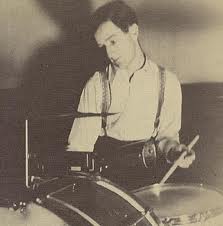
Gordon “Specs” Powell was born June 5, 1922 in New York City. He started out musically on the piano but by the late 1930s he became exclusively a drummer. He began in the swing era working with Edgar Hayes in 1939, Benny Carter in 1941-42 and Ben Webster.
He started working as a staff musician for CBS in 1943 and by the early 60s he was lead drummer on The Ed Sullivan Show. He only led one recording session for Roulette Records in 1957 titled “Movin’ In”.
Remaining active until the 1970s, Specs Powell, jazz drummer and percussionist that worked in the bebop and hard bop idioms was honored by the Big Band and Jazz Hall of Fame in 2004.
Though he passed away three years later on September 15, 2007 at the age of 85, Specs Powell selected discography lists his orchestra and big band albums, “Movin’ In” and “Big Band Jazz” and left behind an impressive albeit a selected collection of recordings with Teddy Wilson, Jess Stacy, Red Norvo, Erroll Garner, Shirley Scott, Reuben Wilson, Bernard Purdie and Billy Butler among others.

Dose A Day-Blues Away
More Posts: drums
Daily Dose Of Jazz…
George Thomas Simon was born on May 9, 1912 in New York City into a wealthy and talented family, with his brother co-founding the publishing house Simon & Schuster and also his niece, singer Carly Simon. He began as a drummer and was an early drummer in Glenn Miller’s orchestra.
After graduating from Harvard University in 1934 he began working for the Metronome magazine the following year, then became editor-in-chief from 1939 to 1955and shifted it, from writing technical articles, to being a chronicler of the swing era. Simon was probably the most influential jazz commentator during the swing era and with his inside connections in the jazz world, he was able to report information about bands and their personnel with great accuracy.
Leaving Metronome he went to the Jazztone Society, consulted for the Timex Jazz Shows, wrote about jazz for the New York Herald Tribune and the New York Post newspapers. He also did liner notes for a variety of jazz musicians including Thelonious Monk who was stylistically quite different from the swing-era musicians Simon championed.
In 1978, he won a Grammy Award for Best Album Notes, was inducted into the Big Band and Jazz Hall of Fame and on February 13, 2001 after years of suffering from Parkinson’s disease, he died of pneumonia in New York City.
Give The Gift Of Knowledge
More Posts: commentator,editor,writer
Daily Dose OF Jazz…
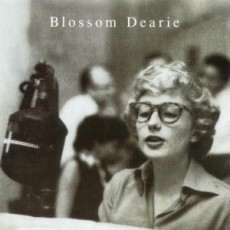
Blossom Dearie was born April 28, 1924 in East Durham, New York and as a child she studied Western classical piano but switched to jazz in her teens. After high school Dearie moved to New York City to pursue a music career and began to sing in groups such as the Blue Flames with the Woody Herman Orchestra and the Alvino Rey’s Blue Reys before starting her solo career.
She moved to Paris in 1952 and formed a vocal group, the Blue Stars of Paris, which included Michel Legrand’s sister Christine and Bob Dorough. In 1954 the group had a hit in France with a French version of “Lullaby of Birdland”. The Blue Stars would later evolve into the Swingle Sisters. Interestingly, on her first solo album released two years later, she plays the piano but does not sing.
After returning to the U.S. Blossom, Dearie made her first six American albums as a solo singer and pianist for Verve Records in the late 1950s and early 1960s, mostly in a small trio or quartet setting. In 1962, she recorded a radio commercial for Hires Root Beer. Through the Sixties she recorded with orchestra, performed in supper clubs around New York, appeared at Ronnie Scott’s in London and recorded four albums in the UK.
After a period of inactivity, by the ‘’70s she established her own label, Daffodil Records, lent her voice to “Mother Necessity” and “Figure Eight” on “Schoolhouse Rock!” and she collaborated with Johnny Mercer on one of his final songs “My New Celebrity Is You”. Her voice and songs have been featured in such films as Kissing Jessica Stein, The Squid and the Whale, My Life Without Me and The Adventures of Felix.
Blossom Dearie, vocalist, pianist and one of the last remaining supper-club performers, continued to perform in clubs until shortly before she passed away on February 7, 2006 at age 84 in Greenwich Village, New York.
Dose A Day-Blues Away
Daily Dose Of Jazz…
Marian McPartland was born Margaret Marian Turner on March 20, 1920 in Windsor, England. A musical prodigy from the time she could sit at a piano at age three, she pursued classical studies on piano and violin at the Guildhall School of Music and Drama in London. However, much to the dismay of her family, she developed a love for American jazz and musicians such as Duke Ellington, Fats Waller, Teddy Wilson, and Mary Lou Williams among many others.
By 1938, despite her family’s efforts to keep her at Guildhall, Marian left to join Billy Mayerl’s Claviers, a four-piano vaudeville act, performing under the stage name of Marian Page. The group toured throughout Europe during WWII entertaining Allied troops where she met and performed with Jimmy McPartland, and later married, moving to the United States.
1944 saw the McPartlands in New York with Marian forming her own trio and enjoying an 8-year engagement at the Hickory House bringing drummer Joe Morello into the fold. After many years of recording for labels such as Capitol, Savoy, Argo, Sesac, Time, and Dot, in 1969 she founded her own record label, Halcyon Records, before having a long association with the Concord Jazz label.
Marian launched a weekly radio program that featured recordings and interviews with guests in 1964 on WBAI-FM in New York City. This series paved the way for the NPR program Marian McPartland’s Piano Jazz that began on June 4, 1978 and is the longest-running cultural program on NPR as well as being one of the longest-running jazz programs ever produced on public radio.
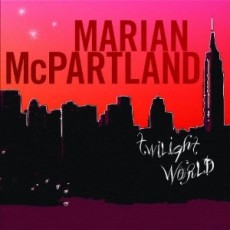
A master at adapting to her guest’s musical styles and having a well-known affinity for beautiful and harmonically rich ballads, McPartland also has recorded many tunes of her own. Her compositions include “Ambiance”, “There’ll Be Other Times”, “With You In Mind”, “Twilight World”, and “In the Days of Our Love”.
Marian a participated in 60 years of jazz evolution, was awarded a Trustees’ Lifetime Achievement Award Grammy for her work as an educator, writer, and host of Piano Jazz, and was appointed Officer of the Order of the British Empire (OBE) in 2010. Pianist and composer Marian McPartland passed away on August 20, 2013 of natural causes at her home in Port Washington, New York. She was 95 years old.
More Posts: piano
Daily Dose Of Jazz…
Reuben “Ruby” Braff was born on March 16, 1927 in Boston, Massachusetts He began playing in local clubs in the 1940s and in 1949, and he was hired to play with the Edmond Hall Orchestra at Boston’s Savoy Cafe. Ruby teamed up with Pee Wee Russell when the clarinet was making a comeback and they recorded several sessions for Savoy Records.
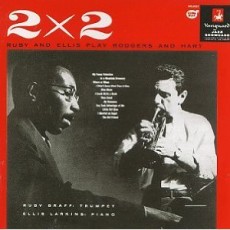
Relocating to New York in 1953 Braff easily fit into a variety of Dixieland and mainstream settings becoming in demand for band dates and recordings. He recorded as both leader and sideman working with such names as Vic Dickinson, Buck Clayton, Urbie Green, Ellis Larkins and Benny Goodman.
In the Sixties he was a member of George Wein’s Newport All-Stars but for a number of years work was hard to come by for the Dixieland player until the 70s when he formed a quartet in 1973. Following this he freelanced in different small combos and duets ultimately recording with Scott Hamilton’s quintet and sparring with guitarist Howard Alden.
Ruby Braff, cornetist and trumpeter who played in the genres of Dixieland, mainstream jazz and swing passed away on February 10, 2003 in Chatham, Massachusetts.