

Daily Dose Of Jazz…
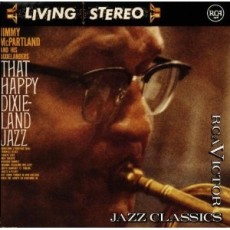
James Dugald McPartland was born on March 15, 1907 in Chicago, Illinois and due to family problems caused Jimmy and his siblings to be partly raised in orphanages. After being kicked out of one orphanage for fighting, he got in further trouble with the law. Fortunately, he had started violin at age 5, then took up the cornet at 15 and credits music with turning him around.
A member of the legendary Austin High Gang in the 920s, they would study and attempt duplication of recordings by The New Orleans Rhythm Kings and visit with Louis Armstrong and King Oliver’s Creole Jazz Band at Lincoln Gardens. After playing through high school, their first musical job was under the name The Blue Friars. In 1924, at age 17, McPartland was then called to New York to take Bix Beiderbecke’s place in the Wolverine Orchestra and who gave him a cornet he would play throughout his career.
From 1926 to the end of the decade, Jimmy worked with Art Kassel, the McKenzie-Condon Chicagoans, Ben Pollack and Benny Goodman, moonlighted in Broadway pit bands and played in a number of small combos. By the thirties he was back in Chicago working with his brother at the Three Deuces and working with other bands around the city. He spent time in South America, returned and led his own bands until drafted into WWII.
Upon his return McPartland worked with Willie “The Lion” Smith’s band that won a Grammy for the soundtrack to the 1954 film After Hours. He soon met and married Marian, encouraged her to form her own group and subsequently landed a long residency at the Hickory House. Jimmy went on to try his hand at acting resulting in a featured role in a Sal Mineo and Ralph Meeker episode “The Magic Horn” on The Alcoa Hour in 1956.
Over the course of his career James McPartland has played with Gene Krupa, Jack Teagarden, Eddie Condon, Pee Wee Russell, Bud Freeman, Glenn Miller, Benny Goodman, Lil Armstrong and George “Pops” Foster to name a few while also guest starring with many bands and at festivals around the world. Although he and Marian divorced in 1970, they remained friends, worked together and remarried shortly before his death of lung cancer on March 13, 1991 in Port Washington, New York, two days shy of his 84th birthday.
More Posts: cornet
Daily Dose Of Jazz…
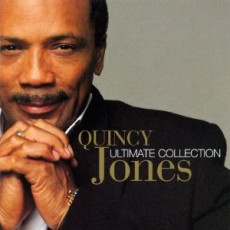
Quincy Delight Jones, Jr. was born on March 14, 1933 in Chicago, Illinois. When he was ten, his family moved to Bremerton, Washington, a suburb of Seattle. He first fell in love with music when he was in elementary school, and tried nearly all the instruments in his school band before settling on the trumpet. While barely in his teens attending Garfield High, Quincy befriended then-local singer-pianist Ray Charles and the two youths formed a combo, eventually landing small club and wedding gigs.
At 18, the young trumpeter won a scholarship to Berklee College of Music in Boston, Massachusetts but dropped out abruptly when he received an offer to go on the road with bandleader Lionel Hampton. The stint with Hampton led to work as a freelance arranger and settling in New York, throughout the 1950s he wrote charts for Tommy Dorsey, Gene Krupa, Sarah Vaughan, Count Basie, Duke Ellington, Dinah Washington, Cannonball Adderley and Ray Charles.
In 1964 Quincy won his first Grammy for Best Instrumental Arrangement of “I Can’t Stop Loving You”, in 1968 he won his second Grammy for Best Instrumental Performance with “Walking In Space” and that same year along with his songwriting partner Bob Russell became the first African Americans to be nominated for an Academy Award for Best Original Song for “The Eyes Of Love” and he became the first African American to be nominated twice within the same year when for Best Original Score for the 1967 film In Cold Blood.
His firsts would continue in 1971 when named musical director/conductor of the Academy Awards ceremony, being first to win the Academy’s Jean Hersholt Humanitarian Award, and He is tied at 7 with sound designer Willie D. Burton as the most Oscar-nominated African American.
His musical achievements are too numerous to list as they span the gambit from film scores such as The Pawnbroker, In The Heat of the Night, The Italian Job, MacKenna’s Gold, The Getaway and The Color Purple to his jazz works “Body Heat” and “Big Band Bossa Nova” from which Soul Bossa Nova was used in the Austin Powers movies to his crowning glories with Miles Davis last release “Live at the Monteux Jazz Festival”, his work with Michael Jackson’s “Thriller” and the charity song “We Are The World”. He continues to produce, conduct, arrange and compose.
More Posts: drums,french horn,piano,synthesizer,trumpet,vocal
Daily Dose Of Jazz…
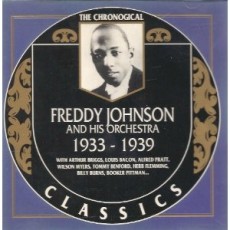
Freddy Johnson was born on March 12, 1904 in New York City. He eventually gained fame and popularity in the 1930s as a swing pianist. He began playing professionally as accompanist to Florence Mills and then formed his own band in 1924. In 1925 he worked with Elmer Snowden and in 1926 he worked with Billy Fowler, then briefly with Henri Saparo and Noble Sissle before joining Sam Wooding’s band on a European tour in 1928.
Wooding and Johnson parted ways a year later and Johnson returned to Paris to do solo work. While in Paris, Freddy along with trumpeter Arthur Briggs and put together a band. Between late 1933 and 1934 Johnson worked with Freddy Taylor’s band, then left for work in Belgium and The Netherlands. In the mid 30’s he made some recordings with the Quintette du Hot Club de France.
While living in Amsterdam he co-lead a band with Lex Van Spall, and they played regularly at the Negro Palace in a trio with Coleman Hawkins. He later worked at the Negro Palace, then with Max Woiski at La Cubana, in Amsterdam where he was arrested by the Nazis and was remanded to a prison camp in Bavaria from 1942-44.
After returning to the States he worked with George James and Gavin Bushell in New York City but by the late 40s and early 50s he worked mostly as a piano and voice coach and also did some solo residencies at Well’s New York. Soon after a touring stint in Europe he became very ill with cancer, infirmed at a Copenhagen hospital in 1960, returned to New York and stayed in St. Barnabas Hospital until his death on March 24, 1961.
More Posts: piano
Daily Dose Of Jazz…
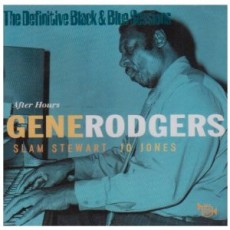
Gene Rodgers was born on March 5, 1910 in New York City. He worked professionally as a pianist from the mid-1920s and over the next few years made recordings with Clarence Williams and King Oliver while also playing with Chick Webb and Teddy Hill.
Rodgers started his own variety show in the 1930s, doing tours of Australia and England recording with Benny Carter in 1936 while in the latter. Upon his return to the States in ‘39 he played with Coleman Hawkins, Zutty Singleton and Erskine Hawkins into the early 40s. During the Forties he worked in Hollywood appearing in the film Sensations of 1945 with Cab Calloway and Dorothy Donegan. After this he worked mainly in New York, leading a trio for many years.
Rodgers appears, with opening title credits, in the 1947 film “Shoot To Kill”, and appearing in the film are two of his compositions “Ballad of the Bayou” and later is “Rajah’s Blues”.
Rodgers recorded sparingly as a leader; he did two sides for Vocalion in 1936, four in a session for Joe Davis in 1945, and albums as a trio leader for EmArcy, Black & Blue Records and 88 Up Right. He played with the Harlem Blues and Jazz Band in 1981-82.
Gene Rodgers, pianist and arranger, best known for his contributions on Coleman Hawkins’ 1939 recording of “Body and Soul”, passed away on October 23, 1987 in New York City.
More Posts: piano
Daily Dose Of Jazz…
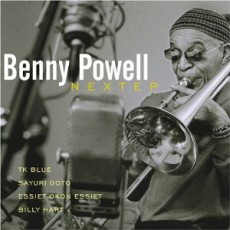
Benjamin Gordon Powell Jr. was born on March 1, 1930 in New Orleans, Louisiana. He first played professionally at age 14 and by 18 he was playing with Lionel Hampton. In 1951 he left Hampton’s band and joined Count Basie, where he remained until 1963. Powell takes the trombone solo in the bridge of Basie’s 1955 recording of “April In Paris”.
After leaving Basie, Benny freelanced in New York City and from 1966 to 1970 he was a member of the Thad Jones-Mel Lewis Jazz Orchestra, playing Monday nights at the Village Vanguard. Among other engagements, he played in the house band of the Merv Griffin Show, relocating to Los Angeles, California when the show moved to the West Coast in 1970.
During this period Powell did extensive work as a session musician working with Abdullah Ibrahim, John Carter and Randy Weston. In the 80s he moved back to New York and added educator to his resume becoming part of the Jazzmobile and later, in 1994 teaching at the New School for Jazz and Contemporary Music.
Benny Powell, tenor and bass trombonist, died following back surgery on June 26, 2010 in Manhattan, New York City. He was 80 years old.
More Posts: trombone