

Daily Dose Of Jazz…
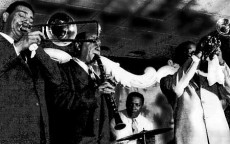
George Dorman “Scoops” Carry was born on January 23, 1915 in Chicago, Illinois. His mother a music teacher, his brother Ed a Chicago based bandleader and guitarist put Scoops in good company during his childhood. Starting on horn at the age of eight, he later went on to study at the Chicago College of Music and Iowa University.
He worked with Cassino Simpson, the Midnight Revellers and Boyd Atkin’s Firecrackers in the late 1920s and 30s while still a teenager. In 1931 Carry played with Lucky Millinder in RKO theater palaces. Reuniting with his brother in 1932, the pair co-led an orchestra through the middle of the 1930s. Following this, Scoops played with Zutty Singleton, Fletcher Henderson and Roy Eldridge. By 1938 he was with Art Tatum, a year later with Horace Henderson and at the end of the decade he worked briefly with Darnell Howard before joining Earl Hines’s band in 1940.
Carry remained in Hines’s employ until 1946, working with him in both large and small ensemble settings. After his tenure with Hines, Carry left music and entered law school in 1947, eventually working in the office of the Illinois state attorney.
Scoops Carry, alto saxophonist and clarinetist during the swing era, passed away on August 4, 1970.
Daily Dose Of Jazz…
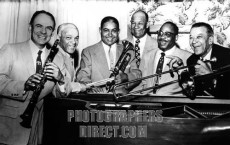
Wallace Bishop was born February 17, 1906 in Chicago, Illinois and started on drums as a teenager, studying under Jimmy Bertrand. His first professional gig was with Art Sims and his Creole Roof Orchestra in Milwaukee in 1926. Around this time he also played with Jelly Roll Morton, Bernie Young, Hughie Swift, Richard M. Jones and Tommy Dorsey.
Often addressed as “Bish”, from 1928 to 1930 he played with Erskine Tate followed with the Earl Hines Orchestra from 1931-1937. By the 1940s he was playing with Jimmie Noone, Coleman Hawkins, Don Redman, Phil Moore, Foots Thomas, John Kirby and Sy Oliver among others.
While touring Europe with Buck Clayton in 1949, Wallace elected to remain there, and found work both with noted European jazz musicians and with touring or expatriate Americans, including Bill Coleman, Don Byas, Ben Webster, Kid Ory, Milt Buckner, Buddy Tate and T-Bone Walker. Bishop recorded only two pieces as a bandleader in 1950, with a trio, but he continued to record regularly into the 1970s.
Wallace Bishop, a subtle and supportive jazz drummer who was one of the finest drummers of the swing era, passed away on May 2, 1986 in Hilversum, Holland.
Daily Dose Of Jazz…
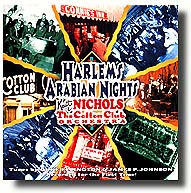
Keith Nichols was born on February 13, 1945 in Ilford, Essex, UK and took his first music lessons at age five on piano and accordion. As a youth he was a child actor and an award-winning accordionist, Great Britain Junior Champion in 1960.
He turned professional after graduating from Gulldhall School of Music, touring with the Levity Lancers for seven years playing trombone, piano and tuba. From the early 70s he has performed in concert ragtime at London’s South Bank, came to the U.S. in 1976 with Richard Sudhalter’s New Paul Whiteman Orchestra, recorded three solo albums for EMI and is a frequent sideman for the label and formed the Midnite Follies Orchestra focusing on the music of Duke Ellington and Cab Calloway.
He has gigged and recorded with Bing Crosby, arranged for the New York Jazz Repertory Company, Dick Hyman and the Pasadena Roof Orchestra, and has worked with Harry Gold, Digby Fairweather and Claus Jacobi.
The multi-instrumentalist, arranger and award-winning accordionist in his youth continues to perform and record prolifically in the UK, America and Europe with projects based in ragtime, and lectures at the Royal Academy of Music.
Daily Dose Of Jazz…
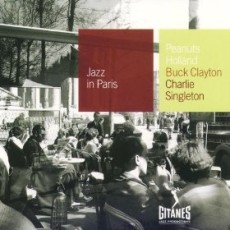
Herbert Lee “Peanuts” Holland was born on February 9, 1910 in Norfolk, Virginia. Holland learned to play trumpet at the Jenkins Orphanage. A veteran of the Alphonse Trent territory band with whom he recorded and played with from 1928 to 1933, he also played with Al Sears, the Jeters-Pillars Orchestra, Willie Bryant Jimmie Lunceford and Lil Armstrong’s band.
In 1938 Peanuts led his own very successful band prior to moving to New York City the following year. There he joined the big bands of Coleman Hawkins and Fletcher Henderson. Through the first half of the Forties he was part of Charlie Barnet’s band and in 1946 with Don Redman toured Europe.
Holland elected to stay in Europe living in Paris and Stockholm and performing with his own small combo. He amassed a catalog of 46 recordings for European labels between 1946 and 1960 regularly working with such jazz names as Mezz Mezzrow, Don Byas, Billy Taylor and Claude Bolling.
Jazz trumpeter Peanuts Holland best known for his contributions to swing jazz, passed away on February 7, 1979 in Stockholm, Sweden, just two days shy of his 69th birthday.
Daily Dose Of Jazz…
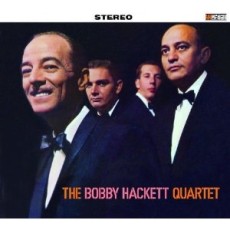
Bobby Hackett was born January 31, 1915 and raised in Providence, Rhode Island. At an early age he played the ukulele and by the time he was twelve, he was playing guitar, violin and had bought his first cornet. Leaving high school after his freshman year he took a steady job with a band that performed seven days a week at the Port Arthur and playing guitar regularly at the Rhodes and Arcadia ballrooms that often broadcasted on Providence radio and when Cab Calloway arrived short-handed and invited him to fill in.
In the fall of 1932 Bobby was recruited by The Herbie Marsh Orchestra, spent the summer of 1933 playing with Payson Re’s band, met Pee Wee Russell, by 1934, and playing college gigs with his band The Harvard Gold Coast Orchestra on weekends between Providence and Boston throughout 1935 and 36.
He worked with a new band at Nick’s in Greenwich Village, with Benny Goodman, Eddie Condon, Jack Teagarden and Teddy Wilson, played the new York World’s Fair in 1939, did the club circuit in New York, toured, recorded with his own band on MCA, took a seat with the Horace Heidt Musical Knights and recorded on the soundtrack of Fred Astaire vehicle “Second Chorus”.
After a dental surgery Bobby’s lip was in bad shape making it difficult for him to play, however, Glenn Miller offered him a job as a guitarist with the Miller Band and playing short trumpet solos. During the 1950s, he made a series of albums of ballads with a full string orchestra, produced by Jackie Gleason, in the Sixties toured with singer Tony Bennett, and by the early 1970s, Hackett performed separately with Dizzy Gillespie and Teresa Brewer. In his later years, he continued to perform in a Dixieland style even as trends in jazz changed.
Trumpeter Bobby Hackett passed away on June 7, 1976 from a heart attack. In 2012, he was selected to be inducted into the Rhode Island Music Hall of Fame.
More Posts: bandleader,cornet,guitar,trumpet