

Daily Dose Of Jazz…
Ivon Karel De Bie was born August 13, 1914 in Molenbeek-Saint-Jean, Brussels, Belgium. He received piano lessons from the age of six for ten years and around 1936 he began working as an amateur with Jimmy Turner, George Clais and with the Blue Blythe Players.
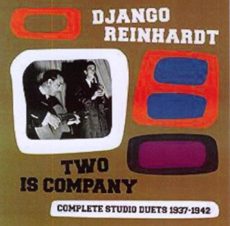
From 1938 onwards he directed his own bands as well as playing and recording beginning in the Forties in the groups of Fud Candrix, Jeff De Boeck and his metro band. In 1942 Ivon recorded his debut with a quartet with Andre Mersch, Gene Kempf and Jeff De Boeck on the Metrophone label. That same year he accompanied Django Reinhardt on a session for the Belgian label Rhythme, recording Vous et moi, Distraction, Blues en Mineur and Studio 24.
He went on to continue recording with Candrix in Berlin, with Hubert Rostaing in Brussels and with members of the Stanbrender Orchestra for the Olympia label. After the World War II De Bie directed a big band recordings for Decca Records, and also played with Robert De Kers.
From the 1950s, Ivon directed the orchestra recordings of the Middelkerke Casino played in bands led by David Bee, as well as with Brother Powell and His Dixie Rag-a-Jazz Band and The Original Syncopators Gang. In 1957 he became the artistic director of the Belgian department of RCA Victor and his last recordings were made in 1983 with the BRT Jazzorkest OLV under the direction of Etienne Verschueren.
Over the course of his career in the field of jazz he was involved in 41 recording sessions between 1941 and 1983. He wrote a series of jazz compositions such as Dixie Souvenir, partly under the pseudonym Don Bayo. His piano style was influenced by Billy Kyle, Bob Zurke, Earl Hines and Art Tatum. Pianist, composer and bandleader Ivon De Bie passed away in 1989 in Brussels.

More Posts: piano
Daily Dose Of Jazz…
Lester Boone was born August 12, 1904 in Tuskegee, Alabama and studied at the Illinois College of Music before beginning his career in the Chicago bands of Alex Calamese, Charlie Elgar, Clarence Black and Carroll Dickerson. At the end of the 1920s he played in Albert Wynn’s Creole jazz band and on his recording Down by the Levee for Vocalion Records.
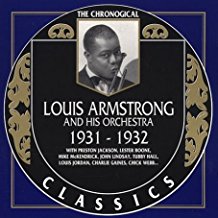
The following years he worked with Harry Dial, got his first big break playing with Earl Hines, and by the early Thirties was hitting with Louis Armstrong. He then moved on to play with Jerome Carrington, Emperor Marshall, Eubie Blake, the Mills Blue Rhythm Band and Jelly Roll Morton. Bouncing between Chicago and New York City he played with trumpeter Hot Lips Page and Eddie South. By 1941 he was accompanying Billie Holiday on her recording session of Am I Blue? on the Decca label.
With Tom Lord he was involved in 24 recording sessions between 1928 and 1941. From the early 1940s into the Sixties he played in New York with his own bands including with Everett Barksdale at clubs such as Harvey’s and the Lucky Bar.
Alto and baritone saxophonist and clarinetist Lester Boone, who had the honor of having the great Satchmo personally introduce his solo in that unmistakable growly voice of his, passed away in 1989.


Daily Dose Of Jazz…
Johnny Claes was born Octave John Claes on August 11, 1916 in London, England and received his education at Lord Williams’s School. He began playing trumpet in a jazz band that included Max Jones on reeds, and another with Billy Mason on piano. By the 1930s he had moved to the Netherlands, where he worked with Valaida Snow and Coleman Hawkins and in Belgium he worked with Jack Kluger’s.
Returning to England, Johnny led his own group, the Clay Pigeons, making a recording in 1942. Unfortunately for the jazz world in the late 1940s he abandoned his jazz career and settled in Belgium as a professional racing driver.
By 1955 Claes’ he had contracted tuberculosis and his health problems worsened. Finally trumpeter, bandleader and professional racer Johnny Claes succumbed to the disease in Brussels on February 3, 1956 at the age of 39.

More Posts: trumpet
Daily Dose Of Jazz…
Frank Traynor was born on August 8, 1927 in Melbourne, Victoria, Australia. He formed his first band, the Black Bottom Stompers, in 1949 and in 1951 he joined the Len Barnard Band. That same year he was voted best trombonist in the Make Way for the Bands poll and made his first recordings with this band.
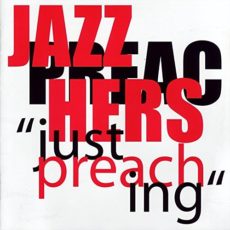
Traynor became a regular feature at Athol’s Abbey, an underground bar and grill on the corner of St Kilda Road and Park Street. In 1963, Traynor recorded an EP with Judith Durham titled, Judy Durham. Frank and his band the Jazz Preachers were also a feature of the Melbourne City Council’s – Free Entertainment in the Parks.
Founding the Melbourne Jazz Club in 1958, and not limiting his entrepreneurial skills to just jazz he also established and ran the Frank Traynor’s Folk and Jazz Club from 1963–75, which played a central role in the Australian folk revival.
Trombonist Frank Traynor led Australia’s longest continuously running jazz band, the Jazz Preachers, from 1956 until he was diagnosed with leukaemia and passed away on February 22, 1985 in Melbourne.

More Posts: trombone
Daily Dose Of Jazz…
Fletcher Allen was born on July 25, 1905 in Cleveland, Ohio and began his career in the mid-’20s as a member of Lloyd Scott’s Band in New York City. In 1927, he was off to Europe for the first time in a group under the direction of Leon Abbey, a bandleader whose pioneering efforts with jazz eventually led to a 1936 tour of India which he also participated in. In between, he went to Budapest with the Benny Peyton group in 1929 and hung out in Europe the following decade. While in Europe he performed on several collaborations with guitarist Django Reinhardt, among others.
Reinhardt recorded some of his arrangements and compositions, including the intoxicating Viper’s Dream. Allen also took advantage of the European base to take part in several tours involving top American performers such as Louis Armstrong, Freddy Taylor and Leon Abbey in the ’30s. It was during this time that he began leading his own band.
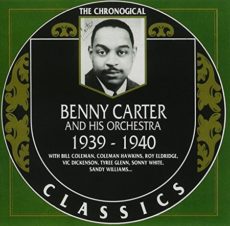
By 1938, he began performing with Benny Carter, something of a doppelgänger in that both men played alto saxophone and clarinet and had excellent reputations as arrangers and shows up several times in the extensive Carter discography. He went on to Later that year, Allen went to Egypt as a member of the Harlem Rhythmakers group during an era when American jazz musicians held court at swank Cairo hotels, a situation that would be quite inconceivable in modern times.
As World War II escalated Fletcher returned home to the States and at first found little work but eventually left the docks when he found that his new skills on baritone sax meant work filling in the sections of various New York big bands. His last job of any notoriety began in the early 70s with the big band of Fred “Taxi” Mitchell, meaning he was one New Yorker who always managed to find a taxi.
Saxophonist, clarinetist and composer Fletcher Allen, whose composition Viper’s Dream has become a jazz staple, passed away on August 5, 1995.
Sponsored By


#preserving genius