

Daily Dose Of Jazz…
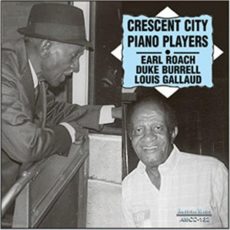
Duke Burrell was born on born July 9, 1920 in New Orleans, Louisiana and worked throughout his career in the Crescent City. He performed and recorded with Louis Jordan, Johnny Otis and on the final recordings of clarinetist Barney Bigard and the Pelican Trio along with Barry Martyn. He would reunite with Bigard for an Ellington segment recording with bassist Bobby Stone, drummer Louis Bellson and trumpeter Ray Nance.
By 1973 Duke became a bandleader and the following year formed the Louisiana Shakers that included Sammy Rimington, Sam Lee, McNeil Breaux and Teddy Edwards in the quintet lineup. He went on to lead four recording sessions between 1973 and 1976.
Pianist, composer, arranger and bandleader Duke Burrell passed away on August 5, 1993 in Los Angeles, California.
Sponsored By

www.whatissuitetabu.com

#preserving genius
More Posts: piano
Daily Dose Of Jazz…
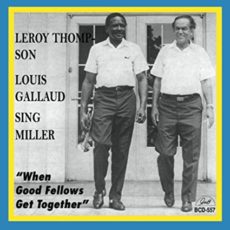
Sing Miller was born James Miller in New Orleans, Louisiana on June 17, 1914. He started out his career singing with the Harmonizing Browns Quartet and playing banjo, but in the late 1920s he switched to piano. He did solo freelance work and as an accompanist in New Orleans in the 1930s, playing with Percy Humphrey for a time.
Serving in the military during World War II, after his discharge he played with Earl Foster’s band from 1945 to 1961. During the 1960s he was a regular at Preservation Hall, working with Kid Thomas Valentine, Kid Sheik Colar, The Humphrey Brothers, Jim Robinson, and Polo Barnes. He did asolo tours of Europe in 1979 and 1981, and recorded two full-length albums under his own name, a 1972 effort for Dixie Records and one in 1978 for Smoky Mary.
Pianist Sing Miller, who was a longtime performer on the New Orleans jazz scene, passed away on May 18, 1990.
Sponsored By

#preserving genius
More Posts: piano
Daily Dose Of Jazz…
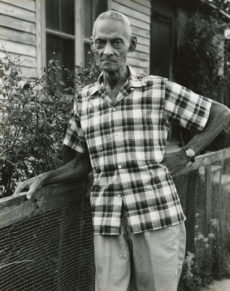
Lawrence Duhé was born April 30, 1887 in La Place, Louisiana. He played with Kid Ory in his youth, and followed Ory to New Orleans, Louisiana. There he played clarinet with Ory, King Oliver, Frankie Duson, and led his own band in Storyville.
Duhé moved to Chicago, Illinois in 1917 and his band became popular in the clubs and dance halls. They played in the stands at the notorious 1919 World Series. During the Roaring Twenties he led Sugar Johnnie’s New Orleans Creole Orchestra comprised of Lil Hardin, Sidney Bechet, King Oliver, Freddie Keppard, tubby Hall and Mutt Carey among others.
By the mid-1920s he had returned to New Orleans and for a time played with Armand J. Piron. After touring with the Rabbit Foot Minstrel Show, Lawrence worked out of Lafayette and New Iberia in Southwest Louisiana with such musicians as Evan Thomas and Bunk Johnson before retiring from music in the 1940s.
Clarinetist and bandleader Lawrence Duhé, passed away in Lafayette, Louisiana in 1960.
Sponsored By
www.whatissuitetabu.com
#preserving genius
More Posts: clarinet
Daily Dose Of Jazz…
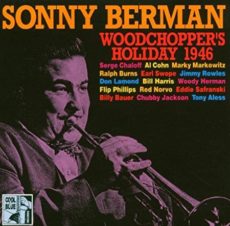
Saul “Sonny” Berman was born on April 21, 1925 in New Haven, Connecticut. He began touring at age sixteen and went on to work with Louis Prima, Harry James and Benny Goodman but is perhaps best known for his later work with Woody Herman.
Berman was distinguished by his passionate and innovative soloing and his versatility of tone, ranging from bold and emotional to sweetly muted. He also had a sense of humor which often made its way into a playfulness and joyfulness found in his solo work.
Trumpeter Sonny Berman died at the age of 21 in New York City from a drug overdose on January 16, 1947.
Sponsored By

#preserving genius
More Posts: trumpet
Daily Dose Of Jazz…
Theodore “Wingie” Carpenter was born on April 15, 1898 in St. Louis, Missouri. He lost his left arm as the result of an accident during his early teens, with the amputation performed by a noted surgeon who was an uncle of jazz musician Doc Cheatham. Sometime later, he took up the trumpet and by 1920 he was working in traveling carnival shows, and in 1921 he toured with Herbert’s Minstrel Band.
By 1926 he had settled in Cincinnati, Ohio and worked with Wes Helvey, Clarence Paige, Zack Whyte, and Speed Webb. In 1927, Wingie played in Buffalo, New York, with Eugene Primus. Off and on from late 1926 through 1928, he was featured on the Whitman Sisters’ Show with pianist Troy Snapp’s band.
During the early 1930s the trumpeter was featured with Smiling Boy Steward’s Celery City Serenaders and another Florida band led by Bill Lacey. In the mid-1930s, he became a touring regular with bandleaders including Jack Ellis, Dick Bunch, and Jesse Stone. By the late 1930s, Carpenter settled in New York City, where he worked with Skeets Tolbert and Fitz Weston.
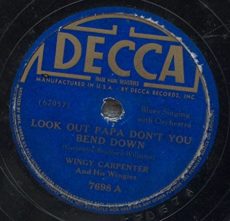
From 1939 on, Wingie worked as the leader of his own band through the 1960s, playing occasional dance dates and working for periods at well-known clubs such as The Black Cat, The New Capitol, Tony Pastor’s The Yeah Man, and other venues. He composed several works not limited to Look Out Papa Don’t You Bend Down, Preachin’ Trumpet Blues, Put Me Back In The Alley, Rhythm of The Dishes and Pans, and Team Up.
Trumpeter, vocalist and bandleader Wingie Carpenter, who was one of several one-armed trumpeters who worked in the music business, including similarly nicknamed Wingy Manone, passed away on July 21, 1975 in New York City.
Sponsored By
Bronze Lens
#preserving genius