


Daily Dose Of Jazz…
Leroy Jones was born on February 20, 1958 in New Orleans, Louisiana and began playing trumpet at the age of ten. By the time he was 12 he was leading the Fairview Baptist Church Marching Band, a group of young musicians organized by guitar and banjo player Danny Barker.
The musicians’ union forced Barker to disband the group in 1974, so Leroy became a union musician and took over the running of the group, renaming it the Hurricane Brass Band. By 1976 he had left the group, touring for a time with Eddie Vinson and Della Reese before forming his own group, the Leroy Jones Quintet.
In 1991 Jones joined the big band of Harry Connick, Jr., and that exposure with the band, including the opportunity for the Leroy Jones Quintet to open for Connick. This in turn led to him releasing his first album under his own name titled Mo’ Cream From The Crop on the Columbia Records in 1994. Trumpeter Leroy Jones, who has ten albums as a leader, has also appeared with the Preservation Hall Jazz Band and Dr. John and continues to tour and record with his quintet.
Sponsored By

Voices From The Community

#preserving genius
More Posts: trumpet

Daily Dose Of Jazz..
Robert Coull Wellins was born January 24, 1936 in Glasgow, Scotland and studied alto saxophone and harmony with his father Max, and also played piano and clarinet when young. Joining the RAF as a musician playing tenor saxophone and after demobilization he played with a few Scottish bands before moving to London. England in the mid-1950s.
He was a member of the Buddy Featherstonhaugh quintet between 1956 and 1957 with Kenny Wheeler. Around that time Wellins also joined drummer Tony Crombie’s Jazz Inc., where he first met pianist Stan Tracey, and then joined Tracey’s quartet in the early 1960s.
In the mid-1970s he led his own quartet with pianist Pete Jacobsen, bassist Adrian Kendon and drummer Spike Wells. Ken Baldock, and then Andy Cleyndert in the 1980s would replace Kendon. He also worked with Lionel Grigson in 1976 and by the end of the 1970s he was a member of the Jim Richardson Quartet.
The 1980s had him forming a quintet with fellow saxophonist Don Weller and Errol Clarke on piano, Cleyndert and Wells, while the latter featured guitarist Jim Mullen and Pete Jacobsen on piano. Following this group, Wellins led various quartets that included pianist Liam Noble, bassist Simon Thorpe and Dave Wickens on drums. He renewed his association with Spike Wells and put together a quartet with pianist Mark Edwards and bassist Andrew Cleyndert.
In 2012, Wellins was the subject of a documentary film, Dreams are Free, directed by Brighton-based director Gary Barber, tracing the rise, fall and redemption of Wellins. It covered his addiction and depression, how he overcame it and rediscovered the desire to play after ten years away from jazz.
Tenor saxophonist Bobby Wellins, best known for his 1965 collaboration with Stan Tracey on jazz suite inspired by Dylan Thomas’s Under Milk Wood, passed away on October 27, 2016 after being ill for some years.

Take A Dose On The Road
#preserving genius
More Posts: saxophone

Daily Dose Of Jazz…
Kenny Davern was born John Kenneth Davern on January 7, 1935 in Huntington, Long Island, New York of Austrian-Irish ancestry. After hearing Pee Wee Russell the first time, he was convinced that he wanted to be a jazz musician and at the age of 16 he joined the musician’s union, first as a baritone saxophone player. In 1954 he joined Jack Teagarden’s band, and after only a few days with the band he made his first jazz recordings.
He would later work with bands led by Phil Napoleon and Pee Wee Erwin before joining the Dukes of Dixieland in 1962. The late 1960s found him free-lancing with, among others, Red Allen, Ralph Sutton, Yank Lawson and his lifelong friend Dick Wellstood.
Davern had taken up the soprano saxophone, and when a spontaneous coupling with fellow reedman Bob Wilber at Dick Gibson’s Colorado Jazz Party turned out be a huge success, one of the most important jazz groups of the 1970s, Soprano Summit, was born. The two co-led the group switching between the clarinet and various saxophones, and over the next five years Soprano Summit enjoyed a very successful string of record dates and concerts. When the group disbanded in 1979, he devoted himself to solely playing clarinet, preferring trio formats with piano and drums.
He revived his collaboration with Bob Wilber in 1991 and the new group was called Summit Reunion. Leading quartets since the 1990s, Kenny preferred the guitar to the piano in his rhythm section, employing guitarists Bucky Pizzarelli, Howard Alden and James Chirillo. He appeared numerous times at the Colorado Springs Invitational Jazz Party; in 1997 he was inducted into the Jazz Hall of Fame at Rutgers University, and in 2001 he received an honorary doctorate of music at Hamilton College, Clinton, New York.
Mainly playing in traditional jazz and swing settings, he ventured into the free-jazz genre collaborating in 1978 with avant-garde players Steve Lacy, Steve Swallow and Paul Motian that produced the album titled Unexpected. He also held an ardour and knowledge of classical music. Clarinetist Kenny Davern passed away of a heart attack at his Sandia Park, New Mexico home on December 12, 2006.
Put A Dose In Your Pocket
#preserving genius
Daily Dose Of Jazz…
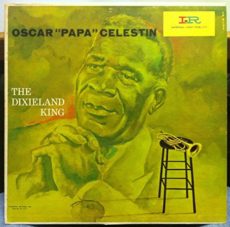
Oscar “Papa” Celestin was born on January 1, 1884 in Napoleonville, Louisiana to a Creole family. As a youth he worked on rural Louisiana plantations but eager for a better life, he worked as a cook for the Texas & Pacific Railroad, saved up money and bought used musical instruments. He played guitar and trombone before deciding on cornet as his main instrument. He took music lessons from Claiborne Williams, who traveled down the Bayou Lafourche from Donaldsonville.
Celestin played with the Algiers Brass Band by the early 1900s, and with various small town bands before moving to New Orleans in 1904, at age 20. There he played with the Imperial, Indiana, Henry Allen senior’s Olympia Brass Band, and Jack Carey’s dance band. Early in his career he was sometimes known as Sonny Celestin. Around 1910 he landed a job as leader of the house band at the Tuxedo Dance Hall on North Franklin St. at the edge of Storyville.
Keeping the name Tuxedo as the band’s name after the Dance Hall closed, they dressed in tuxedos and became one of the most popular bands hired for society functions, both black and white. He co-led the Tuxedo Band with trombonist William Ridgely and made their first recordings during the Okeh Records field trip to New Orleans in 1925. Following a fallout with Ridgely, the two led competing Tuxedo bands for about five years. Celestin’s Original Tuxedo Orchestra had Louis Armstrong, Bill Mathews, Octave Crosby, Christopher Goldston, Joe Oliver, Mutt Carey, Alphonse Picou and Ricard Alexis as a members over the years and made an additional series of recordings for Columbia Records through the 1920s. He also led the Tuxedo Brass Band, one of the top brass bands in the city.
Forced out of the business by depression economics, Papa worked in a shipyard until putting together another band after the World War II. The new Tuxedo Brass Band was tremendously popular and became a New Orleans tourist attraction. By 1953 he appeared in the travelogue Cinerama Holiday, became a regular feature at the Paddock Lounge on Bourbon Street and gave a command performance for President Eisenhower at the White House. He made regular radio broadcasts, television appearance, and more recordings with his last recording was singing on Marie LaVeau in 1954.
Bandleader, trumpeter, cornetist and vocalist Papa Celestin passed away in New Orleans, Louisiana on December 15, 1954, amassing 4000 people who marched in his funeral parade. The Jazz Foundation of New Orleans had a bust made and donated to the Delgado Museum in New Orleans, in honor of his contributions to the genre. #preserving genius
Give A Gift Of Jazz – Share
Daily Dose Of Jazz…
Ted Nash was born December 28, 1960 in Los Angeles, California. His trombonist father, Dick, and reedman uncle Ted, were both well-known jazz and studio musicians and both exposed and encouraged the young man. He started playing the piano at seven, by 12 the clarinet, and a year later he picked up the alto saxophone. In high school he studied jazz improvisation with vibraphonist Charlie Shoemake and had his first gig when he was This was followed by a week with Lionel Hampton in Hawaii.
Ted went on to win an audition to play lead alto with the Quincy Jones band, and by the time he turned 17 he had toured Europe, appeared on three records, and was performing regularly with the likes of Don Ellis, Louie Bellson and Toshiko Akiyoshi, as well as leading his own quintet. The following year he moved to New York City, recorded Conception, his debut album as a leader for the Concord label and became a regular member of a variety of ensembles. He worked with the Gerry Mulligan Big Band, the National Jazz Ensemble and for ten years would be a part of the Mel Lewis Jazz Orchestra.
An accomplished composer his first composition, Tristemente, was recorded by Louie Bellson, he has been commissioned by the Davos Musik Festival in Switzerland to compose works featuring a string quartet in a jazz setting, and commissioned by the Jazz at Lincoln Center Orchestra to compose the well-received Portrait in Seven Shades. It is dedicated to the representation of seven different artists, each in their own movement and was nominated for a Grammy in 2010. The artists were Claude Monet, Salvador Dalí, Henri Matisse, Pablo Picasso, Vincent van Gogh, Marc Chagall, and Jackson Pollock.
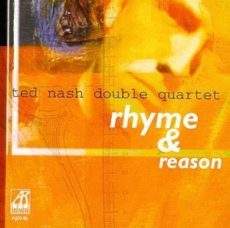
Composer and alto saxophonist Ted Nash leads an eclectic group called Odeon, and is a member of the Jazz Composers Collective along with Ben Allison, Frank Kimbrough, and Michael Blake.
Sponsored By

More Posts: saxophone