

Daily Dose Of Jazz…
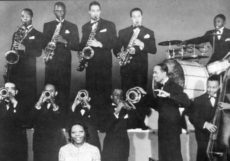
Ben Thigpen was born Benjamin F. Thigpen on November 16, 1908 in Laurel, Mississippi. He played piano as a child and was trained by his sister Eva. He played in South Bend, Indiana with Bobby Boswell in the 1920s before moving to Chicago, Illinois to study under Jimmy Bertrand.
Chicago saw Ben playing with many noted Chicago bandleaders and performers, including Doc Cheatham. He played with Charlie Elgar’s Creole Band from 1927 to 1929 but never recorded with them. Following this he spent time in Cleveland, Ohio with J. Frank Terry, and then became the drummer for Andy Kirk’s Clouds of Joy, where he stayed from 1930 to 1947.
Much of his work is available on collections highlighting the piano work of Mary Lou Williams, who also played in this ensemble. After his time performing and recording with Kirk, his career was not well documented and it appears that he never recorded as a leader. He did however, lead his own quintet in St. Louis, Missouri, recorded with Mary Lou Williams, Booker Collins and Ted Robinson and also recorded Dixieland with Singleton Palmer in the 1960s.
Drummer Ben Thigpen, father of Ed Thigpen, who followed in his footsteps, passed away on October 5, 1971.

Take A Dose On The Road

More Posts: drums
Daily Dose Of Jazz…
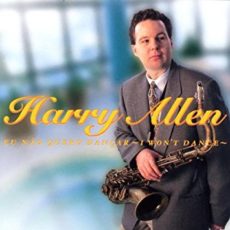
Harry Allen was born in Washington, D.C. on October 12, 1966. When he was a small child, his father, a big band drummer, played records for him including recordings of tenor saxophonist Paul Gonsalves, which made a lasting impression. By his high school years he was recognized as an exceptional talent being able to uncannily play tunes such as Body and Soul in the style of legendary tenor players Coleman Hawkins, Ben Webster, Flip Phillips, or Sam Donahue.
While in high school he also added the traditional influences from Scott Hamilton to his repertoire before attending and graduating from Rutgers University in 1988. A master interpreter of standards, he has recorded with Daryl Sherman, Joe Cohn and Jan Lundgren. He is best known for his work with John Colianni, Keith Ingham, John Pizzarelli and Bucky Pizzarelli. The tenor saxophonist has about two dozen albums under his belt and continues to perform , record and tour.
Jazz Is Global – Share
More Posts: saxophone
Daily Dose Of jazz…
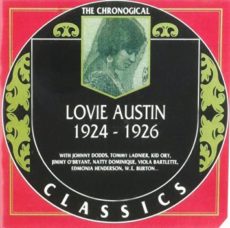
Lovie Austin was born Cora Calhoun on September 19, 1887 in Chattanooga, Tennessee and grew up with eight brothers and sisters. She studied music theory at Roger Williams University and Knoxville College which was uncommon for African American woman and jazz musicians alike during the time.
In 1923, Lovie Austin decided to make Chicago, Illinois her home, living and working there for the rest of her life. She was often seen elegantly dressed, racing around town in her Stutz Bearcat with leopard skin upholstery. Her early career was in vaudeville, playing piano and performing in variety acts. Accompanying blues singers was Lovie’s specialty, and can be heard on recordings by Ma Rainey – Moonshine Blues, Ida Cox – Wild Women Don’t Have the Blues, Ethel Waters – Craving Blues, and Alberta Hunter – Sad ‘n’ Lonely Blues.
She led her own band, the Blues Serenaders, which usually included trumpeters Tommy Ladnier, Bob Shoffner, Natty Dominique, or Shirley Clay on cornet, Kid Ory or Albert Wynn on trombone, and Jimmy O’Bryant or Johnny Dodds on clarinet, along with banjo and occasional drums. The Blues Serenaders developed their own unique sound within the jazz genre, straying away from the typical jazz band paradigm.
Austin worked with many other top jazz musicians of the 1920s, including Louis Armstrong. They worked on a song together that was called Heebie Jeebies. Her skills as songwriter can be heard in the classic Down Hearted Blues, co-written with Alberta Hunter. Singer Bessie Smith turned the song into a hit in 1923. She was also a session musician for Paramount Records and recorded with the Blues Serenaders in 1923.
When the classic blues craze waned in the early 1930s, Lovie became the musical director for the Monogram Theater in Chicago where all the T.O.B.A. acts played. She worked there for 20 years and during wartime, she was reported to be working as a security guard at a defense plant to support herself.
After World War II she became a pianist at Jimmy Payne’s Dancing School at Penthouse Studios, and performed and recorded occasionally.
In 1961, nearly forty years after participating in her first recordings, Lovie recorded Alberta Hunter with Lovie Austin’s Blues Serenaders, as part of Riverside Records’ “Living Legends” series, produced by radio WHAT-FM disc jockey and jazz critic Chris Albertson. Austin’s songs included Sweet Georgia Brown, C Jam Blues and Gallon Stomp.
Pianist Lovie Austin, who is cited as Mary Lou Williams greatest influence and one of the best pianists during the Harlem Renaissance, retired in 1962 and passed away on July 10, 1972 in Chicago.

More Posts: piano
Daily Dose Of Jazz…
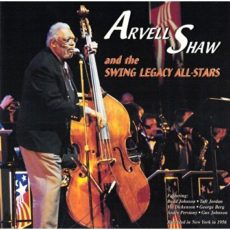
Arvell Shaw was born on September 15, 1923 in St. Louis, Missouri and learned to play tuba in high school, but switched to bass soon after. In 1942 he worked with Fate Marable on the Mississippi riverboats, then served in the Navy from 1942 to 1945.
After his discharge Arvell played with Louis Armstrong’s last big band, from 1945 to 1947. He and Sid Catlettthen joined the Louis Armstrong All-Stars until 1950, when he left to study music. He returned to play with Armstrong from 1952 to 1956, and performed in the 1956 musical High Society.
Following this he worked at CBS with Russ Case, did a stint in the Teddy Wilson Trio, recorded with Red Allen in 1957 and played with Benny Goodman at the 1958 Brussels World’s Fair. After a few years living and performing in Europe, he played again with Goodman on a tour of Central America in 1962. From 1962–64 Shaw played again with Armstrong, and occasionally accompanied him through the end of the 1960s.
After the Sixties he mostly freelanced in New York and kept playing until his death. He recorded only once as a leader, a live concert from 1991 of his Satchmo Legacy Band. Double-bassist Arvell Shaw, who recorded with Armstrong and Wilson, passed away on December 5, 2002 in Roosevelt, New York.
Give A Gift Of Jazz – Share
More Posts: bass
Daily Dose Of Jazz…
Lauderic Rex Caton was born on August 31, 1910 in Arima, Trinidad and Tobago, the fourth son and last among the eight children of Robert Caton, who was of Saint Lucian descent, and Margaret Caton. An autodidact on guitar, he was also proficient on saxophone, double bass, and banjo, and began playing professionally at the age of 17.
After spending time in Guadeloupe and Martinique, he moved to Europe in 1938, playing in Paris with Martinican musician Oscar Alemán. He then moved to Brussels and played with Ram Ramirez, Jean Omer, Harry Pohl, and Jamaican Joe Smith. While in Antwerp, Caton played with Gus Clark and Tommy Brookins.
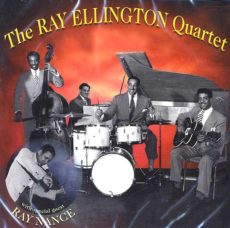
Influenced by Lonnie Johnson and Charlie Christian, he began amplifying his guitar in 1940. Lauderic played in England with Don Marino Barreto and during his tenure met and befriended saxophonist Louis Stephenson, who became a frequent collaborator. He led a house band at Jig’s Club working with Cyril Blake, Johnny Claes, Bertie King, Harry Parry, Dick Katz, and Coleridge Goode. By the 1940s he played with Ray Ellington and Ray Nance, playing under the pseudonym Lawrence Rix for legal reasons.
Guitarist Lauderic Caton went on to teach and build custom amplifiers. He passed away in London, England on February 19, 1999 at age 88 and was interred in Port Of Spain, Trinidad.
Dose A Day-Blues Away
More Posts: guitar