

Daily Dose Of Jazz…
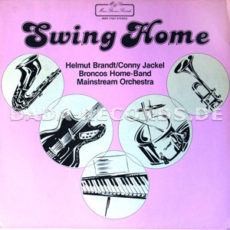
Conny Jackel was born Horst Konrad Jackel on August 30, 1931 in Offenbach am Main, Germany. He first worked as a steel fitter, then in 1951 he played at the conservatory and in the clubs of the US Army in France, the Netherlands and Germany in 1952. In 1955 he became a member of Helmut Brandt Combo, contributing to their success.
By 1959 Jackel had joined the Harald Banter Band in Cologne playing demanding arrangements for two years. In 1961 he joined the orchestra of Erwin Lehn in Stuttgart, where he also worked with Miles Davis, Chet Baker, Dizzy Gillespie and Frank Sinatra on stage.
From 1964 to 1969 he was a member of the Albert Mangelsdorff led Jazz Ensemble of Hessischer Rundfunk . From 1967 Conny played first trumpet in the Dance Orchestra of Hessischer Rundfunk under Willy Berking and the HR Big Band headed by Heinz Schönberger . In addition, he performed with Joki Friendand, Rudi Sehring, Attila Zoller and Charly Antolini. He recorded with Gustl Mayers Swing All Stars and the trio of Manfred Kullmann . Then he was a member of the jazz band Hanauer Sugarfoot Stompers and played with other traditional bands of the region such as the Phoenix Jazz Band.
In 1999 a bout with cancer caused Jackel to have his lower jaw removed forcing him to give up playing trumpet. Occasionally he would play drums as also in the Book Readers active as a drummer. For his contributions to jazz, he was inducted into the Knights of Ronneburg on September 9, 2006.
Trumpeter and flugelhornist Conny Jackel passed away after a long illness and the consequences of an operation on April 28, 2008 in Bad Nauheim, Germany.

Take A Dose On The Road

More Posts: drums,flugelhorn,trumpet
Daily Dose Of Jazz…
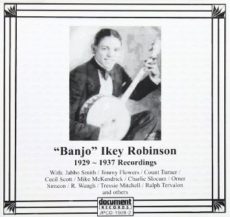
Ikey Robinson also known as Banjo Ikey was born Isaac L. Robinson on July 28, 1904 in Dublin, Virginia. He moved to Chicago, Illinois in 1926, playing and recording with Jelly Roll Morton, Clarence Williams, and Jabbo Smith during 1928-1929.
He went on to put together groups that included Ikey Robinson and his Band with Jabbo Smith, The Hokum Trio, The Pods of Pepper, Windy City Five, and Sloke & Ike.
His jazz style influenced many subsequent players, and his 1929 recording Rock Me Mama is often cited as an early use of the term “rock” as it evolved from black gospel into rock and roll.
Robinson reunited in the 1970s with Jabbo Smith for a global tour and appeared in the 1985 film Louie Bluie, a documentary about fellow musician Howard Armstrong. Having never previously met Armstrong he was initially hesitant to meet him because of their differing musical styles. However, the two got on well and perform together in the documentary. Banjoist and vocalist Ikey Robinson passed away on October 25, 1990.
Inspire A Young Mind

Daily Dose Of Jazz…
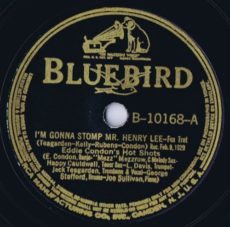
Happy Caldwell was born Albert W. Caldwell on July 25, 1903 in Chicago, Illinois. He began on clarinet at age 16, playing in the Eighth Illinois Regimental Band and soon after in an Army band. He studied to be a pharmacist but eventually gave up his medicinal studies for jazz.
He worked with Bernie Young early in the 1920s in Chicago, where he recorded for the first time in 1923 and began doubling on tenor saxophone. In the middle of the 1920s he played with Mamie Smith’s Jazz Hounds, Bobby Brown’s Syncopaters, Elmer Snowden, Billy Fowler, Thomas Morris, Willie Gant, and Cliff Jackson. By 1929 he had recorded with Louis Armstrong.
The 1930s saw him playing with Vernon Andrade, Tiny Bradshaw, and Louis Metcalfe, and leading his own band, the Happy Pals. He played at Minton’s in New York City for a short time before moving to Philadelphia, where he played with Eugene Slappy and Charlie Gaines. Returning to New York he put together a new ensemble in the Forties and continued to work in small settings for several decades. In the 1970s he played with Jimmy Rushing, including on international tours. Never leading his own sessions, clarinetist and tenor saxophonist Happy Caldwell, sometimes misspelled as Cauldwell, passed away on December 29, 1978 in New York City at age 75.
Take A Dose On The Road
Daily Dose Of Jazz…
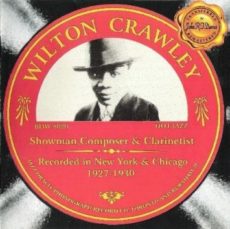
Wilton Crawley was born on July 18, 1900 in Virginia with his family moving to Philadelphia, Pennsylvania. Some of his musical influences may be traced back to Virginia and its many farms and barnyards with cackles and clucks like a chicken, oinks like a pig, and neighs like a goat that he . It was in Philadelphia that along with his reed-playing brother Jimmy that they formed their first band. During the ’20s and ’30s, the clarinetist found success with a variety act featuring his singing and playing. Though not the most versatile musician he had a sound and style that utilized weird speech-like sound effects and extended use of slap tonguing, sometimes filling out whole lines of a solo with obnoxious little pops.
Between 1927 and 1930 Wilton recorded his own compositions for OKeh and Victor Records, working with Paul Barbarin, Lonnie Johnson, Henry “Red” Allen, Pops Foster, Luis Russell, Jelly Roll Morton, Eddie Heywood and Eddie Lang among others. After splitting with Morton in the 1930s he toured England and after the death of his father and his friend guitarist Eddie Lang, his personal problems derailed his career and slipped into oblivion.
His most famous pieces include Crawley Clarinet Moan, She’s Forty With Me, Put a Flavor to Love, Futuristic Blues and Irony Daddy Blues. Much of this music reveals his attempts to recreate jazz sounds from other instruments, particularly the muted trumpet effects that might have been done by an artist such as Bubber Miley. While some of this sound effect activity have may influenced Anthony Braxton, he may have more in common with the clarinetists who worked with Spike Jones or even later rock showmen like Arthur Brown. Some of the membership in his ensembles such as Wilton Crawley & His Orchestra or the Washboard Rhythm Kings remains unknown, however, banjoist Johnny St. Cyr and blues guitarist Lonnie Johnson show up in his bands.
It is unfortunate that many of the recordings originally done under his own name have all been reissued in various Jelly Roll Morton retrospectives, as he went on to become a lasting legend of early jazz while the clarinetist went into obscurity. Clarinetist, composer, contortionist and vaudevillian Wilton Crawley passed away in 1948 in Maryland.
Sponsored By

Voices From The Community
More Posts: clarinet
Daily Dose Of Jazz…
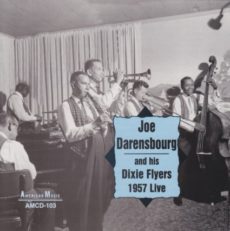
Joe Darensbourg was born Joseph Wilmer Darensbourg on July 9, 1906 in Baton Rouge, Louisiana. He received some of his earliest training from Alphonse Picou. After playing with local groups, and traveling with a medicine show and a circus band, he settled in Los Angeles, California and worked with Mutt Carey’s Liberty Syncopators.
He worked in Seattle from 1929 to 1944, working on cruise lines, playing in after-hours clubs and roadhouses, and backing several non-jazz entertainers. Darensbourg resumed playing jazz in 1944, in a traditional group with Johnny Wittwer. When he returned to Los Angeles, he recorded with Kid Ory and worked briefly with R&B bandleader Joe Liggins.
From 1947 to 1953 Joe worked solely with Ory, then spent the rest of his career in traditional ensembles, working with such musicians as Gene Mayl, Teddy Buckner and Louis Armstrong’s All-Stars. He led his own groups, and had a hit with the song Yellow Dog Blues, and toured with the Legends of Jazz from 1973 to 1975. He also worked with Buddy Petit, Jelly Roll Morton, Charlie Creath, Fate Marable, Andy Kirk, Johnny Wittwer and Wingy Manone. Clarinet and saxophonist Joe Darensbourg, one of the purest soloists in traditional jazz, passed away in Van Nuys, California on May 24, 1985.
Jazz Is Global – Share