

Daily Dose Of Jazz…
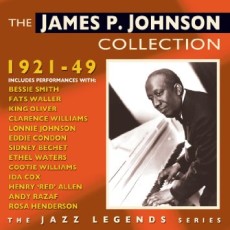
James P. Johnson was born James Price Johnson on February 1, 1894 in New Brunswick, New Jersey and was also known as Jimmy Johnson. A move to San Juan Hill, where Lincoln Center stands today, and subsequent move uptown by 1911, exposed him to the musical experience of New York City’s bars, cabarets and symphonies and listening to Scott Joplin attributed to his early influences. With perfect pitch and excellent recall he was soon able to pick out on the piano tunes that he had heard.
Johnson got his first job as a pianist in 1912, left school to pursue his career in music. From 1913 to 1916 Johnson spent time studying the European piano tradition with Bruto Giannini, spending the next four to five years studying other pianists and composing his own rags. In 1914, he met Willie “The Lion” Smith and became best friends. By 1920 he had gained a reputation as a pianist on the East coast on a par with Eubie Blake and Lucky Roberts, making dozens of piano roll recordings and recording for the Perfection, Artempo, Rythmodik, QRS and Aeolian labels.
James was a pioneer in the stride playing of the jazz piano. He developed into the favorite accompanist of Ethel Waters and Bessie Smith. He continued to compose and record during the 1920s and 1930s he recorded on W. C. Handy’s Black Swan label as well as Columbia. He branched out and became musical director for the revue Plantation Days, went to Europe with the show that toured for five years and made it to Broadway.
By the Depression Era his career slowed down somewhat and he found it difficult to adapt to the new swing era music gaining popularity. In the late 1930s Johnson slowly started to re-emerge with the revival of interest in traditional jazz, but suffering a stroke in 1940 took him out of the action until 1942 when he began to record, with his own and other groups with Eddie Condon, Yank Lawson, Sidney de Paris, Sidney Bechet, Rod Cless and Edmond Hall. He went on to record for jazz labels Asch, Black and White, Blue Note, Commodore, Circle and Decca, perform with Louis Armstrong and was a regular guest on the rudi Blesh This Is Jazz broadcasts.
He would teach Fats Waller his Carolina Shout composition, Duke Ellington learned it note for note from his piano roll and the tune became a right of passage for every contemporary pianist. Considered the last major rag pianist and the first major jazz pianist he became the bridge between the two styles. His influence led to the emergence of Art Tatum, Donald Lambert, Louis Mazetier, Pat Flowers, Cliff Jackson, Hank Duncan, Claude Hopkins, Count Basie, Ellington, Don Ewell, Jimmy Guarnieri, Dick Hyman, Dick Weststood, Ralph Sutton, Joe Turner, Neville Dickie, Mike Lipskin and Butch Thompson.
Pianist and composer James P. Johnson, who composed the Roaring Twenties theme song Charleston, along with If I Could be With You One Hour Tonight, and whose music has appeared in countless films, passed away on November 17, 1955 at age 61.

Take A Dose On The Road
More Posts: piano
Daily Dose Of Jazz…
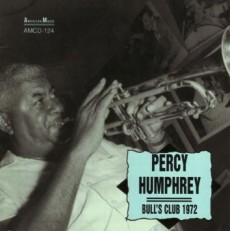
Percy Gaston Humphrey was born January 13, 1905 in New Orleans, Louisiana. He was the son of clarinetist Willie Eli Humphrey and the younger brother of clarinetist Willie and trombonist Earl. He learned the musical basics of New Orleans jazz from his grandfather “Professor” Jim Humphrey.
For more than thirty years he was leader of the Eureka Brass Band founded by trumpeter Willie Wilson and played alongside Willie Parker, John Casimir and George Lewis. After Wilson got ill, Alcide Landry, Joseph “Red” Clark and Dominique “T-Boy” Remy each temporarily led the group until 1946 when Percy took over until the demise of the band in 1975. He also played in the band of pianist Sweet Emma Barrett.
For years he led his own jazz band Percy Humphrey and His Crescent City Joymakers. He played regularly at Preservation Hall from its opening in the early Sixties until shortly before his death. He traveled and performed internationally with the Preservation Hall Jazz Band as well as his own bands.
As a leader and sideman of the various groups he recorded prolifically with Pax, Alamac, Folkways, Jazzology and Sounds of New Orleans. A 1951 album, New Orleans Parade, features Humphrey with trombonists Charles “Sunny” Henry and Albert Warner and saxophonist Emmanuel Paul. Their 1962 sessions, Jazz at Preservation Hall, Volume 1: the Eureka Brass Band of New Orleans, on Atlantic Records with his borhter Willie, Kid Sheik Cola, Pete Bocage, Alber Warner and Oscar “Chicken” Henry, Emanuel Pail, Wilbert “Bird” Tilman, Josiah “Cie” Frazier and Robert “Son Fewclothes” Lewis.
After 1975, Percy revived the name occasionally for festival performances and other appearances. Trumpeter and bandleader Percy Humphrey continued to lead his own band until his passing in New Orleans on July 22, 1995 at the age of ninety .His last gig was at the annual New Orleans jazz festival in April, three months before his death.
Inspire A Young Mind
More Posts: trumpet

Daily Dose Of Jazz…
Dr. Michael White was born on November 29, 1954 in New Orleans, Louisiana. He is a classically trained clarinetist who began his jazz musical career as a teenager playing for Doc Paulin’s Brass Band in New Orleans. He was a member of an incarnation of the Fairview Baptist Church Marching Band.
Kid Sheik Colar, discovered him after hearing him onstage performing in Jackson Square in the French Quarter. He began working with the musician regularly following the encounter. A staunch jazz traditionalist, he can be heard on Wynton Marsalis’s 1989 album The Majesty of the Blues. Wynton also appears on White’s 1990 album titled “Crescent City Serenade”, along with Wendell Brunious and Walter Payton.
Michael has led several bands in the New Orleans area, and has accompanied various artists on other recording projects. Since 1979 he has played in the Young Tuxedo Brass Band. During the 1980s he led a band called The New Orleans Hot Seven.
In 1981, White founded The Original Liberty Jazz Band with the express intent of preserving the musical heritage of New Orleans. They perform an end-of-year concert at the Village Vanguard every year since the early 1990s, and in 2006 with former Presidents George H. W. Bush and Bill Clinton in attendance they performed at Tulane University commencement.
Putting on his education cap Michael is also a college professor who formerly taught Spanish, now teaches African-American Music at Xavier University, holds the Rosa and Charles Keller Endowed Chair in the Humanities of New Orleans Music and Culture. As a continuing component of his performances he also serves as guest director at several Jazz at Lincoln Center concerts relating to traditional New Orleans jazz.
Give A Gift Of Jazz – Share
More Posts: clarinet
Daily Dose Of Jazz…
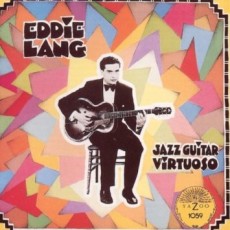
Eddie Lang was born Salvatore Massaro on October 25, 1902 in Philadelphia, Pennsylvania. He first took violin lessons for 11 years and while in school he became friends with Joe Venuti, with whom he would work for much of his career. By the time he was 16 he was playing violin, banjo and guitar professionally. He worked with various bands in the Northeast United States, worked in London between late 1924 to early 1925, and then settled in New York City.
By 1927 Lang was being featured along with cornetist Bix Beiderbecke on the recording of Singin’ the Blues by Frankie Trumbauer and His Orchestra. Between the two trading licks and soloing this session became a landmark jazz recording of the decade. 1929 saw him joining Paul Whiteman’s Orchestra and performing in the movie King of Jazz. The following year he played guitar on the original recording of the jazz and pop standard Georgia On My Mind recording with Hoagy Carmichael and His Orchestra with Joe Venuti and Bix Beiderbecke.
Eddie would leave Whiteman’s band with Bing Crosby and as his accompanist was back in the movies with Big Broadcast. Switching gears to play blues he recorded under the pseudonym Blind Willie Dunn on a number of blues records with Lonnie Johnson. Over the course of his short career he composed some three-dozen songs and recorded with the bands of Joe Venuti, Frank Signorelli, Adrian Rollini, Roger Wolfe Kahn, Jean Goldkette, in addition to doing a large amount of freelance radio and recording work.
Guitarist Eddie Lang, who was one of the three major innovators of jazz guitar and who influenced future guitarists, such as Django Reinhardt, passed away following a tonsillectomy in New York City on March 26, 1933 at the age of thirty. He had been urged by Crosby to have the tonsillectomy so that he might have speaking parts in Crosby’s films. His voice was chronically hoarse, and it was hoped that the operation would remedy this.
His recording of Singin’ The Blues with Frankie Trumbauer and His Orchestra was inducted into the Grammy Hall of Fame and has been placed on the U.S. Library of Congress National Recording Registry. He has been inducted into the Big Band and Jazz Hall of Fame, is one of the ASCAP Jazz Wall of Fame inductees.
Give The Gift Of Knowledge
More Posts: guitar
Daily Dose Of Jazz…
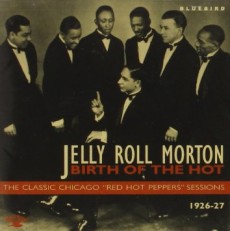
Jelly Roll Morton was born Ferdinand Joseph LaMothe on October 20, 1890 into a common-law creole of color family in the Faubourg Marigny neighborhood of downtown New Orleans, Louisiana. He started playing music as a child, showing early talent. After his parents separated, his mother married a man named Mouton and anglicizing it changed it to Morton.
At the age of fourteen, Morton began working as a piano player in a Storyville brothel, then known as a sporting house. In that atmosphere he often sang smutty lyrics and it was there he took the nickname “Jelly Roll”, which was African American slang for female genitalia. While working there, he was living with his religious, church-going great-grandmother; he had her convinced that he worked as a night watchman in a barrel factory. After Morton’s grandmother found out that he was playing jazz in a local brothel, she kicked him out of her house. However, Tony Jackson, also a pianist at brothels and an accomplished guitar player, was a major influence on his music.
Around 1904, Jelly Roll started touring in the American South, working with minstrel show, gambling and composing. He moved to Chicago in 1910 and New York City the following year where future stride greats James P. Johnson and Willie “The Lion” Smith caught his act, years before the blues were widely played in the North. His works Jelly Roll Blues, composed in 1915, has arguably become the first jazz song ever published. New Orleans Blues, Frog-I-More Rag, Animus Dance and King Porter Stomp followed as they were composed during this period. In 1917, he followed bandleader William Manuel Johnson Johnson’s sister Anita Gonzalez to California, where his tango The Crave, made a sensation in Hollywood. Returned to Chicago in 1923 to claim authorship of his recently published rag, “The Wolverines”, which had become a hit as “Wolverine Blues” in the Windy City. He released the first of his commercial recordings, first as piano rolls, then on record, both as a piano soloist and with various jazz bands.
In 1926, Morton succeeded in getting a contract to record for the largest and most prestigious company in the United States, Victor. This gave him a chance to bring a well-rehearsed band to play his arrangements. These recordings by Jelly Roll Morton & His Red Hot Peppers are regarded as classics of 1920s jazz. They featured Kid Ory, Omer Simeon, George Mitchell, Johnny St. Cyr, Barney Bigard, Johnny Dodds, Baby Dodds and Andrew Hilaire. And the group became one of the first acts to be booked on tour by MCA. Moving to New York City in 1928 he continued to compose and record for Victor with the aforementioned in addition to George Baquet, Albert Nicholas, Wilton Crawley, Russell Procope, Lorenzo Tio, Artie Shaw, Bubber Miley, Johnny Dunn, Henry “Red” Allen, Sidney Bechet,, Paul Barnes and Bud Freeman, Pops Foster, Paul Barbarin, Cozy Cole and Zutty Singleton.
During the Great Depression Morton lost his contract with Victor, struggled financially and took a job with a traveling burlesque show for steady income. In 1935, his 30-year-old composition King Porter Stomp arranged by Fletcher Henderson became Benny Goodman’s first hit and swing standard but Jelly Roll received no royalties from its recordings.
A move to Washington, DC saw him becoming the manager, piano player, master of ceremonies, bouncer and bartender of a bar located at 1211 U Street in the NW Black section of town called Shaw. Unable to make it a success due to the owner’s bad business decisions and being stabbed by a friend of the owner, Morton’s wife demanded they leave DC. Before his departure folklorist Alan Lomax invited him to record music and interviews at the Library of Congress, which ended after eight hours, though Lomax conducted longer interviews but only to notes without recording.
When Morton was stabbed and wounded, a nearby whites-only hospital refused to treat him, as the city had racially segregated facilities. Transported to a black hospital farther away it was several hours before being attended to and his recovery suffered, often he became short of breath. Worsening asthma sent him to a New York hospital for three months at one point and although he continued to suffer from respiratory problems when visiting Los Angeles, California with manuscripts of new tunes and arrangements, planning to form a new band and restart his career, pianist and composer Jelly Roll Morton passed away on July 10, 1941, after an eleven-day stay in Los Angeles County General Hospital. He was inducted into the Rock and Roll Hall of Fame, the Louisiana Hall of Fame and is a charter member of the Gennett Records Walk of Fame.
Dose A Day – Blues Away
More Posts: piano