

Daily Dose Of Jazz…
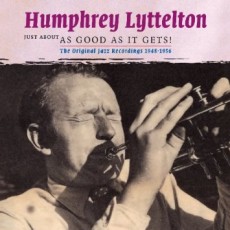
Ian Christie was born on June 24, 1927 in Blackpool, Lancashire, England to a father who was a piano tuner and banjoist. He took lessons from Charlie Farrell but opted to join the Royal Air Force, taking up photography as his primary interest. After his brother Keith joined Humphrey Lyttleton’s band, he soon followed, finishing his photography studies with financial help from Humphrey.
During the 1950s and 1960s Ian worked extensively with Mick Mulligan and George Melly as well as playing in a number of trad jazz ensembles, and forming a group with his brother Keith, Ken Coyle and Dicky Hawdon called the Christie Brothers’ Stompers.
Throughout his career he continued to work in trad jazz ensembles into the 2000s, with the Wyre Levee Stompers, the Merseysippi & Parade Jazz Band, and the Tony Davis Band, among others. In his later years he played with Graham Tayar in his Crouch End All Stars. Aside from playing music clarinetist Ian Christie worked as a film critic for The Daily Express for over 25 years and as a photographer until his passed away on January 19, 2010.

Take A Dose On The Road
More Posts: clarinet

Daily Dose Of Jazz…
Rusty Jones was born Isham Russell Jones II on April 13, 1942 in Cedar Rapids, Iowa and began playing drums at the age of thirteen and continued on throughout his college years choosing traditional and modern jazz as his preferred mode of music.
He went “on the road” after graduating college in 1965 from the University of Iowa with a degree in history and political science, to “get it out of his system”, but he never stopped his pursuit of a musical vocation. He moved to the Chicago area in 1967.
Jones appeared with Chicago musician Judy Roberts from 1968 to 1972, soon after becoming a member of George Shearing, then accompanied pianist Marian McPartland, then free-lanced throughout Chicago with several bands, touring the United States and Europe. He has worked with Patricia Barber, Adam Makowitz, Larry Novak, Ike Cole, Clifford Jordan, Danny Long, Johnny Gabor, Frank D’Rone, Art Hodes, Buddy DeFranco, Mark Murphy, Eddie Higgins, Red Holloway, Anita O’Day Stephane Grappelli, Ira Sullivan and J. R. Monterose, and the list goes on.
Between 1958 and 2004 this consummate sideman has been a part of nearly four-dozen recording sessions, all while performing and touring the U.S. and the world. Drummer Rusty Jones currently, appears quite regularly around the Chicago area with the Johnny Gabor Trio featuring vocalist Connie Marshall.
Dose A Day – Blues Away
More Posts: drums

Daily Dose Of Jazz…
Zoltan Sagi was born in Hungary on February 10, 1956. He attended the Guildhall School of Music studying clarinet with Robert Earle and later Frank Allen at Warwick University. Self-taught on saxophone, he draw much of his inspiration from Johnny Hodges, Cannonball Adderley and Stan Getz.
His early career was spent playing in dance bands and in New Orleans jazz genre playing in festivals stateside and overseas. This was followed by a period as an educator as Director of Music and a country music service manager. He spent two and a half years extensively touring the world with Chris Barber.
Zoltan has recorded numerous CD’s and other recordings as a freelance session musician and has also appeared with such musicians as Earl Warren, Benny Waters, Kenny Davern, Bob Humphrey Lyttleton, Marty Grosz, Digby Fairweather, Duncan Swift, , Janusz Carmello, Bill Coleman, Greg Abate, Alan Barnes, Paul Degville and John Barnes among many others.
Has worked extensively both in this country and abroad. His experience spans from New Orleans jazz to jazz fusion. Sagi has been a part of several groups including Harlem, Swing Syndicate and The Charleston Chasers. Clarinetist Zoltan Sagi also plays all saxophones and currently performs with the Sticky Wicket Big Band, the Big Chris Barber Band, the Stars of British Jazz and with his own quartets and trios.
Inspire A Young Mind
Daily Dose Of Jazz…
Benny Moten was born on November 30, 1916. A solid and supportive bassist, he had a long career as a sideman for decades. He began seriously playing professionally in 1941 and quickly developed relationships with top players of the time.
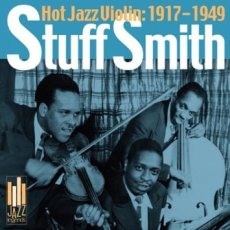
Over the course of his career Benny played and recorded with such artists as Hot Lips Page, Henry “Red” Allen, Stuff Smith, Arnett Cobb, Ella Fitzgerald, Wilbur DeParis, Roy Eldridge and Dakota Staton, just to name a few. He toured Africa from 1956 – 1957.
Bassist Benny Moten, often confused or mistaken for pianist and bandleader Bennie Moten, was never a leader however he remained musically active as a sideman until the time of his death at the age of 60 on March 27, 1977.
Dose A Day – Blues Away
More Posts: bass
Daily Dose Of Jazz…
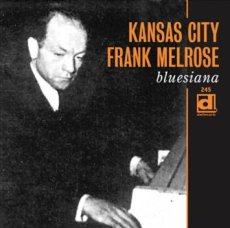
Frank Melrose was born Franklyn Taft Melrose on November 26, 1907 in Sumner, Illinois, the younger brother of Walter and Lester who set up the Melrose Brothers Music Company in Chicago in 1918. His first instrument was the violin, but he later took up the piano, strongly influenced by his brothers’ business partner, Jelly Roll Morton.
In 1924 Frank left home and began drifting around, playing and settling for short periods in St. Louis, Kansas City, Detroit and playing occasionally in Chicago with Jelly Roll. In 1929 his brother Lester recorded him performing piano solos that were released under the pseudonym of “Broadway Rastus”.
1930 saw Melrose recording “Jelly Roll Blues” and other tunes that were released on the Brunswick Record label’s “race” series under the pseudonym of “Kansas City Frank”, and for some years were wrongly assumed to be the work of Morton. Throughout the decade he continued to play piano in small clubs and bars, either solo or as part of a band, recorded sporadically with Johnny Dodds and others while occasionally working in a factory to support his family.
Pianist Frank Melrose, one of the leading figures in the Midwest blues and jazz scene during the 1920s and 30s played his last recording session with Bud Jacobson’s Jungle Kings. On Labor Day, September 1, 1941 he was found dead in the road after apparently being killed in a fracas in a club in Hammond, Indiana.
Put A Dose In Your Pocket
More Posts: piano