

Daily Dose Of Jazz…
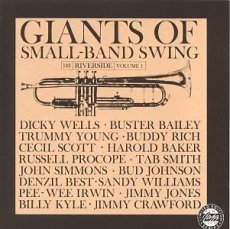
Cecil Scott was born in Springfield, Ohio on November 22, 1905 and played clarinet and tenor saxophone as a teenager with his brother, drummer Lloyd Scott. They played together as co-leaders through the end of the 1920s, holding residencies in Ohio, Pittsburgh, Pennsylvania and in New York City at the Savoy Ballroom. Among the members of this ensemble were Dicky Wells, Frankie Newton, Bill Coleman, Roy Eldridge, Johnny Hodges and Chu Berry.
By 1929 Cecil took full music control over the group in 1929, though Lloyd continued to manage the group. However, he was seriously injured in an accident in the early 1930s that temporarily sidelined his career. After recovery, he would play in different groups through the Thirties with Ellsworth Reynolds, Teddy Hill, Clarence Williams and Teddy Wilson accompanying Billie Holiday.
The early 1940s saw Scott playing with Albert Socarras, Red Allen, and Willie “The Lion” Smith prior to reassembling his band that hired at times Hot Lips Page and Art Hodes and towards the end of the decade worked with Slim Gaillard.
In 1950 Cecil disbanded the group, worked with Jimmy McPartland as a sideman, occasionally led groups and continued to play as a sideman up until the time of his death on January 5, 1964 in New York City. The clarinetist, tenor saxophonist and bandleader is credited on some 75 albums.

Inspire A Young Mind
Daily Dose Of Jazz…
Charlie “Fess” Johnson was born on November 21, 1891 in Philadelphia, Pennsylvania. He led an ensemble called the Paradise Ten and played in Harlem clubs like Small’s Paradise between 1925 and 1935.
Though Charlie was an accomplished pianist very rarely did he eve solo on his recording sessions and as a unit never achieved the reputation is so deserved. It was noted later that the band rivaled Duke Ellington and anyone else and employed a number of notables like Sidney DeParis, Charlie Irvis, Dicky Wells, Benny Waters and Benny Carter, who also wrote arrangements for the band.
He led the ensemble until 1938 then his musical endeavors freelancing in various ensembles around New York City until he retired in the 1950s due to health issues. Pianist and bandleader Charlie Johnson, who nickname “Fess” it is assumed was shortened from Professor, passed away in Harlem Hospital on December 13, 1959 in New York City.
Give A Gift Of Jazz – Share
More Posts: piano
Daily Dose Of Jazz…
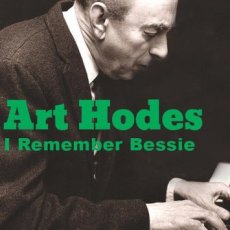
Art Hodes was born Arthur W. Hodes on November 14, 1904 in Ukraine, Russia but his family emigrated to the U.S. and settled in Chicago, Illinois when he was just a few months old. Although he gained wider attention once he moved to New York City in 1938, He began his career as a pianist in Chicago playing with Sidney Bechet, Joe Marsala and Mezz Mezzrow.
In the 1940s Art led his own big band that would be associated with his hometown of Chicago, playing mostly in that area for the next forty years. By the late 1960s he starred in a series of TV shows on Chicago style jazz called “Jazz Alley” appearing with greats like Pee Wee Russell and Jimmy McPartland. During this period he also wrote for jazz magazines like Jazz Record and remained an educator and writer in jazz.
He toured the UK in 1987 recording with drummer John Petters, and then returned the next year to play the Cork Jazz Festival with Petters and Wild Bill Davison, followed by a tour with the Legends of American Dixieland.
Over the course of his career he performed and recorded with Louis Armstrong, Wingy Manone, Gene Krupa, Mugsy Spanier, Alert Nicholas and Vic Dickerson among others. Pianist Art Hodes passed away on March 4, 1993 in Harvey, Illinois and was posthumously inducted into the Big Band and Jazz Hall of Fame in 1998.
Give A Gift Of Jazz – Share
More Posts: piano
Daily Dose Of Jazz…
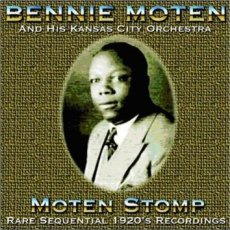
Bennie Moten was born on November 13, 1894 in Kansas City, Missouri. By the time he reached his mid-twenties he was leading the Kansas City Orchestra that was the most important of the itinerant, blues-based orchestras active in the Midwest at the time. The band helped develop the riffing style that would come to define many of the 1930s Big Bands.
Moten first recorded with Okeh Records in 1923 influenced by New Orleans and ragtime. His Victor Records sessions had a more sophisticated sound similar to Fletcher Henderson but featured a hard stomp popular to Kansas City.
By 1928 Bennie’s piano was showing some Boogie Woogie influences, but the real revolution came in 1929 when he recruited Count Basie, Walter Page and Oran “Hot Lips” Page. Walter Page’s walking bass lines gave the music an entirely new feel compared to the 2/4 tuba, colored by Basie’s understated, syncopated piano fills.
Their final session comprised of 10 recordings made in 1932 were made during a time when the band was suffering significant financial hardship but had added Ben Webster and Jimmy Rushing as their primary vocalist. These recordings showed the early stages of what became known as the “Basie Sound” some four years before Basie would record under his own name.
Pianist and bandleader Bennie Moten passed away after an unsuccessful tonsillectomy on April 2, 1935.
Jazz Is Global – Share
More Posts: piano
Daily Dose Of Jazz…
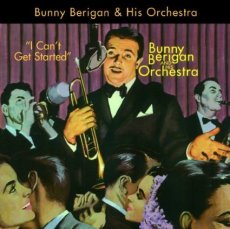
Bunny Berigan was born Rowland Bernard Berigan on November 2, 1908 in Hilbert, Wisconsin. Raised in Fort Lake the child prodigy learned violin and trumpet at an early age and played in local orchestras by his late teens. He joined the Hal Kemp Orchestra in mid 1930 recording his first trumpet solos and touring England. Upon his return in ’31 he was a sought after studio musician and recorded his first vocal “At Your Command”, then worked with the bands of Paul Whiteman and Abe Lyman by 1934.
He continued freelancing in the recording and radio studios, most notably with the Dorsey Brothers and on Glenn Miller’s earliest recording date as a leader in 1935, an association that graduated him to fame in his own right when he joined Benny Goodman’s re-formed band that included drummer Gene Krupa. The band made the legendary tour that ended with their unexpectedly headline-making stand at the Palomar Ballroom in Los Angeles, California, which has often been credited with the “formal” launch of the swing era.
Berigan went on to work with Tommy Dorsey recording one of his signature solos on the hit “Marie”, recorded under his own name his biggest hit “I Can’t Get Started”, led his own big band for three years that included Buddy Rich and Ray Conniff. He was a fixture on CBS Radio’s coast-to-coast broadcasts of Saturday Night Swing Club from 1937 to 1940, that helped further popularize jazz as the swing era climbed to its peak.
Already a heavy drinker and the band failing financially, Bunny drinking took a toll suffering pneumonia and then stricken with cirrhosis and ignoring his doctor’s advice, trumpeter, composer and bandleader Bunny Berigan, who modeled his playing in part on Louis Armstrong’s style lost his battle with alcoholism passing away of a massive hemorrhage on June 2, 1942 at age 33.
Dose A Day – Blues Away
More Posts: trumpet