

Daily Dose Of Jazz…
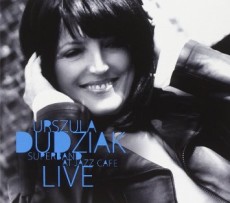
Urszula Bogumiła Dudziak was born October 22, 1943 in the Straconka neighborhood of Bielsko-Biata, Poland. She studied piano but began to sing in the late 50s after hearing records by Ella Fitzgerald. Within a few years she was one of the most popular jazz artists in her native country.
With her marriage to Michael Urbaniak in the late 60s they began to tour overseas and in the 70s settled in New York. Dudziak has some problems with language and customarily eschews words in favor of wordless vocalizing that is far more adventurous than scat. Already gifted with a remarkable five-octave vocal range, she employs electronic devices to extend still further the possibilities of her voice.
She has frequently worked with leading contemporary musicians, including Archie Shepp, Lester Bowie, Jay Clayton, Jeanne Lee, Bobby McFerrin, Norma Winstone, Sting, Michelle Hendricks, Michael Urbaniak, Krzysztof KomedaLaura Newton, Gil Evans and collaborated with fellow Polish jazz vocalist Grazyna Auguscik.
Vocalist Urszula Dudziak has been awarded the Knight’s Cross of the Order of Polonia Restituta by President Leon Kaczynski, published her autobiography Wyspiewam Wam Wszystko, translated means I’ll Sing Everything For You and she has recorded twenty-two albums and appeared in thirteen films. She continues to perform and tour.

Give A Gift Of Jazz – Share
More Posts: vocal
Daily Dose Of Jazz…
Carol Kidd was born on October 19, 1945 in Glasgow, Scotland and knew from five years old that she was a singer. She first came to prominence in the mid-Seventies as the vocalist for the band led by vibraphone and saxophonist Jimmy Feighan, and while raising three children and running a hotel she sang part-time all over Britain, performing on stage and television.
Kidd recorded her debut album Just For You in 1981 but it was three years before she released her self-titled sophomore project Carol Kidd and a third in 1985 titled All My Tomorrows. Her full-time professional career began in 1990 when Frank Sinatra issued her an invitation to appear live with him at Ibrox Stadium in Glasgow, in front of a capacity crowd. British jazz lovers gave rave reviews and Kidd was invited to sing at London’s internationally acclaimed Ronnie Scott’s Club, where Tony Bennett was in the audience. The momentum of her success picked up after that appearance and she was voted the Best Performer at Edinburgh International Jazz.
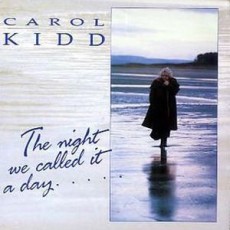
With four albums already under her belt, in 1990 Carol released her award-winning album, The Night We Called It a Day for Linn Records and was voted Best Jazz Recording at the U.K. Musical Retailer’s Awards. After being named Best Vocalist at the Cannes International Jazz Awards, she subsequently received invitations to appear all over Europe, the Far East and the United States.
For over a decade, jazz singer Carol Kidd has managed to consistently pull in accolades, “Best Awards,” and honors from an arena consisting of all-time greats such as Peggy Lee, Ella Fitzgerald, and Sarah Vaughan. She has won several awards at the British Jazz Awards and in 1998 she was awarded an MBE or Most Excellent Order of the British Empire for her services to jazz.
Jazz vocalist Carol Kidd has performed and recorded a standards album with the Robert Farnon Orchestra, has sixteen albums to date and continues to perform, record and tour all over the world.
Take A Dose On The Road
More Posts: vocal
Daily Dose Of Jazz…
Sathima Bea Benjamin was born Beatrice Bertha Benjamin on October 17, 1936 in Claremont, Cape Town, South Africa. As an adolescent, she first performed popular music in talent contests at the local cinema (bioscope) during the intermission. By the 1950s she was singing at various nightclubs, community dances and social events, performing with notable Cape Town pianists Tony Schilder and Henry February, among others. She built her repertoire watching British and American movies and transcribing lyrics from songs heard on the radio. She discovered Nat King Cole, Billie Holiday, Doris Day and Ella Fitzgerald who greatly influenced her singing style, phrasing and diction.
At 21, she joined Arthur Klugman’s traveling show, Coloured Jazz and Variety, touring South Africa. When the production failed, she found herself stranded in Mozambique where she met South African saxophonist Kippie Moekets. Returning to Cape Town’s now thriving jazz scene in 1959, Sathima met pianist Dollar Brand, later known to the world as Abdullah Ibrahim. She would marry him in 1965 and the same year record with his trio what would have been the first jazz album in South Africa titled My Songs For You, but it was never released.
In the aftermath of South Africa’s 1960 Sharpeville Massacre, Benjamin and Ibrahim left South Africa for Europe, settling in Zurich. Along with bassist Johnny Gertze and drummer Makhaya Ntshoko they worked throughout Germany and Scandinavia, meeting and occasional working with American jazz players, such as, Don Byas, Dexter Gordon, Kenny Drew, Ben Webster, Bud Powell, John Coltrane and Thelonious Monk. The artist who would have the greatest impact on Benjamin’s life, however, was Duke Ellington.
Benjamin met Duke Ellington while he was in Zurich in 1963 asked that he hear her husband’s trio at the Club Africana. Obliging but insisting that she sing for him. Following this encounter, Ellington arranged for the couple to fly to Paris and record separate albums for Sinatra’s Reprise label. Her recording, A Morning in Paris, was thought lost and remained unreleased until 1966. Maintaining her musical relationship with Ellington she performed with his band in the U.S. at the Newport Jazz Festival. He subsequently asked her to join his band permanently but being newly wedded she declined.
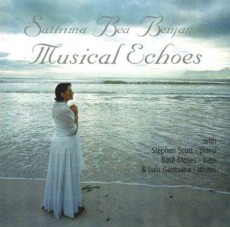
Throughout the 1960s, Sathima moved back and forth between Europe and New York City as manager and agent for her husband while raising their son, Tsakwe. Returning to South Africa 1976 she gave birth to a daughter and recorded African Songbird, and then returned to New york City the following year. Launching her own record label, ekapa rpm, to produce, publish and distribute her and Ibrahim’s music, between 1979 and 2002, she released eight of her own albums on ekapa: Sathima Sings Ellington, Memories and Dreams, Windsong, Lovelight, Southern Touch, Cape Town Love, Musical Echoes and Dedications, the last receiving a Grammy nomination.
Benjamin collaborated on these albums with saxophonist Carlos Ward, pianists Stephen Scott, Kenny Baron,, Larry Willis and Onaje Allan Gumbs, bassist Buster Williams and drummers Billy Higgins and Ben Riley. She has been the recipient of South Africa’s Order of Ikhamanga Silver Award, was the feature of a 2010 documentary film Sathima’s Windsong, and has had a co-authorhip of her life Musical Echoes: South African Women Thinking In Jazz.
Sathima Bea Benjamin returned to Cape Town in 2011, where she continued to work as a vocalist until passing away on August 20, 2013, aged 76.
Put A Dose In Your Pocket
More Posts: vocal
Daily Dose Of Jazz…
Brian Robert Jackson was born October 11, 1952 in Brooklyn, New York to a New York State parole officer and librarian at the Ford Foundation. Spending the first two years of his life in Bedford-Stuyvesant and later stayed with his uncle in Flatbush until his parents separated when he was five. Then with his mother they moved into a one-bedroom apartment in Crown Heights, Brooklyn until she remarried in 1968.
Jackson studied music in Fort Greene with his mother’s childhood teacher, Hepzibah Ross with whom he took lessons for seven years. From 1965-1969 Jackson attended Brooklyn’s Erasmus Hall High, where he met other musicians and began to form bands on the outside while participating in school music programs.
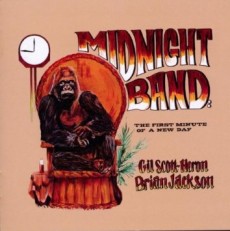
Brian met Gil Scott-Heron while the two were attending Lincoln University in Pennsylvania. They began a decade-long writing, producing, and recording partnership with Jackson composed most of the music that he and Scott-Heron together performed and recorded. In 1973, the two released their first album together, Pieces of A Man with bassist Ron Carter. Tey would go on to record the landmark albums Free Will and Winter In America. His biggest hit was with Scott-Heron, 1974’s The Bottle. By 1979, they had recorded ten albums, with other unreleased material surfacing on subsequent Scott-Heron releases following their 1980 split.
He remained active in the 1980s and 1990s, switching to R&B to work with Earth, Wind & Fire, Stevie Wonder, Will Downing, Gwen Guthrie, Kool & The Gang and Janis Siegel. Enlisting guest appearances by Gil and Roy Ayers, he recorded his first solo album Gotta Play in 2000. Pianist and flutist Brian Jackson is still actively performing and recording.
Give The Gift Of Knowledge
Daily Dose Of Jazz…
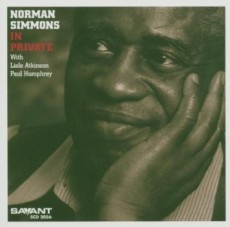
Norman Simmons was born October 6, 1929 in Chicago, Illinois. His childhood was filled with the sound of the big band era and he was captivated by the Duke Ellington Orchestra broadcasts he listened to over a neighbor’s radio. He started teaching himself at the family piano, progressing quickly and by age 16 enrolled in the Chicago School of Music, where he completed his studies in four years.
Simmons kept a steady gig leading the house trio at Chicago’s hottest jazz club, The Beehive, where his group would back touring greats like saxophonists Wardell Gray, Lester Young and Charlie Parker. He formed his own group in 1949 and began recording in 1952. Norman’s composition Jan was a hit for tenor saxophonist Paul Bascomb in 1953. In 1966 his arrangement of Ramsey Lewis’ Wade In The Water became a huge commercial success. Later, after leading a nonet at the C & C Lounge, Simmons began accompanying jazz singers in 1958 and quickly earned a reputation as an exceptional accompanist.
Norman became widely known for his work with vocalists Helen Humes, Carmen McRae, Sarah Vaughan, Anita O’Day, Dakota Staton, Ernestine Anderson, Betty Carter, and Joe Williams, Norman has also performed and recorded nearly two-dozen albums as a sideman with Johnny Griffin, Red Holloway, Roy Eldridge, Harold Ousley, Warren Vache, Eddie “Lockjaw” Davis, Scott Hamilton, Clifford Jordan, Von Freeman, Cy Touff, Victor Sproles, Wilbur Campbell, Al Grey and Bjarne Nerem.
Simmons’ arrangements have been heard through his work with Johnny Griffin on his White Gardenia and The Little Giant albums as well as Teri Thornton’s Devil May Care sessions. His personal catalogue is small only having five albums as a leader or co-leader.
As an educator he has taught at Paterson State College in New Jersey since 1982 and also participated in the Jazzmobile program for 20 years, fostering music education at New York’s public schools. Arranger, composer, educator, and pianist Norman Simmons continues to perform, record and tour and has been a member of the Ellington Legacy Band since 2002.
Dose A Day – Blues Away
More Posts: piano