

Requisites
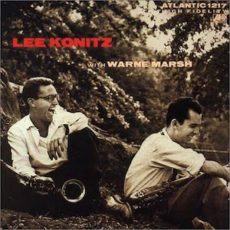
Lee Konitz With Warne Marsh ~ Lee Konitz & Warne Marsh | By Eddie Carter
This morning’s choice from the library is an album bringing together two of the best musicians from the Cool Jazz school, Lee Konitz on alto sax and Warne Marsh on tenor sax. Lee Konitz With Warne Marsh (Atlantic 1217) was recorded and released in 1955. Ronnie Ball (track: B3), Sal Mosca (tracks: A2, A4 to B2, B4) on piano, Billy Bauer on guitar, Oscar Pettiford on bass, and Kenny Clarke on drums round out the stellar supporting cast. My copy used for this report is the 2018 Speakers Corner Mono audiophile reissue sharing the original catalog number.
Side One begins with Topsy by Edgar Battle and Eddie Durham. Oscar starts an elegant bass introduction segueing into a collective subtle theme minus both pianists. Lee opens with a relaxing informality on a lyrical, soft-spoken statement. Oscar delivers the next reading with exquisite skill and Warne excels on the final solo before both saxes take the closing chorus into a soft climax. The sextet turns the beat upward on There Will Never Be Another You by Harry Warren and Mack Gordon. It opens with a quick collective theme led by Konitz who also cooks briskly on the opening statement. Marsh follows with a passionately assertive solo, then Pettiford delivers something special on the next vigorous reading. Both horns return to share the final solo ahead of the close.
I Can’t Get Started by Vernon Duke and Ira Gershwin tells the story of a man who’s achieved great success in everything, except the affection and love of the woman he desires. Both pianists lay out on this tune also. Lee takes the lead this time with a dreamy melody and reading that’s delicately crafted. Warne approaches the next solo with tender sincerity. Oscar walks a short distance on the closer leading to a gentle exit. Donna Lee by Miles Davis is named for the daughter of bassist Curly Russell and begins with an expedient theme that’s breathtaking. Konitz opens with a very impressive reading, then Mosca takes over for an energetic interpretation. Marsh charges into the next searing statement and Clarke shares a fiery conversation with both saxes into the reprise and abrupt ending.
Side Two opens with Two Not One by Lennie Tristano that gets underway a vibrant opening chorus. Lee takes off first like a jolt of electricity traveling through the body. Warne adds some additional power on an inspired solo as steady as the rock of Gibraltar. Sal responds with an exhilarating reading shadowed closely by both saxes in the background. Kenny shares a brief statement with the principal soloists into the climax. Don’t Squawk is by Oscar Pettiford, a blues he makes his presence felt on the introduction and the melody with the rhythm section. Konitz takes the first solo for a slow stroll, then Mosca swings softly and smoothly into the next interpretation. Marsh also makes his point in a relaxed manner, followed by Pettiford who gives a slow, easy groove gently sailing over the rhythm section.
Ronnie Ball takes over the piano chair on his uptempo original, Ronnie’s Line. Lee begins with an upbeat, energetic theme, then adds exuberant vitality to the opening solo. Ronnie takes the next spot for a swiftly paced statement. Marsh swings into the next performance vigorously, and the front line energizes the closing chorus with a spirited ride ending with an attractive exit. The album ends with a little Background Music by Warne Marsh opening with a collective theme. Lee applies some serious blowing to the opening statement. Sal gives an exhilarating reading next, followed by Warne who executes the third solo with high-voltage precision. Oscar and Kenny exchange their ideas on the finale into a soft summation. Lee Konitz With Warne Marsh was produced by Nesuhi Ertegun and engineered by Tom Dowd.
Speakers Corner reissues are remastered using pure analog components only, from the master tapes through to the cutting head. The soundstage on this album is immense and absolutely stunning, drawing you in completely the moment your stylus touches the lead groove. You don’t just hear the musicians and their instruments; you almost feel their presence in your listening room. In my opinion, the album’s not only remarkable for its musicianship, but an underrated jewel of fiery and relaxed tempos by both saxophonists. If you’re a fan of Cool Jazz and in the mood for some great sax, I invite you to check out, Lee Konitz With Warne Marsh for your library. It’s a terrific album of pure bliss that’s perfect in every way!
~ Tom Dowd – Source: Discogs.com ~ Donna Lee, I Can’t Get Started, There Will Never Be Another You, Topsy – Source: JazzStandards.com © 2021 by Edward Thomas Carter

More Posts: choice,classic,collectible,collector,history,instrumental,jazz,music,saxophone
Requisites
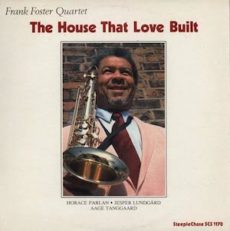
The House That Love Built ~ Frank Foster Quartet | By Eddie Carter
Frank Foster steps into the spotlight this morning with an underrated, exceptional album titled The House That Love Built (SteepleChase Records SCS-1170). Frank was adept as an arranger, bandleader, composer, and multi-instrumentalist. Horace Parlan on piano, Jesper Lundġard on bass, and Aage Tanggaard on drums complete the quartet. Foster wrote all five selections and my copy used in this report is the 1982 Danish Stereo album. Frank was born in Cincinnati, Ohio and educated at Central State College, and Wilberforce University. He led his own big band in the fifties and was a member of The Count Basie Orchestra. Several of his songs became huge hits for the band and are now jazz standards, and his resume reads like a Who’s Who of Jazz.
>Side One takes off with I Remember Sonny Stitt, an uptempo tribute to the saxophonist that gets underway with an enthusiastic melody by the foursome. Frank kicks off the solos with a vibrant statement of pure jubilation. Aage engages in a brisk exchange with Foster fueled by Horace and Jesper’s lively foundation preceding the closing chorus. The House That Love Built is a tender ballad with a quaint melody and the tenor sax providing a lead solo of graceful elegance. Horace marks the beginning of a beautiful romance on the next reading with an intimate conversation of beauty and warmth. The saxophonist returns, expressing a few final moments of thoughtfulness over the rhythm section’s delicate support into the soft climax.
A neatly paced toe-tapper titled John R and Garfield closes Side One with the quartet’s opening chorus in a light groove with everyone swinging easy. Horace opens with an exemplary performance on the lead solo. Frank is completely carefree on the second statement and Aage keeps perfect time with an impeccable swing on the closer. A concise drum introduction by Aage grows into a collective melody march to begin Side Two with Lightly Stroking. Jesper gets the first spot this time and executes an invigorating interpretation. Frank has the last word plenty to say on the next with a light, effervescent work that flows along efficiently. Horace gets the last word and ends with an exceptionally relaxing finale before the quartet’s exit.
Dunbar’s Delight cooks from the opening notes of the quartet’s vigorous theme and allows Foster a lengthy energetic first reading. Parlan meets the challenge with some high-voltage on the next solo followed by Tanggaard who supplies sharp brushwork for a propulsive showcase into ends on an upbeat note. The album was produced by Nils Winther and engineered by Niels Erik Lund. The album has a breathtaking soundstage with each instrument possessing remarkable clarity. If you’re in the mood for Hard-Bop on your next vinyl hunt, I invite you to check out The House That Love Built by The Frank Foster Quartet. It’s a very satisfying session from one of jazz’s best musicians and worthy of a spot in any library!
© 2021 by Edward Thomas Carter
More Posts: choice,classic,collectible,collector,history,instrumental,jazz,music,saxophone
Requisites
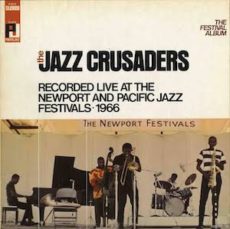
The Festival Album ~ The Jazz Crusaders | By Eddie Carter
This morning’s discussion is a 1966 live album by four friends from Houston, Texas who began performing locally in 1956. After moving to Los Angeles in 1961, they became The Jazz Crusaders, one of the best West Coast jazz groups. I became a fan of their music listening to Chuck Lansing of Cleveland’s jazz station, WCUY 92.3 FM. His opening theme was The Young Rabbits, taken from their second LP, Lookin’ Ahead (1962). The Festival Album (World Pacific Jazz ST-20115) contains two performances from The Pacific Jazz Festival and The Newport Jazz Festival. The quartet consists of Wayne Henderson on trombone, Wilton Felder on tenor sax, Joe Sample on piano, and Stix Hooper on drums. Jimmy Bond (tracks: A1, A2) and Herbie Lewis (tracks: B1, B2) on bass, complete the group. My copy used in this report is the 1967 Stereo reissue (Pacific Jazz ST-20115).
Trance Dance by Kenny Cox opens Side One with a collective soulful theme. Wayne goes first with a noteworthy contribution offering a relaxing informality. Wynton follows with an excellent solo of his own, then Joe gives a spirited closing reading ahead of the ensemble’s reprise and ending. A Summer Madness is the collaborative creation of Sample, Henderson, and Felder. Wayne leads the quintet on the mid-tempo melody, then entices the listener with a captivating first statement. Wilton builds a satisfying groove with inspired lines next. Joe unfolds the next reading with a mellow tone effortlessly, and Jimmy makes a brief remark into the finale and crowd’s ovation.
Henderson’s Young Rabbits is off to the races from the intensely hot opening notes of the melody. Felder takes the first solo at breakneck speed with electrically charged excitement. Sample steps up next for a high-octane statement. Stix provides an energetic interpretation leading to the vigorous ending. Sample’s Freedom Sound was the title tune of their debut album (1961). The trio begins this midtempo swinger with a march-like introduction developing into the quintet’s theme. Felder takes the lead with a cheerfully, light-hearted reading. Henderson swings comfortably into the next statement, and Joe wraps the album with a leisurely-paced performance powered by Herbie and Stix’s excellent groundwork.
This was The Jazz Crusaders’ twelfth LP for World Pacific Jazz and Pacific Jazz Records. *They were extremely popular and well known on the West Coast, but their first trip to The Newport Jazz Festival was significant because it introduced them to a whole new group of fans and brought them to the attention of the New York City jazz clubs. I only wish it would have been released as a two-record set with each festival highlighted on one LP. The Festival Album was produced by Richard Bock, and the sound quality of each session is quite good with an exquisite soundstage. For those fans that only know of The Crusaders’ music from the seventies and eighties, The Festival Album shows the group in excellent form live and gives a snapshot of the Hard-Bop sound they created when Jazz was their middle name! ~ *AllMusic Review by Thom Jarek – Source: AllMusic.com
~ Freedom Sound (Pacific Jazz PJ-27/ST-27), Lookin’ Ahead (Pacific Jazz PJ-43/ST-43) – Source: Discogs.com © 2021 by Edward Thomas Carter
More Posts: bass,choice,classic,collectible,collector,drums,history,instrumental,jazz,music,piano,saxophone,trombone

Requisites
London Calling: A Toast To Julie London ~ Lyn Stanley | By Eddie Carter
One of the best things I love about jazz is the discovery of old and new songs, classic and new artists, and bands with which I am not familiar. On one occasion, I visited Evolution Home Theater in Buckhead for the Atlanta Audio Club meeting and had the pleasure to meet and hear jazz vocalist Lyn Stanley. She treated the members to selections from her sixth LP, London Calling: A Toast To Julie London (A.T. Music, LLC – ATM 3107), and discussed how the album was recorded. This 2019 two-record release pays homage to the talented actress, jazz, and pop vocalist with other surprises. My copy used in this report is the limited edition, numbered 33 1/3 Stereo audiophile release.
She’s heard here with nine exceptional musicians; Mike Garson (tracks: A1, A2, A4, B1, B4 to C3, D2 to D4), Christian Jacob (tracks: B3, D1) on piano, John Chiodini (tracks: A1, A2, A4, D3) on guitar, Chuck Berghofer (tracks: A3 to B3, C3 to D1, D3), Mike Valerio (tracks: A1, A2, B1, B5 to C4, D2) on double bass, Paul Kreibich (tracks: A1, A2, B1, B4, C1 to C3, D2) on drums, Aaron Serfaty (A1, A2, A4, B1, B3 to D2) on drums, percussion, Luis Conte (track: C1), Brad Dutz (tracks: A1, A2, B1, B3, B4, C1 to C3, D1, D2) on percussion. What is unique about the album is that each song was recorded only once without any formal arrangements whatsoever, only chord charts with the musical roadmap created by Lyn and the band during the working demo sessions.
Ms. Stanley opens the album with an upbeat rendition of the 1936 song, Goody Goody by Matty Malneck and Johnny Mercer. The lyrics depict a woman getting her revenge on the man who hurt and left her and has now had the tables turned on him. It first appeared on Julie Is Her Name, Volume 2 (1958). Lyn beautifully expresses the song’s lyrics with a lively rendition of the opening and closing melody. Chiodini, Garson, and Valerio also add three spirited concise comments that swing freely. Call Me Irresponsible by Jimmy Van Heusen and Sammy Cahn is from Julie’s LP, The End of The World (1963). This tune shows Lyn is an inspired stylist as she cruises smoothly through the melody with artful simplicity. Chiodini and percussionist Brad Dutz appear at the introduction and finale with Garson, Valerio, and Serfaty providing a solid foundation throughout her presentation.
Bye Bye Blackbird was composed in 1926 by Ray Henderson and Mort Dixon. This song appeared on Julie (1958) and is a slow-tempo duet by Lyn and Chuck. Both vocalist and bassist complement each other in one of the most beautiful renditions I have ever heard. Lyn’s voice is soft and sweet matching Chuck’s bass walking tenderly on a short statement with his sensitive support to her vocals into a tranquil finale. I Heard It Through The Grapevine by Barrett Strong and Norman Whitfield is a Soul classic. It was a hit for Gladys Knight & The Pips on Everybody Needs Love (1967), Smokey Robinson & The Miracles on Special Occasion, and Marvin Gaye on In The Groove (1968). Lyn’s sultry interpretation about hearing a lover’s plan to leave their significant other from someone else is an excellent illustration of how she transforms this straightforward melody into a chillingly unique performance. Chiodini, Garson, Berghofer, and Serfaty provide the slowly rocking beat for her to tell the story.
Side Two starts with a 1928 song from the pen of Irving Berlin, How About Me? Ms. London introduced it on Around Midnight (1960) and the lyrics describe a display of regret and sadness for the loss of someone loved. The tempo moves to a medium beat for Lyn who kicks off the solo sequence with flawless enunciation, followed by Garson and Chiodini who split a perfectly constructed chorus. Cry Me A River by Arthur Hamilton was Julie’s first and biggest hit, making its debut on Julie Is Her Name (1955). It remained her signature song throughout her singing career. Like Ms. London’s version, a trio release featuring Barney Kessel on guitar and Ray Leatherwood on bass, Lyn is accompanied by John and Chuck who are the lush foundation behind her deeply affecting vocals. Chiodini also gives a passionately poignant reading before the trio’s tender climax.
As Time Goes By is songwriter Herman Hupfield’s most well-known composition. It premiered in the Broadway musical, Everybody’s Welcome (1931), but is best known as the song featured in the romantic drama, Casablanca (1942). Julie’s rendition first appeared on Our Fair Lady (1965). The ensemble’s version possesses a Bossa Nova flavor by the musicians and Lyn infuses the lyrics with a cheerfully happy tone, resulting in a delightful vocal interpretation. Christian and John match Ms. Stanley with two mellow statements that move along sprightly off the easy-going drive of Chuck’s bass, Aaron’s drums, and Brad’s percussion.
The first of two vocals of the timeless classic Summertime (1934) by George and Ira Gershwin and DuBose Heyward concludes both records. The song first appeared in the opera, Porgy & Bess (1935). Heyward wrote the lyrics based on his 1925 novel Porgy and it is sung as a mother’s lullaby to her baby. To date, the standard has over twenty-five thousand recordings. It is beloved by jazz musicians and vocalists worldwide and considered one of the greatest songs ever written. Julie sang it on Feelin’ Good (1965). Lyn and the quintet preserve the spirit of the song as a seductive slow tempo southern styled blues and her delivery of the lyrics are alluringly tender and expressive. John and Chuck take the spotlight, leading the quintet through one enchanting chorus preceding the bewitchingly beautiful ending.
Side Three starts with the Latin pop song It’s Impossible by Mexican songwriter Armando Manzanero who recorded it under the original title Somos Novios for his album, Somos Novios…Siempre Novios (1968). It was composed as an instrumental ballad. American composer and songwriter Sid Wayne added English lyrics two years later and it became a huge hit for Perry Como as the title tune of his album (1970). Lyn presents the lyrics with tender beauty and warmth while serenaded by Chiodini who plays a Spanish guitar and has a gentle solo as well. Berghofer and percussionists Conte and Serfaty provide the lush background behind Ms. Stanley’s delicate delivery.
Richard Rodgers and Lorenz Hart’s popular song Blue Moon (1934) was composed as The Bad In Every Man for the crime film, Manhattan Melodrama with different lyrics. After the film’s premiere, Hart eventually wrote more romantic lyrics for the song, and it has been a successful standard since two 1949 hit records by Billy Eckstine and Mel Tormé. Blue Moon opens Julie’s album, Julie Is Her Name, Volume 2 and in the version presented here, Lyn sings the lyrics sensuously at a slower tempo than Ms. London, blending superbly with John who provides a marvelous interpretation enhancing one of the prettiest tunes on the album.
George and Ira Gershwin contribute another jazz classic with Lyn’s version of I’ve Got A Crush On You. This song appeared in two different Broadway musicals, Treasure Girl (1928) and Strike Up The Band (1930). The vocal became a standard after renditions by Ella Fitzgerald, Frank Sinatra, and Sarah Vaughan. Ms. London featured it on Nice Girls Don’t Stay For Breakfast (1967). Lyn captures the melody perfectly with a warm, sincere interpretation and the song is perfect for couples to slow dance to. Chiodini answers her vocals with an impressive chorus backed by Garson, Berghofer, Kreitbich, and Serfaty preceding an intimately romantic conclusion.
Light My Fire was the first huge hit for the American Rock band, The Doors, first appearing on their debut release (1967). The song was a collaborative effort by Jim Morrison, Ray Manzarek, Robby Kreiger, and John Densmore. It appeared on Julie’s final studio album of Pop and Rock songs, Yummy, Yummy, Yummy (1969)! Lyn’s sultry voice caresses each word of the lyric with sensuous pleasure to John’s Flamenco flavored guitar playing, Aaron’s incredibly perfect percussion work, and Mike’s passionately powerful piano cascades that speak voluptuously.
Sway by Norman Gimbel and Pablo Beltran Ruiz appeared on Julie London Sings Latin In a Satin Mood (1963). The rhythm section’s gentle beat serves as a backdrop through the seductively, poignant introduction. Lyn’s tender, expressive opening, and closing vocals are immensely touching as Chiodini’s thoughtfully constructed reading of velvety-soft phrases. Lyn treats us to two beautiful melodies next; Go Slow by Debbie Kronck and Russell Garcia which appeared on Julie’s album, Make Love To Me (1957) and Nice Girls Don’t Stay For Breakfast by Bobby Troup and Jerome Leshay!
On the first tune, her bewitchingly lusty lyrics are the spark for a romantic evening ahead with the assistance of Chiodini, Serfaty, and Dutz who provide the gentle rhythm as she sings. Mike Valerio’s bass sets the mood perfectly for Lyn’s swinging interpretation of the second song’s lyrics illustrating her skillful phrasing into a subtle climax. You, The Night and The Music by Arthur Schwartz and Howard Dietz, premiered in the Broadway musical comedy, Revenge With Music (1934). Julie sang this timeless standard on her album, Around Midnight (1960). Lyn paints a compelling portrait of the lyrics as a Tango, making it her own with a unique delivery to a superbly done danceable beat. Garson matches the vocalist with an exquisite contribution sustained by the rhythm section’s rich accompaniment.
Ev’ry Time We Say Goodbye (1944) is one of Cole Porter’s most beautiful compositions from The Great American Songbook. It first appeared in Billy Rose’s musical revue Seven Lively Acts. This is a trio number with Lyn opening with an enchantingly vocal presentation possessing a deep romantic affection for the lyrics. Her bandmates Chiodini has a voluptuously gorgeous guitar solo and Berghofer matches the delicate softness of her tone with a tender bass beat, resulting in a stunningly perfect rendition. The finale is the second version of Summertime, this time a duet with Lyn and Mike. This tune opens with the pianist’s very pretty introduction capturing the beauty and sensitivity of the song into Lyn’s vocals which weaves a spell of love and intimacy in a style distinctively her own, completing the stories she and her colleagues tell so convincingly.
Lyn and John Chiodini produced the album and the men responsible for the excellent engineering on all the songs except It’s Impossible are Rouble Kapoor and Steve Genewick. Spencer Garcia was the engineer on It’s Impossible. The mastering is by Bernie Grundman of Bernie Grundman Mastering. Allen Sides of Ocean Way Recording is the mixing engineer, and the record was pressed at RTI (Record Technology Incorporated). The sound quality is stunning with a very realistic soundstage of Lyn’s vocals and the musicians’ instruments. If you have a mid-fi or high-end audio system, the music emerges from your speakers vibrantly transporting you into the studio alongside Lyn and the musicians.
Now that I have had the pleasure of hearing Lyn Stanley, I look forward to picking up the other albums in her discography. London Calling: A Toast To Julie London is a record that has it all, superb vocals, engaging compositions, excellent musicians, and a great sound that should be heard in its entirety to be fully appreciated. For those in search of fine jazz singing, I offer for your consideration London Calling: A Toast To Julie London by Lyn Stanley. A great collection of standards and abundant music for the money that once heard should earn her lots of new fans!
~ Around Midnight (Liberty LRP 3164/LST-7164), Everybody Needs Love (Tamla SM-706/SS-706), Feelin’ Good (Liberty LRP-3416/LST-7416), In The Groove (Tamla T-285/TS-285), Julie (Liberty LRP 3096/LST 7004), Julie Is Her Name (Liberty LRP 3066/LST 7027), Julie Is Her Name, Volume 2 (Liberty LRP 3100/LST 7100), Julie London Sings Latin In a Satin Mood (Liberty LRP-3278/LST-7278), Make Love To Me (Liberty LRP 3060/LST-7060), Nice Girls Don’t Stay For Breakfast (Liberty LRP-3493/LST-7493), Our Fair Lady (Liberty LRP 3392/LST-7392), Special Occasion (Tamla S-290/TS-290), Somos Novios…Siempre Novios (RCA Victor MKL-1785/MKS-1785), The Doors (Elektra EKL-4007/EKS-74007), The End of The World (Liberty LRP-3100/LST-7300), Yummy, Yummy, Yummy (Liberty LST-7609) – Source: Discogs.com
~ As Time Goes By, Blue Moon, Bye Bye Blackbird, Ev’ry Time We Say Goodbye, Summertime, You, The Night and The Music – Source: JazzStandards.com ~ Call Me Irresponsible, Cry Me a River, Goody Goody, How About Me, I Heard It Through The Grapevine, It’s Impossible, I’ve Got a Crush on You, Light My Fire, Sway – Source: Wikipedia.org
© 2021 by Edward Thomas Carter
More Posts: choice,classic,collectible,collector,history,instrumental,jazz,music,vocal
Requisites
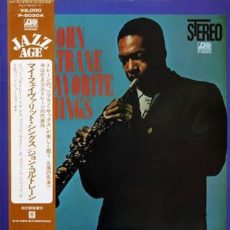
My Favorite Things ~ John Coltrane | By Eddie Carter
I was reading a few nights ago and wanted something to listen to before heading to bed, so I pulled out an old favorite that always transports me back to my childhood and still blows me away every time I hear it. This morning’s subject of discussion is My Favorite Things (Atlantic 1361/SD 1361) by John Coltrane that hit the stores in 1961. It is one of the most important albums in his discography and is a beloved record in my library. The personnel is a stellar one, Coltrane on soprano sax (tracks: A1, A2), tenor sax (tracks: B1, B2), McCoy Tyner on piano, Steve Davis on double bass, and Elvin Jones on drums. My copy used in this report is the 1971 Atlantic Jazz Age Series Japanese Stereo reissue (Atlantic P-6030A) by Warner-Pioneer Corporation.
Side One starts with a show tune from The Sound of Music (1959), My Favorite Things by Richard Rodgers and Oscar Hammerstein II. It became a huge hit for Coltrane and his signature song whenever he performed live. The trio opens with a highly contagious introduction, segueing into a beautifully constructed melody by the saxophonist. McCoy kicks off the first solo with a captivating reading that is a feast for the ears. John comes in slowly, then takes flight into the stratosphere with a joyously unrestrained statement that swings until it returns to earth for the climax. Everytime We Say Goodbye by Cole Porter is a beautiful song that Coltrane adapts as if it was written just for him with an elegantly graceful melody and opening statement. Tyner speaks with delicacy on the closing reading ahead of the foursome’s gentle ending.
Side Two takes off with a spirited version of Summertime by George and Ira Gershwin, and DuBose Heyward. John is ablaze from the start of the melody and ascends to an exhilarating height on the opening chorus. McCoy supplies the high-octane fuel for the second performance. Steve executes the next reading meticulously with great precision, and Elvin delivers a fierce attack on the finale into the quartet’s exit. But Not For Me by George and Ira Gershwin first appeared in the musical, Girl Crazy (1930). The quartet kicks off this energetic cooker with a vigorous theme. John builds the first interpretation with blazing heat to Steve’s bass and Elvin’s impressive timekeeping, then Tyner adds his imaginative ideas on the next statement into Trane’s aggressive improvisation during the closing chorus.
Nesuhi Ertegun supervised My Favorite Things, and the engineers are Phil Lehle and Tom Dowd. Together, both men provide a solid soundstage that is good enough to transport the listener to the studio with the musicians. For me, this album is an intriguing examination of the thin lines between Hard-Bop, Modal, and Free Jazz that still sounds as fresh today as when first released sixty years ago. If you are a fan of tenor sax or are just discovering the music of John Coltrane. I offer for your next vinyl hunt, My Favorite Things. An album of soothing and swinging music that I am sure will become a welcome addition to your library.
~ Everytime We Say Goodbye, Summertime, But Not For Me – Source: JazzStandards.com ~ My Favorite Things – Source: Wikipedia.org © 2021 by Edward Thomas Carter
More Posts: choice,classic,collectible,collector,history,instrumental,jazz,music,saxophone