

Requisites
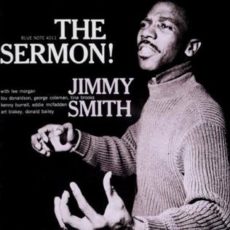
The Sermon! is a 1959 album by jazz organist Jimmy Smith. It was produced by Alfred Lion for the Blue Note record label. The album was recorded at The Manhattan Towers Hotel Ballroom on August 25, 1957 (#2) and February 25, 1958 (#1, 3). The engineer, Rudy Van Gelder, used the ballroom as a recording studio for ensembles to large for his parents’ Hackensack, New Jersey home studio where he recorded artists for Blue Note. Reid Miles designed the cover, Francis Wolff took the photograph and Ira Gitler wrote the liner notes.
Track Listing | 40:10
- The Sermon (Jimmy Smith) – 20:12
- J.O.S. (Jimmy Smith) – 11:56
- Flamingo (Edmund Anderson, Ted Grouya) – 8:02
Track 1 ~ Jimmy Smith – organ, Lee Morgan – trumpet, Lou Donaldson – alto saxophone, Tina Brooks – tenor saxophone, Kenny Burrell – guitar, Art Blakey – drums
Track 2 ~ Jimmy Smith – organ, Lee Morgan – trumpet, George Coleman – alto saxophone, Eddie McFadden – guitar, Donald Bailey – drums
Track 3 ~ Jimmy Smith – organ, Lee Morgan – trumpet, Kenny Burrell – guitar, Art Blakey – drums
The Sermon ~ Jimmy Smith | By Eddie CarterAs Johnny Hodges, Charlie Parker and Sonny Stitt were to the alto sax; Clifford Brown, Miles Davis and Dizzy Gillespie to the trumpet; John Coltrane, Coleman Hawkins and Sonny Rollins to the tenor sax; Duke Ellington, Thelonious Monk and Bud Powell were to the piano; Jimmy Smith was to the Hammond B-3 organ. From his 1956 Blue Note debut, A New Sound, A New Star until 1962 when he left the label moving to Verve Records and throughout the remainder of the decade, any release by the organist was praised as a major event in Jazz. Smith’s contributions to the development of modern jazz on the organ are as many fans and critics alike called him, “incredible”. An accomplished pianist originally, he didn’t begin playing the organ until he was twenty-eight years old but established and personified a jazz language for the instrument by mastering his approach of playing chords with his left hand, harmonic and rhythmic lines with his right hand while walking bass lines with his left foot.
I began my love affair with Jazz at the age of eight and my education into this extraordinary music on Jimmy’s 1959 LP, The Sermon (BLP 4011). It’s the companion to Houseparty, recorded at the same session but released a year earlier in 1958! The all-star group supporting Smith are Lee Morgan on trumpet (tracks: A1, B1, B2); Lou Donaldson (track: A1), George Coleman (track: B1) on alto sax; Tina Brooks on tenor sax (track: A1); Kenny Burrell (track: A1, B2), Eddie McFadden (track: B1) on guitar; Art Blakey (tracks: A1, B2), Donald Bailey (track: B1) on drums. My copy used in this report is the 1992 Toshiba-EMI Limited Japanese Stereo reissue (BST 84011-BN 4011). Jimmy begins the sidelong title tune (dedicated to label mate, Horace Silver) at a bluesy groove with a cool lyricism introducing the melody tastefully supported by Kenny and Art. Smith sustains the momentum on the opening solo at a low flame, building each phrase gradually and enveloping each beat to a marvelous conclusion. Kenny imprints his unmistakable stamp on the next reading with emphasis. Tina is beautifully captured on the third performance with considerable zest and joyous feeling. Lee preaches the next statement of this marathon jazz service with an exquisite interpretation. Lou taps the same impeccable vein on the final solo with a sinuous blues workout into the sextet’s collective summation and Jimmy’s slow fade into nothingness.
Smith opens Side Two, hitting a lively beat that doesn’t let up on his uptempo composition, J.O.S., titled for his full name, James Oscar Smith. Jimmy’s trio of Eddie McFadden and Donald Bailey sets the tone with a high-spirited introduction, blending into the opening statement by Coleman who cooks with boundless energy that’s rocking all the way. Morgan elevates the next solo with the burning intensity of a raging inferno fueling the rhythm section into a high-octane culmination. McFadden is given plenty of space on the next reading and doesn’t disappoint with electrically charged energy that pulls no punches. Smith cooks so hard with a sweltering, soulful closing performance so infectiously swinging, he’s almost unstoppable preceding the ferocious climax. The LP concludes with the lovely ballad, Flamingo by Edmund Anderson and Theodor Grouya, a favorite tune and regular feature of bandleader Duke Ellington. Lee leads the quartet on the theme, setting down a subtle melody that’s absolutely gorgeous. He also reveals his more lyrical side on the first statement with an intimate interpretation, succeeded by Kenny who gives a brief, elegantly articulated reading over Jimmy and Art who anchor with reflective tenderness into the theme’s reprise and finale. These are three excellent reasons why the jazz world referred to him as “The Incredible Jimmy Smith”. His highest praise came from Miles Davis who after hearing him, paid Jimmy the greatest compliment by saying, “this cat is the eighth wonder of the world”. The sound quality is superb with a brilliant soundstage throughout the treble, midrange, and bass spectrum that puts your sweet spot in the center surrounded by the musicians enjoying their music first hand. The Sermon is a must for anyone who loves jazz organ, and an essential acquisition for your jazz library that’s perfect to experience on Sunday, or any other day of the week!
After Smith’s enormous hit of Walk on The Wild Side from his Verve Records debut, Bashin’, Alfred Lion capitalized on his popularity by issuing nine albums by the organist from 1962 to 1968. Jimmy Smith Plays Fats Waller came out in 1962; Back At The Chicken Shack, and Rockin’ The Boat in 1963; and Prayer Meetin’ hit the stores in 1964! The other five titles were previously unissued because of his healthy Blue Note catalog of LP’s that was still selling well: Softly As A Summer Breeze came out in 1965; Bucket and Open House in 1966; I’m Movin’ On in 1967 and Plain Talk in 1968! In 1979 as a reissue label under United Artists Records, Blue Note Classic released Confirmation and Cool Blues in 1980 and On The Sunny Side in 1981! King Record Company released a Japanese Mono compilation album of 45-rpm records titled The Singles. In 1984, Blue Note released another Japanese album consisting of unreleased tracks, Special Guests. Jimmy eventually resigned with Blue Note after the label’s resurgence in 1985, recording four studio albums and two live performances, Go For Whatcha Know in 1986; *The Master in 1994; *The Master II; *Standards in 1998; *Six Views of The Blues in 1999 and the final Blue Note album, *Straight Life was released in 2007, two years after his death in 2005!
~ A New Sound, A New Star (Blue Note BLP 1512-BST 81512/BLP 1514-BST 81514); Back At The Chicken Shack (BLP 4117/BST 84117); Bashin’ (Verve Records V-8474/V6-8474); Bucket (BLP 4235/BST 84235); Confirmation (Blue Note Classic LT-992); Cool Blues (LT-1054); Go For Whatcha Know (BT-85125); Houseparty (BLP 4002/BST 84002); I’m Movin’ On (BLP 4255/BST 84255); Jimmy Smith Plays Fats Waller (BLP 4100/BST 84100); On The Sunny Side (LT-1092); Open House (BLP 4269/BST 84269); Plain Talk (BST 84296); Prayer Meetin’ (BLP 4164/BST 84164); Rockin’ The Boat (BLP 4141/BST 84141); Six Views of The Blues (CDP 21435); Softly As A Summer Breeze (BLP 4200/BST 84200); Special Guests (BNJ-50101); Standards (CDP 21282); Straight Life (Blue Note Connoisseur Series CDP 85192); The Master (CDP 30451); The Master Two (CDP 554662); The Singles (K18P-9280) – Source: Discogs.com
*CD-albums ~ Flamingo – Source: Wikipedia.org © 2020 by Edward Thomas Carter

More Posts: choice,classic,collectible,collector,history,instrumental,jazz,music
Requisites
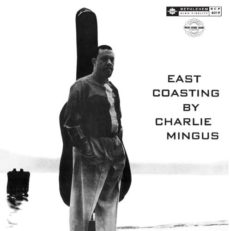
East Coasting is an album by Charles Mingus, recorded in New York City on August 16, 1957 for the Bethlehem record label and released later the same year. All of the songs were composed by Mingus except where noted.
TRACKLIST | 38:49
- Memories of You [Take 7] (Eubie Blake, Andy Razaf) – 4:27
- East Coasting [Take 4] – 5:13
- West Coast Ghost [Take 6] – 10:2
- Celia [Take 5] – 7:54
- Conversation [Take 16] – 5:28
- Fifty-First Street Blues [Take 4] – 5:48
- East Coasting [alternate take] – 5:30
- Memories of You [alternate take] (Blake, Razaf) – 4:42
PERSONNEL
- Charles Mingus – bass
- Clarence Shaw – trumpet
- Jimmy Knepper – trombone
- Shafi Hadi – alto saxophone, tenor saxophone
- Bill Evans – piano
- Dannie Richmond – drums
East Coasting ~ Charles Mingus | By Eddie Carter
This next LP from the library is one of the underrated jewels in the discography of jazz legend, Charles Mingus. A distinguished bandleader, bassist, civil rights activist and composer, Mingus played on and produced some of the greatest albums during the fifties. He founded an independent record label, Debut Records in 1952 with his first wife, Celia, and drummer Max Roach. Charles also recorded for several record labels throughout his career, Atlantic, Candid, Columbia, Impulse, Mercury and United Artists Jazz. For his autobiography, Beneath the Underdog: His World as composed by Mingus, co-written with Louis Lomax, the bassist worked for nearly two decades writing the book until it was published in 1971. The original manuscript totaled nearly fifteen-hundred pages, but the published copy was reduced by nearly two thirds. The album offered now for your consideration is East Coasting (Bethlehem Records BCP 6019), released in 1957. It comes four years after Jazz at Massey Hall and two years before his 1959 Post-Bop masterpiece, Mingus Ah Um. The lineup is Clarence Shaw on trumpet; Jimmy Knepper on trombone; Shafi Hadi on alto and tenor saxes; Bill Evans on piano and Dannie Richmond on drums. My copy used in this report is the 2014 Pure Pleasure UK Mono Audiophile reissue (PPAN 6019).
The album opener is the 1930 song, Memories of You by legendary jazz, ragtime pianist Eubie Blake and Andy Razaf. Shaw on muted trumpet and Mingus present the introduction affectionately preceding the sextet’s tender melody. Evans takes the first solo with a brief reading of elegant sincerity, revealing a glimpse of what he would play two years later on Kind of Blue. Knepper is up next, caressing each note with a lushness and warmth conveying his deepest feelings and roots in a personal expression that will linger long after the song ends. Hadi opens things up on the song’s final interpretation with a short tenor solo of potent playing that’s superbly matched by Richmond’s pensive brushwork into the ensemble’s melodic closing chorus. The title tune is a lighthearted medium tempo swinger and the first of five originals by Mingus making up the remainder of the album. The solo order is Knepper, Evans, Shaw, Hadi and opens with the sextet’s spirited theme treatment. Jimmy is up first with a vivaciously spirited opening statement swinging smoothly to a splendid climax. Bill makes the next solo his own with an exceptional performance that’s completely infectious. Clarence also captivates with a reading that bounces along off the rhythm section’s supplement. Shafi, still on tenor, takes the stage last, wailing on a bewitchingly delightful presentation into a dazzling ending.
West Coast Ghost ends the first side with a distinctive mixture of bop and the blues bringing to mind the street musicians march through the French Quarter in New Orleans. Mingus describes the tune as himself because while living in New York, many of his peers thought him to be an East Coast musician exclusively. That wasn’t the case; Charles saw himself as a West Coast bassist because he also had a home in California and spent a lot of time there also. Clarence leads off with a bright, relaxed interpretation. Shafi soars seamlessly on the next solo, holding no punches with a stimulating sound that’s irresistible. Bill communicates his points well on a luminous performance, then Jimmy hits a splendid pace on the fourth interpretation with imposing authority. Charles puts an exclamation point on this enjoyable tune, casting his spell with a gripping presentation before the reprise. Celia, a poignantly beautiful ballad by Mingus named for his wife opens the second side. She was a producer of documentaries and they were married from 1951 to 1958. The song starts with a gentle introduction by the trio possessing a quiet fire that glows deeply into Clarence’s dreamy muted trumpet for the opening and closing melody. Shafi leads off this time on alto with a soft, sensuous interpretation. Jimmy comes next, delivering an affectionately delicate message. Bill follows him with an intimately lyrical performance that’s stunning. Clarence takes the final bow with the mute off for an enthralling performance before the tender-hearted coda.
The sextet carries on a medium tempo dialogue for Mingus’ Conversation, opening their chat with a bluesy melody in unison led by the front line. Clarence, Jimmy, and Shafi, back on tenor speak individually for one chorus each, then join forces for a three-instrument talk on the next two verses. Bill sums up the song and discussion nicely with an effective solo performance preceding the ending. The closer is Charles’ Fifty-First Street Blues named for the street he and Celia lived on at the time. She gave the song its name and it’s presented with a relaxed beat. Shafi goes to work first with a splendid opening statement, Clarence takes a brassy bite out of the second reading, then Jimmy gives an utterly charming reading exhibiting his rhythmic flexibility very effectively. Bill eases into the final interpretation as mild as a smooth sherry propelled by the sweet beat of Charles’ bass and Dannie’s drums.
The personnel on East Coasting were all members of The Jazz Workshop at the time it was recorded except for Bill Evans and Clarence Shaw. This is also the only time I know of that Evans and Mingus appeared together on an LP. Clarence Shaw comes from Detroit and played with Kenny Burrell, Donald Byrd, Wardell Gray, and T-Bone Walker among others. Jimmy Knepper was born and raised in Los Angeles, he was a significant musician in the orchestras of Woody Herman, Stan Kenton, and Claude Thornhill, and also played with alto saxophonist Charlie Parker. Shafi Hadi, born Curtis Porter comes from Philadelphia, Pennsylvania but grew up in Detroit gaining several years of rhythm and blues experience as an alto saxophonist, before embarking on a jazz career also playing the tenor sax. Bill Evans joined The Miles Davis Sextet in 1958, appearing on the album Jazz Track and Miles’ timeless classic, Kind of Blue a year later. After leaving Davis, he formed a trio that would become the gold standard for all piano, bass, drums groups that would follow and hailed as one of the greatest ensembles in jazz. Dannie Richmond who I became acquainted with on the 1960 album, Jenkins, Jordan, and Timmons was born in New York and raised in Greensboro, North Carolina. He began as a rhythm and blues tenor saxophonist but would abandon both the instrument and the music in 1956 to become a jazz drummer. The sound quality of this Mono reissue is breathtaking with crystal clear transparency throughout the highs, midrange, and low end. The remastering by Ray Staff also makes this album, a serious choice to consider auditioning for your library. If you’re a fan of Cool Jazz and Hard-Bop, East Coasting is an excellent and quite intriguing example of both styles by one of the best musicians in jazz, Charles Mingus!
~ Jazz at Massey Hall (Debut Records DEB-124); Jazz Track (Columbia CL 1268); Jenkins, Jordan, and Timmons (Prestige New Jazz NJLP 8232); Kind of Blue (Columbia CL 1355/CS 8163); Mingus Ah Um (Columbia CL 1370/CS 8171) – Source: Discogs.com
~ West Coast Ghost, Fifty-First Street Blues, Personnel – Source: Album liner notes by Nat Hentoff
~ Memories of You – Source: JazzStandards.com
~ Remastered by Ray Staff at Air Mastering, Lyndhurst Hall, London
Charles Mingus, Debut Records, Beneath the Underdog – Source: Wikipedia.org
More Posts: bass,choice,classic,collectible,collector,history,instrumental,jazz,music
Requisites
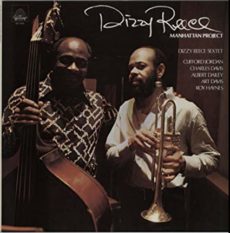
Manhattan Project is an album by Jamaican-born jazz trumpeter Dizzy Reece featuring performances recorded at Blue Rock Studio, N.Y.C. on January 17, 1978 and released on the Bee Hive label.
Track List | 47:16 All compositions by Dizzy Reece except as indicated- Con Man – 8:55
- Manhattan Walk – 7:59
- Yule On The Hudson – 9:05
- Woody ‘n’ You (Dizzy Gillespie) – 13:20
- One For Trane (Mickey Bass) – 7:57
- Dizzy Reece – trumpet
- Clifford Jordan – tenor saxophone
- Charles Davis – tenor saxophone
- Albert Dailey – piano
- Art Davis – bass
- Roy Haynes – drums
Manhattan Project ~ Dizzy Reece Sextet | By Eddie Carter
Submitted for your consideration now is an album by trumpet player Dizzy Reece. Manhattan Project (Bee Hive Records BH 7001) is the only album he recorded for the Evanston, Illinois label. Reece was born in Kingston Jamaica and attended the Alpha Boys School where he began playing the baritone sax before switching to the trumpet at the age of fourteen. It’s also during this time where he got his nickname Dizzy, which has nothing to do with Dizzy Gillespie. He became a professional musician by the age of sixteen and has played with some of the greatest jazz musicians in the United States, England, and France. On this date, he performs with an outstanding quintet; Charles Davis, and Clifford Jordan on tenor sax; Albert Dailey on piano; Art Davis on bass and Roy Haynes on drums. My copy used in this report is the 1978 Stereo album, the only release on LP.
Con Man, the first of three tunes from Reece’s pen starts Side One with a brief trio introduction that segues into the ensemble’s speedy theme. Dizzy begins a lengthy performance that swings with limitless energy convincingly. Clifford and Charles take the reins next for two incendiary solos of intense heat. Albert maintains the high-voltage current on the next reading with his fingers providing plenty of electricity. Roy adds a brisk footnote that glows brightly preceding the sextet’s lively closing chorus. Dizzy’s Manhattan Walk takes the sextet on an adventurous evening stroll through the city with the group speaking in unison on the modal melody led by the front line. Reece goes first, haunting the streets like a restless spirit but with a hypnotic emotion that’s irresistibly seductive. Jordan gets the next turn, revealing his abundant lyricism and Dailey follows exhibiting formidable creativity preceding the ensemble continuing their walk down the street into the fadeout. The first side closes with the third Reece tune; Yule on The Hudson flies from the opening notes of the trio’s introduction with an astounding workout by Roy into the ensemble’s high-powered theme treatment. Dizzy takes his trumpet for a thrilling ride on the first solo; Clifford illuminates the next interpretation with some splendid work. Charles takes over for a spirited presentation possessing equal amounts of speed and energy. Albert continues with an incisively, infectious exploration that takes hold of you and doesn’t let go. The front line reconvenes for an exciting conversation among themselves, then Roy joins them to wrap up the solos with a few final remarks of musical bliss before the climax.
The ageless jazz standard, Woody ‘n’ You by Dizzy Gillespie opens Side Two making a grand out-of-harmony ensemble entrance with Dizzy in front segueing into the familiar rapid melody pace. Reece takes off first with a supercharged solo establishing he’s in complete control of his instrument. Clifford offers an exceptional display of his mastery on the tenor sax with a radiant reading. Charles gives a breathtaking performance next that travels to stratospheric heights. Albert gives a brilliant solo that’s extremely clever and inspired by Art’s bouncy bass and Roy’s impeccable timekeeping. Dizzy launches his second reading like a rocket with an invigorating presentation, then shares the spotlight with Roy for a few red-hot exchanges into the out-of-step climax. One For Trane by bassist Mickey Bass is a blues dedicated to John Coltrane and the sextet turns the heat up on the uptempo theme collectively. Albert solos first, dispensing passionate fury that sinks its teeth into the opening statement with fiery intensity and joyous spontaneity. Dizzy steps into the spotlight next with an exhilarating account illustrating his flawless technique and stylistic versatility. Charles charges into the third solo with cheerful optimism, then Clifford wails his behind off on the next scintillating performance. Albert has the final word on a vigorously energetic presentation culminating with the ensemble’s stunning finish.
Manhattan Project was produced by Jim Neumann, a noted jazz record producer, and the founder of Bee Hive Records, and Fred Norsworthy whose excellent work as an engineer and producer can also be found on jazz recordings for Black Lion Records, Interplay Records, Jazzbank, Muse Records, PJL, Storyville and Trip Jazz. The album was pressed at Wakefield Manufacturing in Phoenix, Arizona. The lacquer was cut by Mastering engineer Brian Gardner who worked at Trident Studio in London, before working at Allen Zentz Mastering and Bernie Grundman Mastering in Hollywood, California. He currently owns Brian Gardner Mastering and the listener can tell a lot of care went into making the best sounding record at the time. Recording Note: To achieve a tight, cohesive sound, Dizzy removed some of the sound baffles in the studio. This creates a close blending of instruments not unlike some of the ’50s. The album has a superb soundstage throughout the treble, midrange and bass spectrum and delivers a crystal-clear sound of the instruments.
Dizzy Reece, now eighty-eight years young is still active as a musician and writer and has recorded albums for Blue Note, and other labels including Futura, Interplay Records, Jasmine, Jazz Vision, and New Jazz. On this album, the leader and his colleagues serve up a Hard-Bop feast with lots of energy that’s put together very well and shows these guys have a perfect balance of technique, intellect, and emotion. If you’re a fan of jazz trumpet, I invite you to audition Manhattan Project for a spot in your library. It’s a compelling album that’s sure to satisfy almost any jazz appetite by the other trumpeter named Dizzy whose recognition as a bandleader, composer, and gifted musician is long overdue.
Recording Note – Source: Album liner notes by Brian Davis Woody ‘n’ You – Source: JazzStandards.com, Wikipedia.org
More Posts: choice,classic,collectible,collector,history,instrumental,jazz,music,trumpet
Requisites
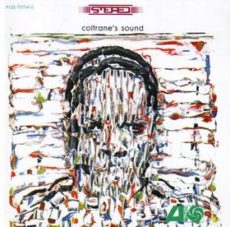
Coltrane’s Sound is an album credited to jazz musician John Coltrane, released in 1964 on Atlantic Records, catalog SD 1419. It was recorded at Atlantic Studios during the sessions for My Favorite Things, assembled after Coltrane had stopped recording for the label and was under contract to Impulse! Records. Like Prestige and Blue Note Records before them, as Coltrane’s fame grew during the 1960s Atlantic used unissued recordings, releasing them without either Coltrane’s input or approval.
Track Listing | 38:18 ~ Original Recording / 50:33 CD Reissue *All compositions are by John Coltrane except where mentioned
- The Night Has A Thousand Eyes ~ Buddy Bernier, Jerry Brainin ~ 6:51
- Central Park West ~ 4:16
- Liberia ~ 6:53
- Body and Soul ~ Edward Heyman, Robert Sour, Frank Eyton, Johnny Green ~ 5:40
- Equinox ~ 8:39
- Satellite ~ 5:59
- John Coltrane ~ tenor saxophone except for soprano Central Park West
- McCoy Tyner ~ piano
- Steve Davis ~ bass
- Elvin Jones ~ drums
- Nesuhi Ertegün ~ production
- Tom Dowd ~ engineering
- Marvin Israel ~ photography
- Ralph J. Gleason ~ liner notes
Fans of Modern Jazz know that John William Coltrane was in a league of his own as a bandleader, composer, soprano and tenor saxophonist, making some of his most substantial contributions to the music genre recording for Atlantic, Impulse and Prestige. The album up for discussion is Coltrane’s Sound (Atlantic 1419), originally recorded in 1960 at the same session that also gave the jazz world, My Favorite Things. This album was released in 1964, three years into Coltrane’s contract with Impulse Records, capitalizing on his increasing popularity during the first half of the sixties. Though criminally underrated, it’s an outstanding program of two timeless evergreens and four original tunes that Coltrane demonstrates are just as enjoyable as the standards. This album in my opinion also helps solidify his place as one of the most important musicians of the twentieth century. Completing the quartet are McCoy Tyner on piano, Steve Davis on bass and Elvin Jones on drums. My copy used in this report is the 2010 Rhino Records US Stereo Audiophile Reissue (SD 1419–R1 1419).
Side One opens with a sparkling rendition of The Night Has a Thousand Eyes, written in 1948 by Jerry Brainin and Buddy Bernier. This jazz and pop standard made its introduction in the film noir crime drama Night Has a Thousand Eyes, released that year. The movie was based on the 1945 novel by author Cornell Woolrich. The song is one of the most popular standards in The Great American Songbook and has been recorded numerous times as a vocal and instrumental. Sometimes played and sung sublimely, the quartet offers a lively theme treatment that’s inspiring. John starts the soloing charging out the gate with a vigorous performance. McCoy heats up the closing reading with exuberant enthusiasm into the coda. Trane turns to the soprano sax for Central Park West, the first of four tunes by the leader. It opens with an alluring introduction and ends with an equally tender melody led by John who also expresses gentle feelings on the opening statement with a soft timbre. The song’s final solo by McCoy is an intimately polite presentation anchored by the affectionate infrastructure of Steve and Elvin.
The first side wraps up with Coltrane’s Liberia, returning the foursome to an uptempo beat with a sprightly theme treatment in unison. John takes the opening statement, gradually building each verse efficiently into a passionate climax. Tyner displays his strong chops on a short closing solo that’s stunning into Trane’s reappearance for the finale. The ageless classic Body and Soul begins the second side with a midtempo rendition by the quartet. It was written in 1930 by Frank Eyton, Johnny Green, Edward Heyman, Robert Sour. The most famous instrumental version was made in 1939 by Coleman Hawkins for Bluebird and it’s one of the most recorded standards in the history of music. The trio led by McCoy’s cheerful piano introduces this chestnut and John provides a succulent treat of what’s in store on the opening melody and heightens the mood on the lead solo. McCoy flavors the next reading with a joyful swing to the infectious beat, then Coltrane makes a final statement that’s brief, but clever leading to the blissful conclusion.
Up next is Equinox, a slow tempo blues by John that was named by his first wife, Naima. The equinox occurs twice a year, the first one around March 21st and the second by September 23rd. It’s the point when the sun crosses the equator with day and night, everywhere on earth approximately at an equal length. The rhythm section opens the song sensuously into Trane’s elegantly tender opening chorus and passionate solo. Tyner concludes the readings with a delicately gentle performance over the soothing support of Davis’ bass and Jones’ elegant timekeeping. Coltrane’s Satellite, the album finale is a trio performance following in the footsteps of Sonny Rollins’ trio LP’s with just the bass and drums providing the power behind him. This tune is a jubilant joyride with John blowing fire on the theme and excitingly fierce solo. Steve dazzles with feisty exuberance and Elvin brings the heat with aggressive brushwork behind John’s reprising the theme into the climax.
The man behind the dials of the original recording was one of the best engineers in the business, Tom Dowd and Nesuhi Ertegün supervised the album’s production. Bernie Grundman cut the lacquers from the original analog masters, utilizing premium 180-gram audiophile vinyl by RTI (Record Technology Incorporated). The sound quality of Mr. Dowd’s work has been beautifully remastered and is amazing throughout the treble, midrange and bass spectrum with a very revealing soundstage for the instruments placing the listener’s favorite chair in the center of the studio alongside the musicians. If you’re in the mood for an album of Hard-Bop and Modal Jazz, I invite you to audition Coltrane’s Sound by John Coltrane. It’s a great LP that makes a profound statement to a legendary jazz giant and a title that should not only appease and delight the serious jazz aficionado but the first-time listener as well! See you next month and Happy Listening Gang!
~ Body and Soul (Bluebird B-10523-A); My Favorite Things (Atlantic 1361/SD 1361) – Source: Discogs.com
~ The Night Has a Thousand Eyes, Body and Soul – Source: JazzStandards.com
~ Equinox – Source: The Merriam-Webster Unabridged Dictionary, Wikipedia.org
More Posts: choice,classic,collectible,collector,history,instrumental,jazz,music,saxophone
Requisites
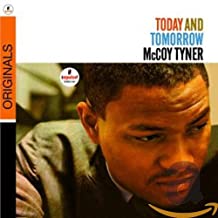
Today and Tomorrow is the fourth album by jazz pianist McCoy Tyner. It was produced by Bob Thiele and recorded for the Impulse! label in 1963 and 1964.
Tracks | 38:44 ~ All compositions by McCoy Tyner except where noted
- Contemporary Focus ~ 8:28
- A Night in Tunisia (Gillespie) ~ 5:07
- T ‘N A Blues (Jones) ~ 4:05
- Autumn Leaves (Kosma) ~ 6:10
- Three Flowers ~ 10:12
- When Sunny Gets Blue (Marvin Fisher, Segal) ~ 4:42
- McCoy Tyner ~ piano
- Jimmy Garrison ~ bass (4-9)
- Albert Heath ~ drums (4-9)
- John Gilmore ~ tenor saxophone (1-3)
- Thad Jones ~ trumpet (1-3)
- Frank Strozier ~ alto saxophone (1-3)
- Butch Warren ~ bass (1-3)
- Elvin Jones ~ drums (1-3)
I was in the mood to hear some piano jazz a few nights ago when I came across a title I’d not listen to for a while. I’ve never heard anything by pianist McCoy Tyner that I didn’t like and the album up for discussion before learning of his passing on March 7, 2020, is no exception. I placed the record on my Dual 1246 turntable, dropped the stylus and became immersed in the music of this gifted musician. Today and Tomorrow (Impulse! A-63) was recorded and released in 1964 while McCoy (only twenty-five years old at the time) was still a member of The John Coltrane Quartet. Here, he’s featured in three sextet and trio settings each leading an all-star group of Thad Jones on trumpet; Frank Strozier on alto sax; John Gilmore on tenor sax; Butch Warren on bass; Elvin Jones on drums (tracks: A1, A3, B2); Jimmy Garrison on bass; Tootie Heath on drums (tracks: A2, B1, B3). My copy used in this report is the 1972 Stereo reissue (Impulse!-ABC Records AS-63), the fourth US pressing.
Contemporary Focus, the first of three tunes by McCoy opens this six-song journey with a rousing collective midtempo theme treatment led by Thad who wails strongly on the lead solo. John and Frank demonstrate their strengths with vibrant enthusiasm for the next two readings. McCoy follows with a briskly swinging interpretation, then Butch and Elvin make the most of two brief juicy opportunities ahead of the closing chorus and fadeout.
A Night In Tunisia by Dizzy Gillespie and Frank Paparelli is a jazz standard from 1942 with many notable vocal and instrumental recordings to its credit. Jimmy Garrison and Tootie Heath provide the musical backing for this uptempo trio rendition beginning with an exhilarating theme treatment in unison. The pianist begins the opening statement at a very high temperature of molten intensity, then Tootie responds with a riveting performance that has lots of fireworks ahead of the pianist’s exuberant finale.
T’N A Blues, also by Tyner strolls in next to end the first side at midtempo with a relaxed attitude by the sextet on the opening chorus. Gilmore and Tyner are the featured soloists and John goes to work first with an infectiously happy groove. McCoy provides the summation on a leisurely paced performance that’s very danceable leading to the ensemble reassembling for the coda.
Side Two opens with the 1945 popular jazz standard Autumn Leaves by Joseph Kosma, Jacques Prévert who wrote the French lyrics for the song’s original title, Les Feuilles Mortes (The Dead Leaves), and Johnny Mercer who created the English lyrics. The trio exhibits their infectious chemistry on a lively intro that evolves into the sprightly opening chorus. McCoy kicks off the solos with a dazzling display of finger dexterity with a spirited performance of effortless spontaneity. Jimmy steps in next, walking his bass with bristling vitality and tastefulness, then Tyner communicates a few final choruses of brisk dialogue preceding the effervescent reprise and climax.
Three Flowers is the leader’s longest composition on the album, a mid-tempo waltz offering substantial solo space to himself, Thad, Frank, and John. The sextet opens with a delightfully charming melody and Tyner starts the soloing with an engaging reading possessing incredible beauty and enchantment. Thad follows with a beautifully phrased, vivaciously soulful presentation that’s lyrically pleasant. Frank keeps the ingredients stirring on the next solo with inherent high spirits, and buoyant lyricism. John takes the last spot with an exquisite solo that swings with a swagger into the melody reprise and coda.
The 1956 jazz standard, When Sunny Gets Blue by Marvin Fisher and Jack Segal brings the album to a close with a thoughtfully tranquil theme treatment led by Tyner. McCoy has the solo showcase to himself and gives an enchanting reading of elegant tenderness bringing the listener home with a gentle closing chorus and culmination.
The recording by Rudy Van Gelder is splendid with an excellent soundstage throughout the treble, midrange, and bass spectrum. Each instrument emerges from your speakers to your listening chair as if you’re in the studio with the musicians as they’re recording, producing a gorgeous sound reminiscent of his Blue Note recordings of the period. I had the pleasure of seeing McCoy Tyner three times live, twice here in Atlanta where I got to meet him and once at The Village Vanguard in New York City. He was an incredible musician and wonderful man who was never too busy to meet and chat with his fans, yours truly among them. If you’re a fan of piano jazz or are looking for a terrific album of Modal Jazz and Post-Bop that’s subdued, subtle, and also energetic, I offer for your consideration, Today and Tomorrow by McCoy Tyner. An extremely skilled musician who whether in performance or on record always brought out the absolute best in each of his bandmates.
Autumn Leaves, Night In Tunisia – Source: JazzStandards.com When Sunny Gets Blue – Source: Wikipedia.org © 2020 by Edward Thomas Carter
More Posts: choice,classic,collectible,collector,history,instrumental,jazz,music,piano