

Requisites
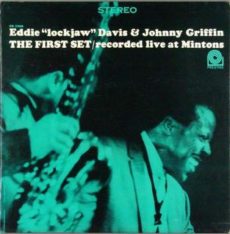
The First Set: Live At Minton’s ~ Eddie “Lockjaw” Davis & Johnny Griffin | By Eddie Carter
Up next from the library this morning is the second of four live sets at Minton’s Playhouse by The Eddie “Lockjaw” Davis~Johnny Griffin Quintet. The album released in 1964 is titled The First Set (Prestige PR 7309/PRST 7309) and the incredible trio of Junior Mance on piano; Larry Gales on bass and Ben Riley on drums anchors both saxophonists. The other three records are The Tenor Scene released in 1961, later reissued as The Breakfast Show in 1965. Live! The Midnight Show came out in 1964 and The Late Show also hit the stores in 1965. The club was founded by retired tenor saxophonist Henry Minton in 1938, becoming famous for its many jam sessions and is credited for the birth of Bebop during the forties. It’s also known for its role in the development of modern jazz during the fifties and if you’re new to this album and both saxophonists, Eddie is featured on the left speaker and Johnny is on the right. My copy used in this report is the 1971 Stereo reissue (PRT 7309).
The quintet starts the beat by giving the audience some heat on the album opener, Billie’s Bounce by Charlie Parker, a jazz classic written in 1945 that was named for the secretary of Dizzy’s agent, and trumpet player Billy Shaw. The tenor men lead the rhythm section on a sizzling theme treatment. Eddie ignites the first solo with a melodic explosion of jet-propelled verses. Junior steps in next glowing radiantly on a luminous statement, then Johnny produces a roaring fire on the closing solo. Both horns exchange a few more short riffs into the closing chorus.
The first of two Thelonious Monk originals, Epistrophy was written in 1941 with drummer Kenny Clarke and ends Side One. The quintet begins the quirky theme at midtempo, then Davis kicks off the solos with a very clever interpretation illustrating his firm-tone and remarkable phrasing. Junior makes a terrific impression on the second statement. Griff gives the third reading a bluesy beat that’s skillfully done and Larry delivers the final solo with an artistic maturity beyond his twenty-five years.
Side Two starts with the second Monk tune, Well, You Needn’t, composed in 1944 and dedicated to jazz vocalist Charlie Beamon, who when told the tune was going to be named after him replied: “Well, you need not”. The ensemble’s opening chorus has a contagious beat that’s suitable for dancing that Monk liked to do on stage during several of his songs. Eddie strolls along at a leisurely pace on the first solo, delivering a charmingly, cheerful performance. Junior gets the crowd to clap along on his superbly articulate solo next, then Johnny offers a resourcefully peppy reading. Larry concludes with a vivacious presentation with Ben providing perfect time and firm beat in support.
The finale is I’ll Remember April by Gene De Paul, Patricia Johnston, and Don Raye. This song made its debut in the 1942 Abbott and Costello comedy, Ride ‘Em Cowboy and is one of the most popular jazz standards. The quintet’s rendition is a fun tune to play and it swings from the start of the introduction. Eddie wails with an assertive tone and limitless effervescence on the lead solo. Junior cooks on the next reading with an electrifying statement, then Griff charges into the next solo with a robust workout of startling speed. Ben gives an equally high-octane performance during the closing chorus into the climax ending a lively jazz set.
The First Set like the other three albums together documents a single night’s work by The Eddie “Lockjaw” Davis-Johnny Griffin Quintet that was recorded by Rudy Van Gelder. Here, the legendary engineer makes magic with a beautifully recorded club performance with an excellent soundstage placing the listener in the audience for a “you are there” feeling. The album clocks in just under thirty-five minutes, but the artistry, music, and musicianship make The First Set-Recorded Live at Minton’s an attractive acquisition that merits a serious audition and consideration for any jazz lover’s library!
~ Live! The Midnight Show (Prestige PR 7330/PRST 7330); The Breakfast Show (PR 7407/PRST 7407); The Tenor Scene (PRLP 7191); The Late Show (PR 7357/PRST 7357) – Source: Discogs.com ~ Billie’s Bounce, I’ll Remember April, Well, You Needn’t – Source: JazzStandards.com ~ Henry Minton, Minton’s Playhouse – Source: Wikipedia.org © 2020 by Edward Thomas Carter Quick Synopsis
The First Set is a live album by saxophonists Eddie “Lockjaw” Davis and Johnny Griffin recorded at Minton’s Playhouse on January 6, 1961 and released on the Prestige label in 1964. The album was the second release from the recordings at Minton’s after The Tenor Scene. The night was produced by Esmond Edwards.
Track List
- Billie’s Bounce (Charlie Parker) – 8:43
- Epistrophy (Thelonious Monk, Kenny Clarke) – 7:17
- Well, You Needn’t (Monk) – 8:58
- I’ll Remember April (Gene de Paul, Patricia Johnston, Don Raye) – 8:05
- Eddie “Lockjaw” Davis, Johnny Griffin – tenor saxophone
- Junior Mance – piano
- Larry Gales – bass
- Ben Riley – drums

More Posts: choice,classic,collectible,collector,history,instrumental,jazz,music,saxophone
Requisites
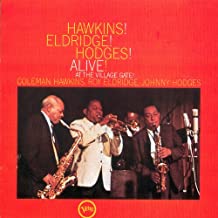
Hawkins! Eldridge! Hodges! Alive! At The Village Gate! ~ Coleman Hawkins, Roy Eldridge, Johnny Hodges | By Eddie Carter
I was in the mood to hear a live recording and came across a title I’ve not heard in a while, but always enjoyed. Hawkins! Eldridge! Hodges! Alive! At The Village Gate! (Verve Records V6-8504) is one of the smoothest live performances ever recorded with a stellar lineup that needs no introduction. Roy Eldridge on trumpet; Johnny Hodges on alto sax; Coleman Hawkins on tenor sax; Tommy Flanagan on piano; Major Holley on bass and Edward Locke on drums. This album was recorded on August 15, 1962, at the Greenwich Village nightclub. My copy used in this report is the 1962 US Stereo release and Satin Doll starts the set. The 1953 jazz standard was written by Duke Ellington, Billy Strayhorn and Johnny Mercer who added the words after the instrumental became a hit. For those unaware, the song is named after a famous black stripper whose stage name was the inspiration for the song. Satin Doll is one of Ellington’s most recorded compositions and has been featured on jazz, pop, and even soul albums.
The rhythm section opens the song gracefully, then Roy’s muted trumpet leads the sextet through the opening chorus thoroughly relaxed with a lightly applied beat. His muted opening statement is executed with sensitive delicacy, then Hodges opens with a sinuously graceful performance next. Tommy shows off his chops next with a gorgeous interpretation that’s relaxed and gracious. Hawk counters with flowing statements of beauty that develop nicely on the third performance and Major makes his presence felt with engaging ideas on the closer preceding the sextet’s strong culmination.
Perdido by Juan Tizol brings Side One to a close with a lively theme treatment that turns up the heat by the sextet and gets your foot tapping along from the outset. It was written in 1941, became a hit for Duke Ellington a year later on Victor, and lyrics were added by Ervin Drake and Hans Lengsfelder in 1944. Hodges opens a dialogue of scintillating energy that drives the trio confidently through the opening statement. Eldridge takes over with a fiery conversation that’s hot enough to glow on the next reading.
Hawk steps up next for a sizzling performance as warm as the summer sun, then Flanagan shines brightly on the next reading with brisk intensity. Holley gets a few final words of utter enthusiasm preceding the ensemble’s rambunctious reprise, finale and appreciative applause by the audience. The Rabbit In Jazz is a slow-tempo blues by Hodges and Hawkins occupying the entire second side that gives the front line plenty of space to play. The sextet begins the song with a solemn opening chorus segueing into Johnny who glides sensuously through a contemplative performance.
Roy follows, enhancing the flavor of this succulent dish with a solo as sweet as sugar. Coleman offers a textbook example of his virtuosity within the boundaries of the blues on the third statement. Tommy takes the final solo with a short and sweet interpretation emphasizing the expressive beauty of his playing into a fitting finale of a live set capturing three giants at their pinnacle.
The men behind the dials are three elite engineers of the recording industry, Frank Greenwald who worked on many Verve jazz albums. Tom Hidley who’s worked on records by Frank Zappa and The Mothers of Invention. Val Valentin whose work appears on many classic MGM and Verve LPs of the sixties, plus other labels including Bethlehem, Contemporary, Pablo, and Tampa.
The result of their combined efforts is an excellent recording with a spacious soundstage that’s very impressive and perfectly matched to the brilliant musicianship exhibited by the sextet throughout the album. At just shy of forty-minutes, Hawkins! Eldridge! Hodges! Alive! At The Village Gate is a gem of a jazz album that I’m sure will make an invaluable addition to any jazz library! An additional live album by Coleman Hawkins hit the stores in 1963 titled Hawkins! Alive! At The Village Gate also featuring Tommy Flanagan, Major Holley, and Edward Locke!
~ Hawkins! Alive! At The Village Gate (Verve Records V-8509/V6-8509); Perdido (Victor 27880); Frank Greenwald, Tom Hidley, Val Valentin – Source: Discogs.com ~ Perdido – Source: jazzstandards.com ~ Satin Doll – Source: Wikipedia.org ~ © 2020 by Edward Thomas CarterHawkins! Eldridge! Hodges! Alive! At the Village Gate! is a live album by saxophonists Coleman Hawkins and Johnny Hodges with trumpeter Roy Eldridge recorded at the Village Gate in 1962 and released on the Verve label.
Track List | 39:01- Satin Doll (Duke Ellington, Billy Strayhorn, Johnny Mercer) – 11:16
- Perdido (Juan Tizol) – 11:36
- The Rabbit in Jazz (Coleman Hawkins, Johnny Hodges) – 16:49
- Coleman Hawkins ~ tenor saxophone
- Roy Eldridge ~ trumpet
- Johnny Hodges ~ alto saxophone
- Tommy Flanagan ~ piano
- Major Holley ~ bass
- Eddie Locke ~ drums
More Posts: choice,classic,collectible,collector,history,instrumental,jazz,music,saxophone
Requisites
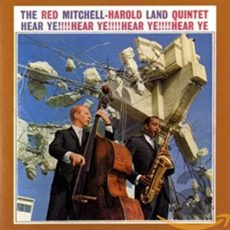
Hear Ye!!!! Hear Ye!!!! ~ The Red Mitchell-Harold Land Quintet | By Eddie Carter
The simplest thing I can say about this morning’s choice from the library is it’s a first-rate West Coast Hard-Bop session. But rather than teasing you with a morsel or taste, I’ll attempt to deliver a full-balanced meal to nourish your jazz appetite. Hear Ye!!!! Hear Ye!!!! (Atlantic SD 1376) brings together two elite masters of this style; double-bassist, composer, lyricist, poet, Red Mitchell and composer, tenor saxophonist, Harold Land as co-leaders of a quintet consisting of Carmell Jones on trumpet; Frank Strazzeri on piano; and Leon Betties on drums. My copy used in this report is the original 1962 US Mono release (1376).
Side One starts with Triplin’ Awhile, a midtempo tune by Land allowing everyone solo opportunities. It opens as a two-instrument dialogue between Harold and Red on the introduction before the ensemble adds to the conversation for the theme. Land delivers the lead statement with a festive appeal perfectly suitable for dancing. The front line fills the gaps with a brief thematic interlude preceding Carmell’s response, a cheerfully bright performance with a good summer groove. Frank makes an intriguing examination next setting up a comfortable beat for Red who captures the soulful mood to perfection. Leon takes the final spot on a feisty solo moving fluently towards a short coda.
The tempo moves upward for Rosie’s Spirit, the first of two Mitchell creations opening with the quintet’s vivaciously spirited theme. Carmell leads off with an effervescent improvisation succeeded by Red’s sprightly statement of swift verses, then Harold seizes the opportunity for a short scorcher. Frank takes a furious flight on the next reading and Leon dives into a lively finale with a bristling passion ascending to a joyful climax.
The title tune, also by Mitchell, concludes the first side on a laid-back note beginning with an introduction by Harold and Red segueing into the quintet’s midtempo melody. Land opens with a bluesy, straightforward solo that’s neat and tidy, then Jones says plenty on the next performance with pinpoint accuracy. Strazzeri exhibits his strong chops on a frisky reading, and Mitchell makes a superb case as one of the best bassists in jazz on the closer.
Somara is from Carmell’s pen, opening Side Two on a brief introduction by the trio blossoming into a collective medium-fast melody. Land launches the lead solo with high-octane velocity, then Mitchell tackles the second turn radiantly. Carmell cooks with ravenous energy next, followed by Strazzeri who’s on fire on the fourth reading. Betties exchanges a concise reading of incandescent heat with both horns into the closing chorus.
Catacomb is the second Land original, slowing the speed to a moderate pace from the previous burner as evidenced on the ensemble’s melody. Harold excels on the opening solo, blowing free and easy against the trio’s sterling groundwork. Red is confidently assertive and direct on the second reading with impeccable intonation, then Carmell melds each note of the third interpretation into a powerful work of inspired creativity. Frank follows, painting an aural picture of melodic emotion with rich and mellow hues. Leon culminates with a brief presentation that holds together into the subtle climax.
The album wraps up with Frank Strazerri’s original, Pari Passu that fastens your seat belt and you take off on a thrill ride right from the start of a torrid introduction and theme in unison. Frank kicks off the first solo voraciously, then Carmell emits intense heat from his horn. Land comes in next with the ascending movement and violent fury of a twister or tornado. Red and Leon both have brief words with the front line for a few radiant riffs before the ensemble’s closing chorus rings the curtain down on this very entertaining album.
The sound on Hear Ye!!!! Hear Ye!!!! is outstanding, capturing the vibrant tone and transparency of each instrument vividly, emerging from your speakers with breathtaking clarity. The quintet only remained together a short time, but the meeting that collectively brought them to record this album is one of the most enjoyable jazz LP’s I’ve heard and would enthusiastically recommend anyone audition.
The All Music review by noted author and historian, Scott Yanow states that “this is a fine effort from a group that deserved greater recognition at the time”. I couldn’t agree with him more and will only add that the verification of his statement can be found within the cover of Hear Ye!!!! Hear Ye!!!! by The Red Mitchell-Harold Land Quintet!
~ Excerpt by Scott Yanow – Source: AllMusic.com ~ I’m Old Fashioned, The Way I Feel – Source: Discogs.com
>~ © 2020 by Edward Thomas Carter
Hear Ye!!!! Hear Ye!!!! is an album by the Red Mitchell-Harold Land Quintet recorded in San Francisco, California on October 14th (tracks 1, 3 & 4) and December 13th (tracks 2, 5 & 6), 1961 and released on the Atlantic label in 1962.
Tracks | 52:41
- Triplin’ Awhile (Harold Land) – 7:46
- Rosie’s Spirit (Red Mitchell) – 5:26
- Hear Ye! (Mitchell) – 6:54
- Somara (Carmell Jones) – 6:42
- Catacomb (Land) – 8:21
- Pari Passu (Frank Strazzeri) – 4:55
- Red Mitchell – bass
- Harold Land – tenor saxophone
- Carmell Jones – trumpet
- Frank Strazzeri – piano
- Leon Petties – drums
More Posts: bandleader,bass,history,instrumental,jazz,music,saxophone
Requisites
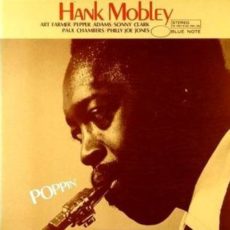
Poppin’ ~ Hank Mobley | By Eddie CarterUp next from the library is a recent acquisition by a member of The Jazz Messengers and a superb tenor saxophonist of the first order. Hank Mobley steps into the spotlight with his 2020 release Poppin’ (Blue Note Tone Poet Series B0030597-01). It was the third of four dates Hank recorded that year and he leads an outstanding sextet consisting of Art Farmer on trumpet; Pepper Adams on baritone sax; Sonny Clark on piano; Paul Chambers on bass and Philly Joe Jones on drums. The title tune by Mobley kicks off Side One with a vigorously energetic melody in unison. Sonny is up first, delivering each note with radiant heat, illustrating he was maturing and developing the style that would make him one of Blue Note’s most frequently recorded musicians. Pepper steps in next, building each verse with zestful virtuosity, then Art attacks the next solo with great relish. Hank executes a knockout performance next and Philly closes with propelling force ahead of the reprise and coda.
Darn That Dream, written in 1939 by Jimmy Van Heusen and Eddie De Lange made its debut in the Broadway musical Swingin’ The Dream that premiered that year. The sextet opens with a brief introduction by the trio and a pensive opening chorus led by Mobley who begins with a softly expressive interpretation. Farmer also gives a voluptuously pretty muted performance revealing his intimate feelings. Adams follows with a reading exhibiting sensual beauty, then Clark takes the final spot on a deeply enticing solo leading to Hank’s poignantly affecting ending. Getting’ Into Something, also by the leader ends Side One with the ensemble presenting a lively melody. Hank goes first with a vibrant performance that starts the listener’s finger-snapping and foot-tapping. Art follows with a dazzling display of fireworks, then Pepper takes over for a captivating presentation of creative excitement and Sonny caps the solos with electrifying enthusiasm driving straight into the closing chorus.
Tune-Up by Miles Davis starts Side Two, giving everyone a chance for extensive solos starting with a brief introduction by Jones leading the way into the sextet’s collective melody. Miles wrote it in 1953 and it originally appeared on the ten-inch LP, Miles Davis Quartet a year later. Farmer brings the heat on a fiery hot opening solo, then Pepper takes flight next proceeding swiftly through an exhilarating statement. Clark fills the next spot of a hard-driving performance with a spontaneous lyricism that burns brightly and strongly. Paul heats up the fourth solo, walking briskly with blazing bass lines, then Hank raises the temperature a few degrees higher on the next solo with electrical energy. Philly puts the exclamation point on the song with a short statement of ferocious intensity leading to the summation. Hank’s East of Brooklyn closes the album with a soulful Latin flavor on the melody by the sextet. The leader starts the solos with a charismatic performance, then Art steps up next to spread a little joy on the second statement. Pepper displays his remarkable gift for straight-ahead bop on a gorgeous reading next, and Sonny reveals the hands of a master in a splendid interpretation that’s a treat to hear. Paul provides the perfect ending in a nicely conceived, well-executed presentation that says something succinctly before the ensemble’s reprise and exit.
Hank Mobley was also a prolific and gifted composer, whether he wrote tender ballads or torrid uptempo tunes, each work is so eminently enjoyable to listen to and several have become jazz standards. He recorded a total of twenty albums for Blue Note from 1955 to 1970, and also made records for Prestige, Roulette, Savoy and one LP for Cobblestone as co-leader of The Cedar Walton-Hank Mobley Quintet. His time with The Jazz Messengers, Miles Davis, Horace Silver and as a leader served him well as one of the best and most sought-after tenor saxophonists in Hard-Bop and Soul-Jazz during the sixties and early seventies. Lung problems from smoking would force Hank to retire in the mid-seventies. He worked only two more times performing once in 1985 and an engagement a few months before his death from pneumonia at the age of fifty-five on May 30, 1986.
The music on Poppin’ was exquisitely recorded by Rudy Van Gelder and the sound quality is simply breathtaking. The album was analog remastered by Kevin Gray at Cohearent Audio from the original master tapes, and the reissue was supervised by Joe Harley of Music Matters Jazz. The result is the sextet emerges from your speakers with superb detail and fidelity from each of the instruments as if they’re playing right in front of you. Like their MMJ cousins, the Blue Note Tone Poet Series reissues utilize 180-gram audiophile vinyl, are plated and pressed at RTI, and come in deluxe gatefold packaging with photos worthy of hanging on your listening room wall. The three-horn lineup of Pepper Adams, Art Farmer, and the leader make a formidable front line together and are all excellent soloists. The music swings throughout each selection with the superb ensemble work provided by Sonny Clark, Paul Chambers, and Philly Joe Jones. In short, Poppin’ by Hank Mobley is a stellar fifties session that I not only recommend but feel will be welcomed in the libraries of any new or seasoned jazz fan!
~ Miles Davis Quartet (Prestige PRLP-161); The Complete Blue Note Hank Mobley Fifties Sessions (Mosaic Records MQ10-181) – Source: Discogs.com
~ Darn That Dream, Swingin’ The Dream – Source: JazzStandards.com
~ RTI is the abbreviation for Record Technologies, Inc.
~ Hank Mobley – Source: Wikipedia.org
Poppin’ is an album recorded in 1957 by saxophonist Hank Mobley but wasn’t released on Blue Note Japan until 1980. Track List | 40:18 All compositions by Hank Mobley except as indicated- Poppin’ ~ 6:33
- Darn That Dream (DeLange, VanHeusen) ~ 6:10
- Gettin’ Into Something ~ 6:33
- Tune-Up (Davis) ~ 10:53
- East Of Brooklyn ~ 10:09
- Hank Mobley – tenor saxophone
- Art Farmer – trumpet
- Pepper Adams – baritone saxophone
- Sonny Clark – piano
- Paul Chambers – bass
- Philly Joe Jones – drums
More Posts: choice,classic,collectible,collector,history,instrumental,jazz,music,saxophone
Requisites
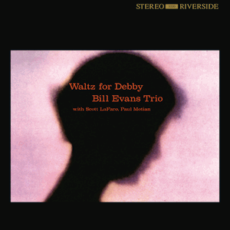
Waltz For Debby ~ Bill Evans Trio | By Eddie Carter
By 1961, pianist Bill Evans not only had one of the best trios in the United States but one of the best groups in jazz with bassist Scott LaFaro who would replace Sam Jones and Paul Motion on drums. Together, this threesome made four incredible albums for Riverside Records. Portrait in Jazz in 1960, Explorations in 1961, and two albums recorded in performance at The Village Vanguard, on June 25, 1961. Sunday at The Village Vanguard released the same year and the subject of this morning’s discussion, Waltz For Debby (RLP 399/RS 9399) in 1962. These LP’s became a standard of excellence among other piano-bass-drums records that followed. My copy used in this report is the 2000 Mono audiophile reissue (DIW-9011 – RLP-399) by DIW Records. This is the third Japanese pressing of Waltz For Debby, but the first Mono reissue manufactured by Victor Entertainment, Inc. The previous two albums released in 1975 and 1984 were both Stereo reissues by Victor Musical Industries, Inc.
The opening track, My Foolish Heart was written in 1949 by Ned Washington and Victor Young! This timeless evergreen became a well-recorded jazz standard and was featured on the silver screen in the film dramatization, the same year. The introduction is a suspenseful and ingeniously planned affair where the trio interacts beautifully so that no one voice dominates or falls subordinate to the others. Bill is ideally suited to this serene standard as the song’s only soloist because he could create compelling improvisations in any context. Here, he crafts a stately delicate reading that unfolds its beauty gently. Scott and Paul complement the pianist with a subtle expression of intimacy that’s beautiful and as lush as any I’ve heard.
Bill’s contribution to the album is the title tune, named for the pianist’s niece and one of two selections heard here that made their first appearance on the 1956 album, New Jazz Conceptions. The introduction is a mild two instrument dialogue by Bill and Scott evolving into a midtempo theme treatment when Paul joins the conversation. Evans’ opening solo is a gorgeous tour-de-force surging with vibrant activity, then LaFaro gives a vigorous exercise on the closer delivered with the utmost assurance that’s impossible not to tap your foot to.
Detour Ahead by bassist and violinist, John Frigo, guitarist Herb Ellis, and pianist Lou Carter is a song that hasn’t lost its charm by being done too often. This jazz standard was written in 1947 after all three musicians left The Tommy Dorsey Orchestra to form a trio, The Soft Winds. Bill masterfully negotiates the opening statement affectionately with skillfully paced cues of rich intonation. Scott closes with an expressive reading that’s inexpressibly poignant and heartfelt into an elegant coda.
My Romance by Richard Rodgers and Lorenz Hart was written in 1935 for the Broadway musical, Jumbo and also returns in the 1962 musical film, Billy Rose’s Jumbo. This evergreen opens with a marvelous solo introduction by Evans, then LaFaro and Motion shine joining him for a midtempo theme treatment that doesn’t fail to please the audience and listener. Bill’s opening solo is on point, emphasizing his remarkable technique and facility for complex melodic invention. Scott moves with supreme confidence and a lively rhythmic drive on the final reading propelled by the nostalgic reinforcement of the piano and drums until the blissful ending.
The opening notes of Some Other Time by Leonard Bernstein, Betty Comden, and Adolph Green recall Evans’ and Paul Chambers’ introduction to Miles Davis’ Flamenco Sketches two years earlier on Kind of Blue. This tune was written in 1944 and featured in the musical, On The Town. The pianist originally planned to record it on his 1958 album, Everybody Digs Bill Evans, but used another Bernstein, Comden, Green composition instead, Lucky To Be Me that’s also heard in the film. The trio presents the melody with a collective warm glow, and Bill delivers a gentle tenderness and tranquility on the song’s only solo that’s bewitching. Scott and Paul add a lovingly subtle supplement that’s just the right touch culminating with a tender climax and warm response from the crowd.
The album closes, paying homage to Evans’ old boss Miles Davis with a scintillating rendition of Milestones, first performed by the trumpeter as the title tune of his 1958 album. This jazz standard opens with a medium-fast introduction by the trio that shifts into uptempo for the melody. Evans is extremely entertaining on the first solo, working efficiently to the sparkling groundwork of his bandmates. The highlight though is the fireworks LaFaro creates on a marvelously energetic closer that’s a perfect finish to a phenomenal set and album.
Scott LaFaro was a gifted hard-bop bassist who was highly engaging. He also added a dimension of artistic delicacy, maturity and meticulousness to the four albums he appeared as a member of The Bill Evans Trio. LaFaro was considered one of the best musicians in jazz and was slated to do greater things in the years ahead. Sadly, that wouldn’t happen because just ten days after this recording was made, he would die in an automobile accident devastating Evans personally and the loss to jazz itself was incalculable. The six selections on this LP were splendidly recorded originally by Dave Jones and the remastering by JVC Mastering Center for this reissue is extraordinary. Like its companion, Sunday at The Village Vanguard, Waltz For Debby is an evocative, riveting live performance that’s captured at its apex and a musical treat by The Bill Evans Trio that I strongly recommend auditioning and occupying a spot in your jazz library!
~ Everybody Digs Bill Evans (Riverside RLP 12-291/RLP 1129); Explorations (RLP 351/RLP 9351); Kind of Blue (Columbia CL 1355/CS 8163); Milestones (Columbia CL 1193/CS 9428); New Jazz Conceptions (RLP 12-223); Portrait in Jazz (RLP 12-315/RLP 1162); Sunday at The Village Vanguard (RLP-376/RLP 9376); Waltz For Debby (Riverside Original Recording Series SMJ-6118); (Riverside Jazz Golden 50 VIJ-113) – Source: Discogs.com
~ Detour Ahead, My Foolish Heart, My Romance, Some Other Time – Source: JazzStandards.com
~ Victor Entertainment, Inc. is the new name for Victor Musical Industries, Inc.
~ Jumbo, Billy Rose’s Jumbo, On The Town, Lucky To Be Me, The Soft Winds – Source: Wikipedia.org
© 2020 by Edward Thomas Carter
Waltz for Debby is a 1962 live album by jazz pianist and composer Bill Evans recorded June 21, 1961 at the Village Vanguard. It was released in early 1962. The album was the fourth and final effort from the unit as bassist Scott LaFaro died in a car accident just ten days after this live date.
Track Listing | 38:29- My Foolish Heart (Victor Young/Ned Washington) – 4:58
- Waltz for Debby [Take 2] (Bill Evans/Gene Lees) – 7:00
- Detour Ahead [Take 2] (Lou Carter, Herb Ellis, Johnny Frigo) – 7:37
- My Romance [Take 1] (Richard Rodgers/Lorenz Hart) – 7:13
- Some Other Time (Leonard Bernstein/Betty Comden/Adolph Green) – 5:11
- Milestones (Miles Davis) – 6:30
- Bill Evans ~ piano
- Scott LaFaro ~ bass
- Paul Motian ~ drums
More Posts: choice,classic,collectible,collector,history,instrumental,jazz,music,piano