

The Jazz Voyager
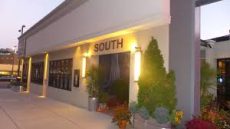
Heading to the City of Brotherly Love for the next stop on the voyage of this traveller. The place I will be seated in for this week’s jazz performance is nestled in the Spring Garden neighborhood of Philadelphia and is called the South Jazz Kitchen. It’s known for the coolest jazz and Southern cuisine in the city.
Vibraphonist Chien Chien Lu and bassist Richie Goods collaborate on this stage for three nights with two shows per evening. When you put together an emerging contemporary percussionist and composer with the youngest bassist ever inducted into the Pittsburgh Jazz Hall of Fame and you get an exciting show and one you will never forget.
The venue’s address is 600 N. Broad Street, Philadelphia, Pennsylvania 19130. For those who want more info go to https://notoriousjazz.com/event/chien-chien-lu-x-richie-goods.

More Posts: adventure,bass,club,genius,jazz,music,percussion,preserving,travel,vibraphone

Daily Dose Of Jazz…
Herb Bushler was born on March 7, 1939 in New York City and played piano and tuba in his youth before picking up double bass. Classically trained in bass he has performed with symphony orchestras in this capacity.
In 1966 he began a longtime association with ballet and film composer Coleridge-Taylor Perkinson. Herb played with The Fifth Dimension in the 1960s. He worked extensively in jazz idioms in the 1960s and 1970s, including with David Amram, Ted Curson, Blossom Dearie, Tony Williams, and Paul Winter.
He first played with Gil Evans in 1967 and the association would continue on and off until 1981. During the 1970s Bushler recorded sessions with Enrico Rava, Joe Farrell, Ryo Kawasaki, David Sanborn and Harold Vick. He also worked with Dee Dee Bridgewater, Billy Harper, Les McCann, Enrico Rava, Joe Chambers, and Howard Johnson.
Bassist Herb Bushler, whose composition Herbs was recorded by David Sanborn, at 85 years old continues to occasionally play both double bass and electric bass.
Requisites
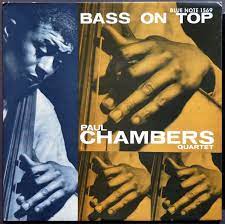
Bass on Top ~ Paul Chambers Quartet | By Eddie Carter
I was in the mood to hear something soothing before going to bed a few nights ago. The record I chose to play inspired my first March discussion by one of the great jazz bassists, Paul Chambers. Bass on Top (Blue Note BLP 1569/BST 81569) by The Paul Chambers Quartet is a 1957 release and his second record for the label. It was one of my mom’s favorite albums to listen to when she was cooking dinner. She always loved his big and warm sound, and his playing always knocked me out whenever I heard him. He is joined on this date by a marvelous rhythm section: Kenny Burrell on guitar, Hank Jones on piano, and Art Taylor on drums. My copy is the 2021 Blue Note Tone Poet Series Stereo Audiophile reissue, sharing the original catalog number.
Side One gets underway with Paul and Kenny’s two-instrument introduction to Yesterdays by Walter Gross and Jack Lawrence. Hank and Art come in to pick up the pace to deliver the alluring melody. The standard’s only solo is a thoughtful, reflective showcase by Paul, complemented by Hank, Kenny, and Art’s delicate accompaniment leading to the gentle ending. You’d Be So Nice To Come Home To by Cole Porter brings the beat up a few notches for the bassist’s introduction, segueing into his stating the melody supported by his colleagues. Chambers starts it off with an easy swinging interpretation, then gives way to Burrell’s unhurried statement. Jones brings on the pleasant finale before the leader’s return for the reprise and conclusion.
Chasin’ The Bird by Charlie Parker affords everyone a solo opportunity and begins with Kenny’s introduction to the group’s medium melody. Paul takes the lead with a lightly swinging solo, then Hank follows with a splendid statement. Kenny comes in next for a thoroughly satisfying reading, and Art cooks comfortably in the closer, preceding the theme’s return. Dear Old Stockholm is a Swedish folk song and jazz standard that receives a medium groove by the quartet. Kenny makes the introduction, and the ensemble joins in for the opening chorus. Chambers is up first and gives a soothing interpretation. Burrell follows with a sensitive and delicate performance; then, Jones wraps up the readings with a delightfully pleasant statement until the quartet regroups for the close.
The Theme ended many of Miles Davis’ live sets. The group opens with Kenny and Paul’s introduction to their lively melody. Paul swings right out of the gate in the opening solo. Kenny follows, maintaining the infectious beat in a vibrant statement. Hank comes in and builds the next reading exquisitely; then, Art shares the finale with Paul ahead of the climax. Confessin’, aka I’m Confessin’ That I Love You by Doc Daugherty, Ellis Reynolds and Al Neiburg begins with Paul’s introduction ahead of the foursome’s lovely opening chorus. Chambers handles the first of two interpretations flawlessly with excellent taste. Jones follows with a short solo as pleasant as a Sunday evening stroll. Chambers returns to give a brief statement that brings the set to a fitting climax.
Alfred Lion produced the original session, and Rudy Van Gelder was the man behind the dials of the recording. Joe Harley supervised this reissue’s release, and Kevin Gray mastered it. The sound quality is superb, with a breathtaking soundstage. A lot of thought and care went into the remastering of this audiophile reissue. The record is pressed on 180 grams of audiophile vinyl and is incredibly quiet until the music starts. The covers could be displayed at home on any wall, and the inside gatefold photos are wonderful. Every once in a while, something magical happens in a recording session where all the musicians come together in such a way that perfection is the result. Bass on Top by Paul Chambers is one of those albums.
Paul Chambers and his bandmates compel you to listen as they’re playing and, as the album unfolds, they provide the perfect backdrop to help you unwind after a long day, night, or week. If you’re new to jazz or only know of his work as a sideman with The Miles Davis Quintet and others. In that case, I happily recommend and invite you to check out Bass on Top by The Paul Chambers Quartet the next time you’re out record shopping. It’s a stellar album of soulful, swinging jazz at its best and a title you won’t have to listen to twice to know you love it!
~ I’m Confessin’ That I Love You, Yesterdays, You’d Be So Nice To Come Home To – Source: JazzStandards.com
~ Chasin’ The Bird, Dear Old Stockholm – Source: Wikipedia.org
© 2024 by Edward Thomas Carter

More Posts: bass,choice,classic,collectible,collector,history,instrumental,jazz,music
Daily Dose Of Jazz…
Moto Fukushima was born in Kobe, Japan on February 23, 1978 and received the Outstanding Performer Award before graduating Summa Cum Laude from Berklee College of Music. His musical style is a unique combination of Western classical music, Japanese traditional music, and African-inspired music of South America, which is evident in his jazz improvisation. His playing is characterized by a remarkable blend of finesse, subtlety, and power.
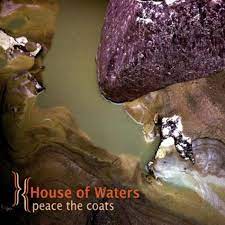
He is a co-leader of the Brooklyn-based power trio, House of Waters. The band has released two albums on the Grammy Award-winning group Snarky Puppy’s GroundUp label, with the first album reaching #2 on the iTunes World Music chart, and the second album hitting #4 on the iTunes Jazz chart.
His music has been featured in the Sports Emmy Award-winning piece on ESPN’s E60, and he won 3rd place in the International Songwriting Competition in 2014. He has also been the recipient of the ASCAP Plus Award.
Moto has collaborated with Mike Stern, Leni Stern, Karsh Kale, Dave Weckl, Dave Eggar, Big Apple Circus, Alex Skolnick, and Gil Goldstein. Six-string bass player, composer, and shamisen player Moto Fukushima, currently based in New York City, continues to perform and record.

More Posts: bass,composer,history,instrumental,jazz,music,shamisen
Daily Dose Of Jazz…
Henry “Bass” Edwards was born on February 22, 1889 in Atlanta. Georgia and by 14 he began playing in local Odd Fellows’ Band, and subsequently studied music at Morris Brown College and Morehouse College.
During the first World War he played in the U.S. Army Bands, including a spell with Lt. J. Tim Brymn’s 350th FA. Band. From 1919 to 1920 he played in Philadelphia, Pennsylvania with various concert orchestras, including working with Sam Wooding.
1921 saw him playing for the next four years with several dance bands in the Philadelphia-Atlantic City, New Jersey area. In mid-1925, Bass joined Duke Ellington, but only remained with the band until spring 1926. He then joined Leon Abbey in New York City and toured South America during the spring 1927. Returning to the city, he joined the Allie Ross Orchestra, which played for the Blackbirds shows.
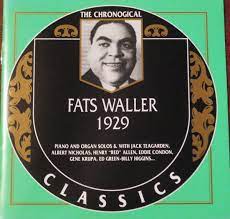
In 1929, he joined Noble Sissle’s band on brass bass, and sailed to Europe with him. On his return Edwards worked with Fats Waller, James P. Johnson, and Eubie Blake, before rejoining Allie Ross for the Rhapsody in Black show. His last major jazz position was with the Charlie Matson Orchestra during 1933. He then worked mainly on string bass with various light and classical orchestras.
Tubist and bassist Bass Edwards died in New York, New York on August 22, 1965.