

Requisites
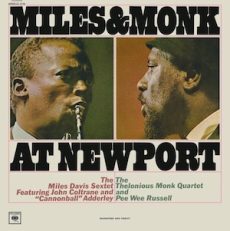
Miles & Monk at Newport ~ The Miles Davis Sextet Featuring Cannonball Adderley and John Coltrane, and The Thelonious Monk Quartet, plus Pee Wee Russell | By Eddie Carter
This morning’s album from the library, Miles & Monk at Newport (Columbia CL 2178/CS 8978), documents two performances on July 3, 1958, and 1963 by The Miles Davis Sextet and The Thelonious Monk Quartet. The lineup is Miles Davis on trumpet; Julian “Cannonball” Adderley on alto sax; John Coltrane (tracks: A1 to A4), Charlie Rouse on tenor sax; Pee Wee Russell on clarinet (tracks: B1, B2); Wynton Kelly (tracks: A1 to A4), Thelonious Monk (tracks: B1, B2) on piano; Paul Chambers (tracks: A1 to A4), Butch Warren (tracks: B1, B2) on bass; Jimmy Cobb (tracks: A1 to A4), and Frankie Dunlop (tracks: B1, B2) on drums. The copy I own is no. 1841 of the 2013 U.S. Record Store Day Limited Edition mono audiophile reissue, sharing the original catalog number from Miles Davis – The Original Mono Recordings series.
The opener is Charlie Parker’s Ah-Leu-Cha, and the sextet’s melody flies out of the gate at the outset. Miles launches into the lead solo rapidly, then John takes flight next, soaring through the skies. Cannonball also moves at lightning speed next, before the ensemble jumps back into the closing chorus featuring two brief comments by Jimmy ahead of an abrupt stop. The audience has a second to catch their breath when the sextet changes gears for Thelonious Monk’s Straight, No Chaser. The group’s easygoing melody sets the tone. Miles makes his entrance with a mellow swing. Coltrane follows with a laid-back solo, then Adderley hits a cool groove. Kelly displays his versatility next, and Chambers takes a relaxing walk, leading back into the theme’s reprise and climax.
Miles switches to a mute to introduce the melody of Fran Dance, his tribute to his then-wife Frances. Cannonball leads off this time with a leisurely, carefree opening statement. John follows, making the most of each note with brilliant idea upon idea in an invigorating interpretation. Wynton gets the last word in a bluesy reading that takes the audience and listener into a restatement of the theme and a soft summation. The first side closes with Two Bass Hit, by Dizzy Gillespie and John Coltrane. Switching back to his open trumpet, Miles kicks things off with a lively opening and main theme, while Jimmy drives the group forward with his dynamic playing. Coltrane is the featured soloist and motors along at a breakneck pace into Miles’ return for the closing chorus, and a final thought by Cobb into the explosive climax.
The Thelonious Monk Quartet and guest Pee Wee Russell begin Side Two with their 1963 performance of Nutty, the first of two originals by Monk. Monk’s introduction sets the stage for the ensemble’s good-humored opening chorus. Charlie sails through the lead solo efficiently. Pee Wee continues the laid-back mood on the second reading. Monk swings casually into the third interpretation, then Butch delivers a few solid bass lines, and Frankie has the last word before the close. Blue Monk is the tune the pianist recorded most often throughout his career. Monk opens with a short introduction segueing into the ensemble’s melody. Rouse leads the way with an abundance of nostalgic charm. Russell answers him with a soulful statement. Monk matches them with a smooth statement, and Warren takes a short walk until the theme’s reprise.
Teo Macero produced both concerts, though it’s not clear who recorded them. Still, the sound quality on both dates is surprisingly good for the time they were recorded. This mono reissue is pressed on 180-gram vinyl and is completely silent until the music begins. The front and rear covers are made of sturdy, heavy cardstock. If I had to mention one small critique, it would be that Miles & Monk were two of the biggest stars on Columbia’s roster, and it might have been wonderful to see each performance released in a two-record set. But putting that aside, Miles & Monk at Newport is more than just a piece of jazz history; it’s a lively celebration of the genre’s energy and diversity during the late 50s and early 60s. If you’re a fan of either artist, I highly recommend checking it out next time you’re record shopping. Miles Davis and Thelonious Monk lead their bands through two unforgettable performances that every jazz fan should experience!
~ Straight, No Chaser – Source: JazzStandards.com © 2026 by Edward Thomas Carter

More Posts: choice,classic,collectible,collector,history,instrumental,jazz,music,piano,trumpet