

Daily Dose Of Jazz…
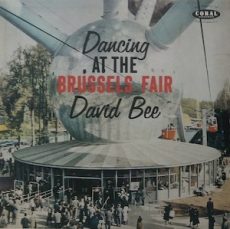
David Bee was born on October 17, 1903 in Brussels, Belgium. He was a multi-instrumentalist adept on clarinet, harp, piano, and alto and tenor saxophone. For a year in 1924 he played with the group Bistrouille ADO before co-founding an ensemble with Peter Packay called Red Beans. The group toured widely throughout western Europe.
After returning to Belgium, David joined Robert De Kers’s band, and also played in Paris, France at Chez Florencewith Benny Carter and Willie Lewis. He recorded with Gus Deloof in the early Forties and after World War II he played with Robert Bosmans and Chas Dolne later in the decade. He led his own bands and groups at various times in the 1950s and continued recording late into the decade and the 60s.
As a composer, Bee pennedr the tunes High Tension recorded by Luis Russell) and Obsession recorded by Ted Heath and Reg Owen.
Clarinetist, harpist, pianist, alto and tenor saxophonist, arranger and composer David Bee, also known as Ernest Craps, Ernie Sparks, and Manuel Travo, transitioned in 1992.

More Posts: arranger,clarinet,composer,harp,history,instrumental,jazz,music,saxophone
Daily Dose Of Jazz…
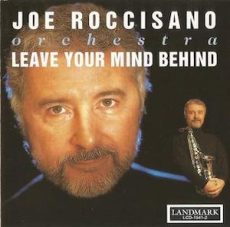
Joseph Lucian Roccisano was born on October 15, 1939 in Springfield, Massachusetts. He received his bachelor’s degree in music education from SUNY-Potsdam in 1963. In 1964 he played in the Tommy Dorsey orchestra under Sam Donahue.
After moving to Los Angeles, California in the mid-Sixties he played with Don Ellis, Ray Charles, Louie Bellson, Lew Tabackin, Toshiko Akiyoshi, Terry Gibbs, Don Menza, Bill Holman, and Don Rader. He assembled the 15-piece ensemble Rocbop in 1976 and played in the Capp-Pierce Juggernaut in 1981.
He formed his own big band, the Joe Roccisano Orchestra, releasing two albums during the 1990s. The musicians joining him in this band included Bill Charlap, Bud Burridge, Jack Stuckey, Franck Amsallem, James E. Pugh, John Basile, Ken Hitchcock, Lou Marini, Matt Finders, Robert Millikan, Scott Lee, Terry Clarke, Tim Ries, Tom Harrell, Scott Robinson, and Greg Gisbert.
He became an arranger for Ellis, Bellson, Doc Severinsen, and Woody Herman. He scored the tune Green Earrings on the 1978 Herman album Chick, Donald, Walter, and Woodrow. Joe was nominated for a Grammy Award for the arrangement. He composed Tenors of the Time, a tune recorded by Pete Christlieb and Warne Marsh.
Saxophonist and arranger Joe Roccisano transitioned on November 9, 1997.
More Posts: arranger,bandleader,history,instrumental,jazz,music,saxophone
Daily Dose Of Jazz…
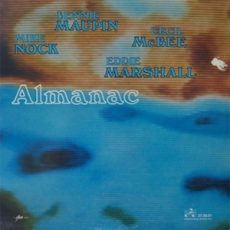
Michael Anthony Nock was born September 27, 1940 in Christchurch, New Zealand. He began studying piano at 11 and attended Nelson College for one term in 1955. By the age of 18, he was performing in Australia and in Sydney he played in The Three Out trio with Freddy Logan and Chris Karan. They toured England in 1961 before he left to attend Berklee College of Music.
Nock was a member of Yusef Lateef’s group from 1963 to 1965. Three years later he became involved with fusion, leading the Fourth Way band for two years. For a decade beginning in 1975 he was a studio musician in New York City, then returned to Australia.
His 1987 album Open Door with drummer Frank Gibson, Jr. was named that year’s Best Jazz Album in the New Zealand Music Awards. The 2003 New Year Honours saw Mike appointed an Officer of the New Zealand Order of Merit, for services to jazz.
Currently residing in New South Wales, pianist, composer and arranger Mike Nock, who taught at the Sydney Conservatorium of Music until 2018, continues to perform with his trio, big band, and various one-off ensembles.

More Posts: arranger,bandleader,composer,educator,history,instrumental,jazz,music,piano

Daily Dose Of Jazz…
Born on September 21, 1927 Ward Lamar Swingle grew up in Mobile, Alabama and studied music, particularly jazz, from a very young age. He learned clarinet, oboe and the piano as a child and played in Mobile-area big bands before he was out of high school. He continued his music studies at the Cincinnati Conservatory of Music, graduating summa cum laude in 1950.
Moving to France in 1951 on a Fulbright scholarship, he studied piano with Walter Gieseking and worked as a rehearsal pianist for Les Ballets de Paris. He met a French-born violin student, Françoise Demorest, and got married in 1952. 1959 saw Swingle as a founding member of Les Double Six of Paris, which specialised in scat singing of jazz standards.
This concept of scatting to Johann Sebastian Bach was the foundation for The Swingle Singers, which became fully established by 1962. They released their albums Jazz Sebastian Bach and Bach’s Greatest Hits in 1963 and their early recordings won five Grammy Awards. Disbanding the original Swingle Singers in 1973 he moved to London, England and formed a new group, and expanded their repertoire to include classical and avant-garde works along with the scat and jazz vocal arrangements.
Returning to live in America in 1984 he remained musical advisor for his London-based group, but devoted most of his time to workshops, guest conducting and the dissemination of his printed arrangements through his publishing company, Swingle Music. He went on to conduct several chamber and philharmonic choirs, and conduct workshops and seminars at universities in Europe and North America.
In 1994 he moved back to France, where he continued his work in arranging, composing and guest conducting. He wrote an autobiography and treatise titled Swingle Singing, in which he defined ‘Swingle Singing’ techniques with illustrations from his arrangements and compositions.
Vocalist, pianist and arranger Ward Swingle, who was named Officier de l’Ordre des Arts et des Lettres (Officer of the Order of Arts and Letters) by the French Minister of Culture and Information, transitioned in Eastbourne, England, on January 19, 2015.
More Posts: arranger,bandleader,history,instrumental,jazz,music,piano
Daily Dose Of Jazz…
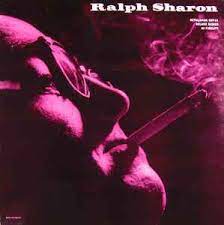
Ralph Simon Sharon was born in London, England on September 17, 1923 to a British mother and Latvian-born father. He emigrated to the United States in early 1954 and became a naturalized citizen five years later.
By 1958, Ralph was recording with Tony Bennett as accompanist. That was the start of a more than 50 year working relationship. He found the song I Left My Heart in San Francisco for Bennett, which became his signature song.
A jazz pianist in his own right, Sharon recorded nineteen albums as a leader, 15 with Bennett and two with Johnny Hartman. However, he also accompanied the likes of Robert Goulet, Chris Connor and nemerous others. Retiring to Boulder, Colorado, from on-the-road work when he reached 80, he continued to perform in the Denver metropolitan area until shortly before his death.
Pianist and arranger Ralph Sharon, best known as one of the finest accompanists who backed up popular singers, transitioned from natural causes on March 31, 2015.
More Posts: arranger,bandleader,history,instrumental,jazz,music