

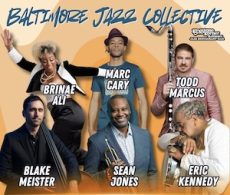
BALTIMORE JAZZ COLLECTIVE
Founded in 2019 at Keystone Korner Baltimore, the Baltimore Jazz Collective is making its Homecoming Return! Music and spirituality have always been fully intertwined in the artistic vision of trumpeter, bandleader, composer, educator and activist Sean Jones. With boundless passion, energy, and soul, Baltimore Jazz Collective explores the inner and outer frontiers of melody, harmony and time itself.
Sean Jones | Trumpet/Bandleader
Brinae Ali | Keys
Todd Marcus | Saxophone/Clarinet
Marc Cary | Piano
Blake Meister | Bass
Eric Kennedy | Drums
Cover: $35.00 ~ $45.00 + fee
Streaming: $15.00 + fee
More Posts: adventure,bandleader,bass,clarinet,drums,genius,instrumental,jazz,music,piano,preserving,saxophone,travel,trumpet,vocal
Daily Dose Of Jazz…
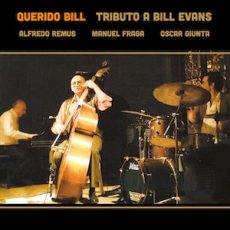
Alfredo Remus was born in Buenos Aires, Argentina on November 9, 1938. In 1964 he participated as the double bassist on the historic album La Misa Criolla by Ariel Ramírez.
He has accompanied important musicians and groups such as Paul Gonsalves, Vinícius de Moraes, Maria Bethânia, Enrique “Mono” Villegas, Gato Barbieri, Mercedes Sosa, Tony Bennett, Ariel Ramírez, Víctor Heredia, Alberto Cortez, Trio Los Panchos, Raphael, Zupay Quartet, Dyango, Leonardo Favio, Sandro, Susana Rinaldi, and Antonio Carlos Jobim , among others.
He was a regular participant in a series of informal folklore improvisation and experimentation meetings at Eduardo Lagos’s house, humorously baptized by Hugo Díaz as folkloréishons, which in the style of jazz jam sessions, used to bring together Lagos, Astor Piazzolla and Díaz.
With other musicians, Remus played with Oscar Cardozo Ocampo, Domingo Cura and Oscar López Ruiz among others. He recorded nine albums as a leader with his debut album Trauma released in 1968 and his final recording Tribute To Bill Evans in 2006.
Double bassist Alfredo Remus, who performed various genres of American popular music, that included but not limited to tango, jazz, Argentine folklore, bossa nova and post-bop, died in Buenos Aires on September 28, 2022.

More Posts: bandleader,bass,history,instrumental,jazz,music
Daily Dose Of Jazz…
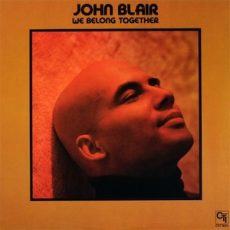
John Franklin “Ellington” Blair was born November 8, 1943 in Toledo, Ohio. He grew up in California and began taking violin lessons as a child, graduating with honors from Lincoln High School in San Diego, California in 1961.
Blair became a heavy academic, holding degrees from Eastman and Curtis conservatories. He even founded a school, The Universal Natural System. He is best known as the inventor of the Vitar, an acoustic combination of violin and guitar.
He was featured on many jazz funk records in the early 1970s and released a few sought after psych-funk releases on Mercury, Columbia and CTI. During the 1980s Ellington disappeared off of the map, never to return.
Violinist & guitarist Ellington Blair, suffered from heart failure and was homeless when he died on June 3, 2006 in New York City, New York
More Posts: bandleader,guitar,history,instrumental,jazz,music,violin
Daily Dose Of Jazz…
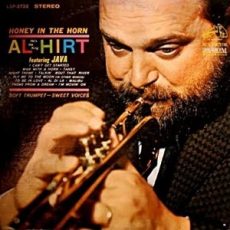
Alois Maxwell Hirt was born on November 7, 1922 in New Orleans, Louisiana to a police officer father. At the age of six, he got his first trumpet, which had been purchased at a local pawnshop. He played in the Junior Police Band with friend Roy Fernandez, the son of Alcide Nunez. By 16 he was playing professionally with his friend Pete Fountain, while attending Jesuit High School. During this time, he was hired to play at the local horse racing track, beginning a six-decade connection to the sport.
1940 saw Al in Cincinnati, Ohio studying at the Cincinnati Conservatory of Music with Dr. Frank Simon. After a stint as a bugler in the Army during World War II, he performed with various swing big bands, including those of Tommy Dorsey, Jimmy Dorsey, Benny Goodman, and Ina Ray Hutton.
In 1950 Hirt became the first trumpet and featured soloist with Horace Heidt’s Orchestra and after several years on the road he returned to New Orleans working with various Dixieland groups and leading his own bands. He soon signed with RCA Victor and posted twenty-two albums on the Billboard charts in the 1950s and 1960s. He recorded the theme for the 1960s television show The Green Hornet, with arranger and composer Billy May.
From the mid-1950s to early 1960s, Hirt and his band played nightly at Dan’s Pier 600, hosted the hour-long television variety series Fanfare, as the summer replacement for Jackie Gleason and the American Scene Magazine, and would go on to play for Pope John Paul II.
Trumpeter and bandleader Al Hirt died of liver failure on April 27, 1999 at the age of 76, after having spent the previous year in a wheelchair due to edema in his leg.
More Posts: bandleader,history,instrumental,jazz,music,trumpet
Daily Dose Of Jazz…
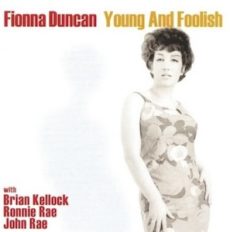
Fionna Duncan was born on November 5, 1939 in a temperance hotel in Garelochhead, Scotland a few weeks into the Second World War. The doctor had refused to come to the family home in Portincaple, on the shores of Loch Long, because a blackout was in operation. The youngest of three, she initially preferred to sing, although she later began to accompany herself on guitar and ukulele.
When she was six, the family moved to Rutherglen and it was there, thanks to Rutherglen Academy’s ballads and blues club, that she added folk and skiffle songs to the Gilbert & Sullivan operettas she sang at the local music society. By sixteen, while still at school, she was singing in talent competitions and with local jazz bands. One competition win resulted in an audition for television and the chance to make a recording.
A family trip to the United States had her singing on radio and television, and Riverside Records offered Fionna a recording contract. Not wanting to live in the States, a stipulation of the deal, she turned it down along with the chance to become label-mates with pianists Thelonious Monk and Bill Evans, and saxophonists Cannonball Adderley and John Coltrane. Back in Glasgow, Scotland appearances on the weekly TV show Skiffle Club with the Joe Gordon Folk Four, singing with the Steadfast Jazz Band, and another talent competition win and auditions, she met clarinettist Forrie Cairns.
With her mother’s blessing Fionna joined Cairns’ All-Stars whom she would go on to work into the 2000s. In 1959 she and Forrie were invited to join the Clyde Valley Stompers, a traditional jazz band and recorded the album, Have Tartan Will Trad.
She won the JazzBeat Award for Top Singer in 1960 met Louis Armstrong at his own insistence when they shared a bill, and also met Lena Horne and the Beatles. She continued touring until 1964, then took up residence in London, where she hosted the Georgian Nightclub in the West End, singing with Kenny Ball and Humphrey Lyttelton, among other prominent musicians of the time. Suffering five slipped discs and being hospitalized for a year, Fionna changed careers and trained as a hairdresser. However, the lure of the microphone and telling stories in song pulled her back to performing.
In 1985 she put together her own group with her partner, bassist Ronnie Rae, Ronnie’s son John on drums and Brian Kellock on piano. Together they became the house trio for Fionna’s Vocal Jazz Workshops, where she became a supportive mentor. if also quite a tough critic to a veritable legion of budding jazz singers as her workshops developed into a regular feature at Glasgow Jazz Festival. The festival’s late-night club also benefited from Fionna’s ‘strict but fair’ hosting skills for several years.
Vocalist Fionna Duncan continued to sing and teach into her seventies, was voted Best Jazz Vocalist and received a Lifetime Achievement award at the Scottish Jazz Awards, died at 83 on December 6, 2022.
More Posts: bandleader,educator,history,instrumental,jazz,music,vocal