Daily Dose Of Jazz…

Bronisław Suchanek was born August 30, 1948 in Bielsko-Biała, Poland. During his studies at the Secondary Music School he was a member of the Andrzej Zubek Quartet and from 1967 to 1971 he studied at the Academy of Music. In 1969, while still a student, he began collaborating with Tomasz Stańko’s quintet and recorded two albums and were among the first musicians to inaugurate the first Music Workshop in Chodzież, Poland.

He made his debut on the music scene playing in the Silesian Jazz Quartet, which he co-founded with pianist Andrzej Zubek, trumpeter Bogusław Skawina, Jerzy Jarosik on flute and saxophone, and drummer Kazimierz Jonkisz.

At the end of 1972, Bronisław went with the Klan Band to Finland where he took part in a concert as part of the Helsinki Festival and presented the premiere of free-jazz and rock. In 2016, GAD Records released an album titled Live Finland 1972 with a recording of this concert. In the 1970s he was a member of the Polish Radio Jazz Studio Orchestra.

He has performed and recorded both in Poland and abroad with American jazz musicians such as Don Cherry and Rick Stepton. In the second half of the decade he emigrated to Sweden, where he played in the Swedish Jazz Radio Group. He operated in Scandinavia for over a dozen years, collaborating with the bands Sound of Flowers and Birka.

The 1980s saw him giving concerts and recording albums in Germany and Austria with different formations. In 1995 Suchanek moved to the United States where he taught at the Maine School of Music and played in the Woody Herman Big Band and the Artie Shaw Orchestra.

He recorded an album titled Sketch in Blue in a duet with Dominik Wania. In 2010 he recorded an album titled Jerzy Wasowski Songbook together with Bogdan Hołownia, Jerry Veimola and Joe Hunt. He collaborated with the New Bedford Symphony Orchestra.

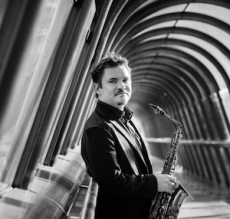
Double bassist Bronisław Suchanek, who was awarded the Silver Medal for Merit to Culture – Gloria Artis, continues to perform and record in the free jazz and straight-ahead mediums.

BRONZE LENS

More Posts: ,,,,,

Daily Dose Of Jazz…

Bobby Carcassés was born on August 29, 1938 in Kingston Jamaica where his Cuban grandfather worked as a diplomat. Upon moving to Villa Clara, Cuba at the age of four he grew up surrounded by Cuban rhythms, listening to Benny Moré, Conjunto Casino & Roberto Faz. He acquired a love for an eclectic spectrum of music from the opera star Enrico Carusso and Mexico’s Jorge Negrete to jazz royalty Sarah Vaughan, Buddy Rich and Stan Getz.

By the 1950’s he was involved with some of the best vocal quartets in Cuba and while playing for many years at The Tropicana the center of Cuban Jazz, he began to experiment with bebop and scat vocals. During the Sixties he traveled to Europe, spending a year in Paris where he played with Kenny Clarke and Bud Powell.

Returning to Cuba he worked in the Teatro Musical where he met three of the future founders of Irakere: Chucho Valdes, Carlos Emilio Morales and Paquito D’ Rivera. Over the next ten years he played in the best night clubs in Havana, Cuba as well as acting in Cuban cinema, Tv and essentially starting to form his own Jazz group.

In 1980 he organized the first Jazz Plaza Festival in Havana, inviting Dizzy Gillespie, Ronnie Scott, Charlie Haden, Airto Moreira, Tania Maria, Steve Coleman and many others. After his own group played these festivals. he traveled to Canada, England, France and the USA where he performed with Tito Puente, Eddie Palmieri, Patato Valdés and many others on the Latin Jazz scene.

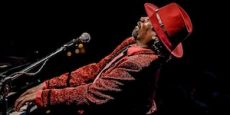
Trumpeter Bobby Carcassés, who also plays piano, bass, percussion, and flugelhorn, as well as writing his own pieces, continues to perform, record and create art that has been exhibited globally.

BRONZE LENS

More Posts: ,,,,,,,,,,

Daily Dose Of Jazz…

Richard Hawdon was born in Leeds, England on August 27, 1927 and first studied cello before moving to trumpet in his mid-teens. After a stint with the Yorkshire Jazz Band he relocated to London, England in 1951, signing on with Chris Barber’s famed New Orleans Jazz Band.

Hawdon replaced trumpeter Ken Colyer in the Christie Brothers Stompers in 1952, remaining with the group for close to two years. While his Louis Armstrong-inspired approach earned favor among traditional jazz purists, he developed a modernist sensibility influenced by Clifford Brown.

Bop and progressive jazz followed in 1954 as a member of Don Rendell’s group in addition to a stint as trumpeter and arranger with Tubby Hayes. He joined his first big band in mid-1956 with Basil and Ivor Kirchin and the next year he joined John Dankworth in 1957. This would be his longest and most rewarding career collaboration.

Beyond recordings with Dankworth, the group performed with Louis Armstrong, teamed with the Duke Ellington Orchestra, he wrote and arranged a number of Dankworth staples including Cool Kate and One for Janet. Hawdon went on to freelance with bandleaders Sid Phillips, Harry Gold, Oscar Rabin, Terry Lightfoot, and backed singers Tony Bennett and Eartha Kitt during a stint with the house band at the London cabaret Talk of the Town.

On the eve of the demise of jazz as the leading music of the era, Dick relocated to Yorkshire, England in 1967 and led the Batley Variety Club’s house band. A year later, he developed a jazz course at the new City of Leeds College of Music, and became head of the school’s Light Music Department in 1972. Hawdon also led his own jazz quintet throughout the 1980s, and after retiring from academia in 1993 he turned his attention to the bass, playing in a series of local groups.

Trumpeter and bassist Dick Hawdon died June 24, 2009.

BRONZE LENS

More Posts: ,,,,,,

Daily Dose Of Jazz…

Frances Wayne was born Chiarina Francesca Bartocci or Clara Bertocci on August 26, 1924 in Boston, Massachusetts. She graduated from Somerville High School. Moving to New York City in her teens she sang in an ensemble led by her brother, saxophonist Nick Jerret.

In the early 1940s she recorded with Charlie Barnet’s big band, and in 1943 sang with Woody Herman’s band. Marrying Neal Hefti in 1945, Frances soloed in her husband’s big band formed in 1947. In addition to her solo career she sang with Hefti into the 1950s.

She later sang with smaller ensembles featuring Hank Jones, Milt Hinton, Jerome Richardson, Richie Kamuca, John LaPorta, Billy Bauer and Al Cohn. On The Woody Herman Show broadcasted on the radio, Wayne was his female vocalist.

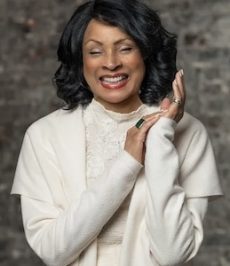
On February 6, 1978, vocalist Frances Wayne, who  received the 1946 Esquire Award as Best New Female Vocalist, died after suffering from cancer over an extended period in her hometown at age 58.

BRONZE LENS

More Posts: ,,,,,

ERIC ALEXANDER

Eric Alexander is one of the most sought-after saxophonists on the modern jazz scene. “The people I listened to in college are still the cats that are influencing me today,” says Alexander. “Monk, Dizzy, Sonny Stitt, Clifford Brown, Sonny Rollins, Jackie McLean, Joe Henderson – the legacy left by Bird and all the bebop pioneers, that language and that feel, that’s the bread and butter of everything I do.”

More Posts: ,,,,,,,,,,

« Older Posts       Newer Posts »