

Daily Dose Of Jazz…
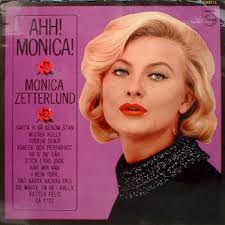
Monica Zetterlund was born Eva Monica Nilsson on September 20, 1937 in Hagfors, Sweden. She began by learning the classic jazz songs from radio and records, initially not knowing the language and what they sang about in English. Her hit songs included Swedish covers of Walking My Baby Back Home. Little Green Apples, Waltz for Debby, Hit the Road Jack, and Moon Over Bourbon Street, among many others.
She also interpreted the works of Swedish singer-songwriters Evert Taube, Olle Adolphson and Povel Ramel, as well as international jazz musicians/songwriters. She worked with Louis Armstrong, Bill Evans, Stan Getz, Steve Kuhn and Quincy Jones, and in the Scandinavian jazz world with people like Georg Riedel, Egil Johansen, Arne Domnérus, Svend Asmussen and Jan Johansson.
In 1964, she recorded the jazz album Waltz for Debby, featuring Bill Evans, and was the most proud of. Her professional skill was amply demonstrated in her performance of the challenging Harold Arlen song, So Long, Big Time. Her rendition of Once Upon A Time In Stockholm, though not suitable for the 1963 Eurovision Song Contest, remained successful in Sweden.
She suffered from severe scoliosis which began after a childhood accident, and as a result was forced to retire from performing in 1999. On May 12, 2005, vocalist Monica Zetterland, as awarded the Illis quorum by the government of Sweden, died probably due to her habit of smoking in bed following an accidental fire in her apartment in Stockholm, Sweden at age 67.

More Posts: bandleader,history,instrumental,jazz,music,vocal
Daily Dose Of Jazz…
Paul Hession was born on September 19, 1956 in Leeds, West Yorkshire, England where his parents bought him a guitar when he was seven and encouraged his musical development by getting him in the church choir. His first paid gigs were weddings. He started playing drums around fourteen and was mainly self taught working himself through the different musical genres until he reached jazz.
After several years of playing jazz he turned to free improvisation and formed Art, Bart & Fargo with saxophonists Alan Wilkinson and Peter Malham. While living in London, England he played with numerous improvisers and formed a trio with Chris Green and Roberto Bellatalla. Returning to Leeds in the mid-Eighties he continued playing and running music workshops.
By the time he turned thirty he made a solo recording and tour and continued to play and record solo. He started working with electroacoustic dimensions as a soloist. Hession went on to run the Improvised Music Workshop in the late 1980s and a decade later founded Improvised Music Leeds, a workshop that was founded to teach drumming to youth.
Paul created his next trio, Hession/Wilkinson/Fell which became his most prolific group. They recorded for the Canadian Broadcasting Corporation and broadcast on the radio program Two New Hours. He toured the United States and parts of Canada before returning to Europe and playing several cities and festivals.
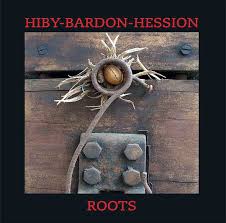
In 2018 he received his doctorate from the University of Leeds for research into augmenting solo percussion with analogue and digital electronics. Another trio later with Hans Peter Hilby and Michael Bardon, he remains active.
More Posts: bandleader,drums,history,instrumental,jazz,music
Daily Dose Of Jazz…
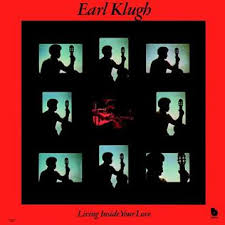
Earl Klugh was born September 16, 1953 in Detroit, Michigan. At the age of six he started training on the piano but switched to the guitar at ten. By 13, he was captivated by the guitar of Chet Atkins when he made an appearance on the Perry Como Show.
His first recording was at age 15 on Yusef Lateef’s Suite 16. He played on George Benson’s White Rabbit album and two years later, in 1973, joined his touring band. He has performed as a guest on several of Atkins’ albums, who has reciprocated as well, joining Klugh on his Magic In Your Eyes album.
He and Bob James received a Grammy for Best Pop Instrumental Performance in 1981 for their album One on One. Klugh has recorded over 30 albums, including twenty-three top ten charting records, with five hitting No. 1 on Billboard’s Jazz Album chart.
Each spring, Klugh hosts an event called Weekend of Jazz, featuring jazz musicians at the Broadmoor Hotel & Resort in Colorado Springs, Colorado. The weekend attracts a host of famous musicians and vocalists.
Guitarist and composer Earl Klugh, who was influenced by Bob James, Ray Parker Jr, Wes Montgomery and Laurindo Almeida, has received 13 Grammy nominations, continues to compose, perform and record.
More Posts: bandleader,guitar,history,instrumental,jazz,music
WYCLIFFE GORDON & ERIC REED WORKSHOP
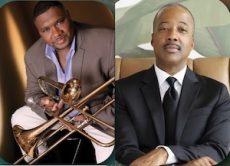
The duo will present a workshop for musicians and jazz lovers at the Hammonds House Museum. Registration is required. To reserve your spot, click HERE.
More Posts: adventure,bandleader,genius,history,instrumental,jazz,music,piano,preserving,saxophone,travel
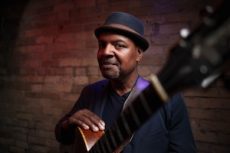
BOBBY BROOM: TRIBUTE TO RUSSELL MALONE
Born in Harlem and raised on the Upper West Side of NYC, Bobby Broom took up guitar at 12 and five years later, in 1977, made his first appearance with Sonny Rollins at Carnegie Hall. Even prior to that auspicious start, he had dedicated himself to the art, culture, and life of jazz, with the goals of learning to express himself within the idiom, while honoring its historical traditions and spirit.
Nearly 50 years later, Bobby has amassed a formidable jazz pedigree, working closely with historic figures such as Rollins, Miles Davis, Art Blakey, Stanley Turrentine and Kenny Burrell, as well as many of his contemporaries. To date he has made fifteen leader recordings and has traveled to perform, as an accompanying musician and with his own ensembles, in countries on five continents.
Broom is a tenured Associate Professor at Northern Illinois University and has devoted much of his career to jazz education. He began teaching at the tertiary level under the direction of NEA Jazz Fellow and saxophone great Jackie McLean at University of Hartford. Bobby has also worked with high school students through the Herbie Hancock (formerly Thelonious Monk) Institute and currently, with the Ravinia Jazz Mentor Program.
More Posts: adventure,bandleader,club,genius,guitar,history,instrumental,jazz,music,preserving,travel