

Daily Dose Of Jazz…
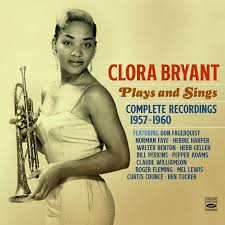
Clora Larea Bryant was born on May 30, 1927 in Denison, Texas to Charles and Eulila Bryant, the youngest of three children. As a young child she learned to play piano with her brother Mel, and was a member of a Baptist church choir. Her brother Fred left his trumpet when he joined the military, she picked it up and learned to play. In high school she played trumpet in the marching band.
She turned down scholarships from Oberlin Conservatory and Bennett College to attend Prairie View College in Houston, Texas starting in 1943. Bryant was a member of the Prairie View Co-eds Jazz Band which toured in Texas and performed at the Apollo Theater in New York City in 1944. Her father got a job in Los Angeles, CAlifornia and she transferred to UCLA in 1945, and where she first heard bebop on Central Avenue.
In 1946 she became a member of the International Sweethearts of Rhythm, an all-female jazz band, earned her union card and dropped out of school. Dizzy Gillespie became her mentor and provided her with work. She joined the black female jazz band the Queens of Swing as a drummer, and went on tour with the band.
In 1951 she worked in Los Angeles as a trumpeter for Josephine Baker and Billie Holiday. The same year the Queens of Swing became the first women’s jazz group to appear on television and performed as The Hollywood Sepia Tones. Clora was called onto Ada Leonard’s all-girl orchestra show, however, racist directed calls to the station the engagement. In 1954 she briefly moved to New York because she had lost inspiration from playing in bands.
Bryant recorded her first and only album, Gal With A Horn, in 1957 before returning to the life of a traveling musician. She worked with Louis Armstrong and Harry James, toured with singer Billy Williams and around the world with her brother Mel, had a TV show in Australia and became the first female jazz musician to tour in the Soviet Union after writing to Mikhail Gorbachev.
After a heart attack and quadruple bypass surgery in 1996, Bryant was forced to give up the trumpet but she continued to sing. She also began to give lectures on college campuses about the history of jazz, co-edited a book on jazz history in Los Angeles titled Central Avenue Sounds: Jazz in Los Angeles, and worked with children in Los Angeles elementary schools.
Trumpeter and vocalist Clora Bryant, who was the only female trumpeter to perform with Dizzy Gillespie and Charlie Parker and was a member of the International Sweethearts of Rhythm, died at Cedars-Sinai Medical Center in Los Angeles on August 25, 2019, after suffering a heart attack at home.

More Posts: bandleader,history,instrumental,jazz,music,trumpet,vocal
Daily Dose Of Jazz…
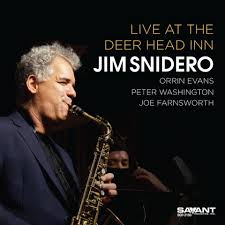
James J. Snidero was born in Redwood City, California on May 29, 1958 and grew up in the Washington, D.C. suburb of Camp Springs, Maryland. He then attended the University of North Texas, performed in the One O’clock Lab band and then moved to New York City in 1981. Once there he recorded and toured with Jack McDuff from 1981 to 1982, then joined Toshiko Akiyoshi’s Jazz Orchestra in 1983 after she moved to New York.
Snidero was a working member of Frank Sinatra’s band from 1991 to 1995 and Eddie Palmieri’s band beginning 1994. He performed with the Frank Wess Sextet, the Mingus Big Band, and Walt Weiskopf. He has worked as a sideman for David Hazeltine, David Murray, Mike LeDonne, Joe Magnarelli, Maria Schneider, Mel Lewis, Jim Rotondi, Brian Lynch, Conrad Herwig, and Tom Varner.
He recorded and performed with his own quintet and over time had various musicians including trumpeters Brian Lynch, Tom Harrell and Tim Hagans; pianists Benny Green and Mulgrew Miller; double bassists Peter Washington and Dennis Irwin; and the drummers Billy Hart and Louis Hayes, Gene Jackson, and Adam Nussbaum.
As an educator Jim has held professor positions at the New School University, Indiana University and Princeton University. He has written five series of jazz etude books and produced courses in jazz improvisation and performance for The Jazz Conception Company.
Saxophonist Jim Snidero Snidero, who has recorded 27 albums as a leader and thirty-three as a sideman, continues to perform throughout the United States, Europe, and Japan.
More Posts: bandleader,educator,history,instrumental,jazz,music,saxophone
Daily Dose Of Jazz…
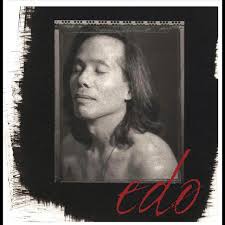
Edo Castro was born on May 24, 1957 in San Francisco, California to mother Aida Saberi, the only child from her first marriage. He attended Grattan Elementary, Herbert Hoover Junior High and J. Eugene McAteer High School, all in the city by the bay. Growing up during the tumultuous 1960s, where from an early age he was exposed to a myriad of musical styles, listening not only to rock and roll, R&B, but classical music, folk and jazz.
The first jazz albums came to him via his uncle, a recording engineer pioneer Reice Hamel. From these, Edo was first exposed to and enthralled by the sounds of Vince Guaraldi, Hugh Masekela, Ahmad Jamal, Bill Evans, Ramsey Lewis and Paul Desmond. He initially studied piano and violin, but when a friend suggested he try the electric bass, he knew he had found his instrument.
Castro attended Humboldt State University in northern California. Nearly three years later he bought an acoustic bass and auditioned for the music department at San Jose State University. So inspired by the musicians he met and their sound, he moved to Chicago, Illinois in 1982, and studied at DePaul University for a year, then completed his studies at the American Conservatory of Music, earning a Bachelor of Arts in 1987 with a focus on jazz studies and electric bass.
Returning to the Bay Area in 1990, Edo has performed and recorded with among others David Amram, Roy Haynes, Fareed Haque, David Onderdonk, Ed Thigpen, Johnny Griffin, Joel Harrison, Deborah Winters, Jill Knight, Bethany Pickens, Armando Peraza, Caren Armstrong, Percy Howard, Mark Egan, Yves Carbonne, and David Friesen.
Bassist Edo Castro has performed across Europe, Asia and South America. He continues to perform and record.
More Posts: bandleader,bass,history,instrumental,jazz,music
Daily Dose Of Jazz…
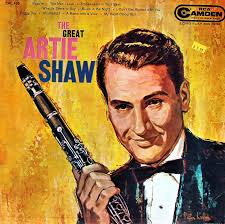
Artie Shaw was born Arthur Jacob Arshawsky on May 23, 1910 in New York City to Austrian and Russian Jewish parents Sarah and Harold Arshawsky, a dressmaker and photographer. He grew up in New Haven, Connecticut, where his natural introversion was deepened by local antisemitism. Buying a saxophone by working in a grocery store and began learning the saxophone at 13. At 16, he switched to the clarinet and left home to tour with a band.
From 1925 to 1936 Shaw performed with many bands and orchestras, working in Cleveland, Ohio and establishing a lasting reputation as music director and arranger for an orchestra led by violinist Austin Wylie. Exposed to symphonic music while playing with Irving Aaronson’s Commanders, which he later incorporated in his arrangements. In 1932 he joined the Roger Wolfe Kahn Orchestra and made several recordings. Three years later he gained attention with his “Interlude in B-flat” at a swing concert at the Imperial Theater in New York. During the swing era, his big bands had numerous popular hits with Begin the Beguine, Stardust and others.
In addition to hiring Buddy Rich, he signed Billie Holiday as his band’s vocalist in 1938, becoming the first white band leader to hire a full-time black female singer to tour the segregated South. However, after recording Any Old Time, Holiday left the band due to hostility from Southern audiences, as well as from music company executives who wanted a more mainstream singer.
He fashioned a smaller band within the orchestra in 1940, naming it Artie Shaw and the Gramercy Five after his home telephone exchange. Over time members of the band were pianist Johnny Guarnieri, electric guitarist Al Hendrickson, trumpeter Roy Eldridge succeeded Billy Butterfield, Oran “Hot Lips” Page, Max Kaminsky, Georgie Auld, Dave Tough, Jack Jenney, and Ray Conniff. In 1940, the original Gramercy Five cut eight sides, then Shaw dissolved the band in early 1941.
The long series of musical groups Shaw subsequently formed included Lena Horne, Helen Forrest, Mel Tormé, Buddy Rich, Dave Tough, Barney Kessel, Jimmy Raney, Tal Farlow, Dodo Marmarosa, and Ray Conniff.
Throughout his career, Shaw formed big bands for his radio broadcasts, made several musical shorts for Vitaphone and Paramount Pictures, and played with Navy personnel during World War II. Active until 1954, his music was used in several films, he had numerous talk show appearances, came out of retirement in 1983 and put together one last band.
Clarinetist Artie Shaw, who received a Lifetime Grammy Award in 2004, died on December 30, 2004, aged 94.
More Posts: bandleader,clarinet,history,instrumental,jazz,music
Daily Dose Of Jazz…
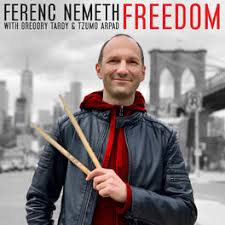
Ferenc Nemeth was born on May 20, 1976 in Keszthely, Hungary and at 14 left home to study classical percussion at the Richter János Conservatory in Győr, Hungary. Following this he attended the Franz Liszt Academy of Music and then received a scholarship to the Berklee College of Music in Boston, Massachusetts. He later enrolled in the graduate program at the New England Conservatory. In 2001 he became the first Hungarian to be accepted into the Thelonious Monk Institute of Jazz, studying there until 2003.
He has played with Herbie Hancock, Wayne Shorter, Christian McBride, John Patitucci, Terence Blanchard, John Abercrombie, Joshua Redman, Dave Samuels, Mark Turner, Ron McClure, Chris Cheek, Aaron Goldberg, Eli Degibri, and Illayaraja.
He is a founding member of Gilfema with Lionel Loueke and Massimo Biolcati. Since the group’s debut album as a leader he has released six more albums, and his sophomore release Night Songs being nominated for the 7th Annual Independent Music Awards for Jazz Album of the Year.
Based in New York City, drummer and composer Ferenc Nemeth, who has also recorded as a sideman, continues to perform, record and compose.
More Posts: bandleader,composer,drums,history,instrumental,jazz,music