

Daily Dose Of Jazz…
Harvie S was born Harvie Swartz on December 6, 1948 in Chelsea, Massachusetts. He learned piano as a child and did not begin playing bass until 1967, when he was nineteen years old. He attended Berklee College of Music and played in and around Boston, Massachusetts with Al Cohn, Zoot Sims, Mose Allison, and Chris Connor.
Moving to New York City in 1972 he worked with Jackie Paris, Thad Jones, Gil Evans, Lee Konitz, Barry Miles, David Friedman, Double Image, David Matthews, Steve Kuhn and Paul Motian. He has recorded extensively as a duet with Sheila Jordan, and has released numerous albums as the leader of his own ensembles, including Urban Earth and the Harvie S Band.
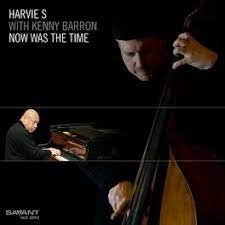
He has recorded fiteen albums as a leader, co-led two sessions with Sheryl Bailey, thirteen as a sideman, and has performed and produced music exclusively as Harvie S since 2001. He has recorded with Alan Broadbent, Sinan Alimanović, Art Farmer, Urbie Green, Jackie and Roy, Eric Kloss, Steve Kuhn, Anders Mogensen and Roseanna Vitro. In 2008, he released a duo album with pianist Kenny Barron, Now Was The Time, on HighNote/Savant Records.
Double bassist Harvie S has been a member of the Westchester Jazz Orchestra since 2007 and continues to produce, compose, arrange and educate.

More Posts: arranger,bandleader,bass,composer,educator,history,instrumental,jazz,music
Daily Dose Of Jazz…
Fate Marable was born on December 2, 1890 in Paducah, Kentucky. His mother was a piano teacher who gave her son music lessons, both in reading music and playing piano. At the age of 17 he began playing on the Mississippi River steamboats. John and Joseph Streckfus hired him to replace their piano player, Charles Mills, who had accepted an engagement in New York City.
Later in 1907 he became bandleader for a paddlewheeler on the Streckfus Line running between New Orleans, Louisiana and St. Paul, Minnesota, a position he retained for 33 years. Later he spent late nights in New Orleans’ clubs scouting for talent and playing at jam sessions. There he discovered Louis Armstrong blowing cornet, and recruited him to play for his band on evening riverboat excursions cruising around the Crescent City.
As a bandleader, Marable shared the lessons from his mother with his musicians as many of the musicians he hired played by ear. He augmented their skills by teaching them to read music, and expected them all to learn how to play from sheet music on sight. His training boosted many of the musician’s careers when they were ready to move on. They went on to play with bandleaders such as Cab Calloway, Count Basie, Duke Ellington, Jimmie Lunceford, Fats Waller, and Chick Webb.
Members of Marable’s bands were expected to be able to play a wide variety of music, from hot numbers to light classics, playing by memory or ear, and from sheet music. As a strict bandleader he demanded musical proficiency and rigid discipline from all his band members as they developed their individual strong points. His band served as an early musical education for many other players who would later become prominent in jazz, including Red Allen, Baby Dodds, Johnny Dodds, Pops Foster, Erroll Garner, Narvin Kimball, Al Morgan, Jimmy Blanton, Elbert Pee Wee Claybrook, Joe Poston, and Zutty Singleton.
Pianist and bandleader Fate Marable, who published the only original composition of his career, Barrell House Rag, co-written with Clarence Williams in 1916, transitioned from pneumonia in St. Louis, Missouri on January 16, 1947 at 56 years old.
More Posts: bandleader,history,instrumental,jazz,music,piano
Daily Dose Of Jazz…
Bobby Donaldson was born Robert Stanley Donaldson on November 29, 1922 in Boston, Massachusetts. Early in his career he played with the Boston Symphony. After playing locally in the early 1940s, he played with Russell Procope while serving in the Army in New York City.
In 1946–47 Bobby worked with Cat Anderson. Following this stint he played with Edmond Hall, Andy Kirk, Lucky Millinder, Buck Clayton, Red Norvo, and Sy Oliver/Louis Armstrong.
A prolific session musician for much of the 1950s and 1960s, he played with Helen Merrill, Ruby Braff, Mel Powell, Benny Goodman, Count Basie, Bobby Jaspar, Herbie Mann, André Hodeir, Kenny Burrell, Lonnie Johnson, Frank Wess, Willis Jackson, and Johnny Hodges.
Drummer Bobby Donaldson, who played both in the jazz, Dixieland and R&B idioms, transitioned in 1971.

More Posts: bandleader,drums,history,instrumental,jazz,music
Daily Dose Of Jazz…
Adelhard Roidinger was born on November 28, 1941 in Windischgarsten, Austria into a musician familyand first learned piano, violin and guitar. When he was 16 he started to play double bass. From 1960 to 1967, he studied architecture at the Graz University of Technology, simultaneously studying double bass and jazz composing at the University of Music and Performing Arts.
Since 1969, Roidinger has played double bass with Joachim Kühn, Eje Thelin, and Karl Berger. From 1971 to 1975 he played in Hans Kollers Free Sound, then founded the European Jazz Consensus with Alan Skidmore, Gerd Dudek and Branislav Lala Kovačev. They recorded two albums. A new band, the International Jazz Consensus was formed by him along with Kovačev, Allan Praskin and John D. Thomas. He went on to perform with Harry Pepl and Werner Pirchner, Herbert Joos, Albert Mangelsdorff, Yosuke Yamashita, George Russell, Maria João, Anthony Braxton, Tone Janša and Melanie Bong.
Roidinger started to teach at Anton Bruckner Private University for Music, Drama, and Dance in Linz in Upper Austria. He was the director of its jazz department and the director of the Music and Media Technology department. He wrote lessons for double bass and bass guitar as well as a detailed publication about jazz improvisation and pentatonic scale.
Bassist, composer and computer graphic designer Adelhard Roidinger, who was awarded Ernst Koref Composition Prize for his computer composition Siamesic Sinfonia, transitioned on April 22, 2022 in Vienna, Austria at 88 years old.
More Posts: bandleader,bass,composer,history,instrumental,jazz,music
Daily Dose Of Jazz…
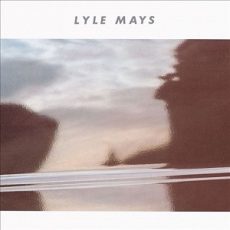
Lyle David Mays was born November 27, 1953 in Wausaukee, Wisconsin. While growing up he had four main interests: chess, mathematics, architecture, and music. His mother played piano and organ, and his father taught himself to play guitar by ear. His teacher allowed him to practice improvisation after the structured elements of each lesson were completed. At the age of nine, he played the organ at a family member’s wedding, and fourteen he began to play in church. During his senior year of high school he was introduced to jazz pianist Marian McPartland.
He attended the University of North Texas where he composed and arranged for the One O’Clock Lab Band and was the composer and arranger for the Grammy Award-nominated album Lab 75. After leaving the University of North Texas, Mays toured the US and Europe with Woody Herman’s Thundering Herd.
In 1975 he met Pat Metheny at the Wichita Jazz Festival, with whom he soon co-founded the Pat Metheny Group. Mays had an extraordinary career as a core musical architect and sound designer of the group for more than three decades. The group had 23 Grammy nominations, winning the award 11 times.
In 2010 Lyle decided to retire from public music performance and became a software development manager because of changes in the music industry. He composed and recorded children’s audiobooks, composed several contemporary classical pieces and formed his own band.
As an amateur architect, he was influenced by fellow Wisconsinian, Frank Lloyd Wright and designed his own house, home studio, and his sister’s house. Mays brought intellectual and organic architectural concepts in his music and sound design based on the innovative integration of many different sources to create a completely new soundscape.
He recorded seven as a leader, two as member of the One O’Clock Lab Band and 14 with the Pat Metheny Band, and as a sideman, seventeen. Mays won eleven Grammys as a member of the Pat Metheny Group and whose important influences were the 1968 recordings of Bill Evans at the Montreux Jazz Festival and Filles de Kilimanjaro by Miles Davis
Pianist and composer Lyle Mays, who was posthumously awarded the Grammy Award for Best Instrumental Composition in 2022 for his composition Eberhard, transitioned in Los Angeles, California on February 10, 2020 at age 66.
More Posts: bandleader,composer,history,instrumental,jazz,music,piano