

Daily Dose Of Jazz…
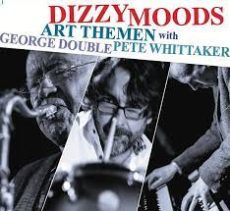
Arthur Edward George Themen was born November 26, 1939 in Manchester, England, where he was involved with the traditional jazz scene in the late 1950s as a self-taught musician, having started playing clarinet as a schoolboy at Manchester Grammar School.
In 1958 he began his medical studies at the University of Cambridge. While there he started playing jazz with the Cambridge University Jazz Band bandmates including Lionel Grigson, Dave Gelly, Jonathan Lynn, and John Hart. Under pianist Grigson’s leadership they achieved near professional standard with a swinging hard-bop style that swept the board in the fiercely contested Inter-University Jazz Band Competitions.
By 1964 he was an orthopaedic consultant playing blues with Jack Bruce and Alexis Korner and was a member of Alexis Korner’s Blues Incorporated. In 1965, Themen played with the Peter Stuyvesant Jazz Orchestra in Zürich, Switzerland going on to play with Michael Garrick, Ian Carr, and Graham Collier’s Music.
The Seventies saw him playing with Stan Tracey, touring with him all over the world as well as around the UK. Art has played and toured with visiting US musicians Charlie Rouse, Nat Adderley, Red Rodney, George Coleman, and Al Haig.
In 1995 he formed a quartet with pianist John Critchinson. Themen’s style originally owed much to the influence of Dexter Gordon and Sonny Rollins, but later influences included such disparate saxophonists as Coleman Hawkins, Evan Parker and John Coltrane. He was inspired to play saxophone after he attended a gig by the Dankworth Seven, at the local Palais, at the age of 16, with a female cousin and his future was set.
Following his retirement as a consultant orthopaedic surgery consultant, saxophonist Art Themen has focused on his jazz career.

More Posts: bandleader,history,instrumental,jazz,music,saxophone
Daily Dose Of Jazz…
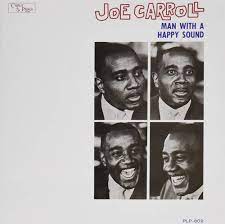
Joe “Bebop” Carroll was born Joseph Paul Taylor in Philadelphia, Pennsylvania on November 25, 1919. In 1949 he became a member of the Dizzy Gillespie big band. After the band broke up a year later, Carroll continued in a small group formed by Gillespie. In 1953, he left Gillespie to pursue a solo career and recorded albums for Epic Records in the 1950s.
Vocalist Joe Carroll, whose collaborations with Gillespie included the humorous songs Swing Low, Sweet Cadillac and Oo Bla Dee, transitioned on February 1, 1981.
More Posts: bandleader,history,instrumental,jazz,music,vocal
Daily Dose Of Jazz…
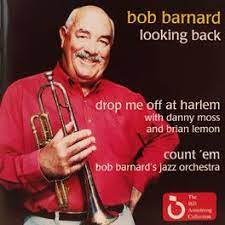
Robert Graeme Barnard was born on November 24, 1933 in Melbourne, Australia and his parents had formed a dance band in the 1920s, his mother was the bandleader and pianist, his father on saxophone, drums and banjo. His older brother Len joined them on drums at age 11. He took trumpet lessons from age 11 and played clarinet in a local brass band before he joined the family band at 14 in 1947.
When his brother Len formed his own group, Len’s South City Stompers the next year he joined on trumpet and they made their first recording in 1949 on his 16th birthday. The following year they began a weekly radio broadcast as Len Barnard’s Dixieland Jazz Band. He played with the group until 1955 after being cheated of their takings and stranded in Tumut, Australia. Relocating to Sydney he performed with Ray Price Trio before returning to Melbourne.
In 1958 Barnard joined the Graeme Bell band for an Australian tour. He worked for Brashs from 1958 to 1962, while performing after business hours. He went back to Sydney in 1962 and as a member of Graeme Bell and His All-Stars appeared on Trad Pad, a TV special program.
He was nominated in 1996 at the ARIA Music Awards of 1996 for Best Jazz Album for Live at the Sydney Opera House, which was recorded with the Australian Jazz Allstars.
Trumpeter and cornetist Bob Barnard, who was made a Member of the Order of Australia (AM) for service to music, particularly jazz, transitioned on May 7, 2022.
More Posts: bandleader,cornet,history,instrumental,jazz,music,trumpet
Daily Dose Of Jazz…
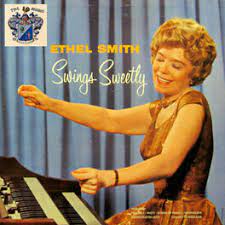
Ethel Smith was born Ethel Goldsmith on November 22, 1902 in Pittsburgh, Pennsylvania and began performing from a fairly young age. Traveling widely, after studying both music and several languages at Carnegie Institute of Technology, she became proficient in Latin music while staying in South America.
Smith performed in several Hollywood films such as George White’s Scandals and Melody Time. Her appearance in these films brought notoriety to her colorful, elaborate costumes, especially her hats.
Her rendition of Tico Tico became her best-known hit. She performed it in the MGM film Bathing Beauty in 1944, after which her recording reached the U.S. pop charts that November, peaking at #14 and selling nearly two million copies worldwide. Her other well known hits were Down Yonder and Monkey on a String.
Smith was a guitarist as well as an organist, and in her later years occasionally played the guitar live for audiences, but all her recordings were on the organ. She recorded dozens of albums, mostly for Decca Records.
Organist Ethel Smith, who became widely known as associated with Latin music, transitioned on May 10, 1996, at age 93 in Palm Beach, Florida.
More Posts: bandleader,history,instrumental,jazz,music,organ
Daily Dose Of Jazz…
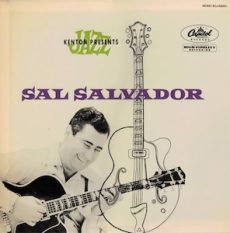
Sal Salvador was born Silvio Smiraglia on November 21, 1925 in Monson, Massachusetts and began his professional career in New York City, New York. He eventually moved to Stamford, Connecticut.
In addition to recordings with Stan Kenton and with his own groups, Salvador can be heard in the film Blackboard Jungle, during a scene in a bar where a recording on which he is featured is played on the jukebox. He is also featured playing with Sonny Stitt in the film, Jazz on a Summer’s Day, at the Newport Jazz Festival.
He taught guitar at the University of Bridgeport in Bridgeport, Connecticut as well as at Western Connecticut State University in Danbury, Connecticut. He wrote several instruction books for beginning to advanced guitarists.
Guitarist and educator Sal Salvador transitioned on September 22, 1999 following a fight with cancer at the age of 73.
More Posts: bandleader,guitar,history,instrumental,jazz,music