

Daily Dose Of Jazz…
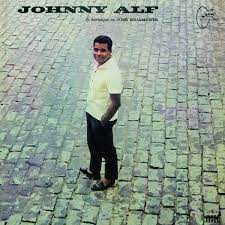
Johnny Alf was born Alfredo José da Silva on May 19, 1929 in Vila Isabel, Rio de Janeiro, Brazil and began playing piano at age 9. His father died when he was 3 and was raised by his mother, who worked as a maid to raise him. He attended Colégio Pedro II, receiving support from his mother’s employers who had appreciation for music. He was enrolled at the IBEU, Instituto Brasil-Estados Unidos, and it was there that he received his first formal musical training, studying classical piano with instructor Geni Bálsamo.
Influenced by Nat King Cole and George Sheaing, Frank Sinatra, Bing Crosby and Brazilian born Dick Fame, he eventually gained membership into the Sinatra~Farney Fan Club, a performers collective. Alf’s membership allowed him regular access to a piano as well as a group of musically sympathetic peers with which to play and experiment. They would finally get the payless opportunity to play in a few well known venues.
By 1950 he was pursuing a professional musical career and received his first professional break in 1952 when he was hired as the pianist at the newly inaugurated Cantina do César, owned by the popular radio host César de Alencar. With free musical reign. Johnny would receive frequent visits from pianist João Donato, vocalist Dolores Duran, and guitarist/vocalist João Gilberto who would sit in on the way to their gigs.
He would begin to combine Samba-cançãoes and foxtrots with American jazz styles. He would go on to record his first two albums, however, the recordings garnered no more than a pittance of recognition for Alf at the time, but would later in the early Sixties be hailed as the progenitors of the Bossa Nova style.
He continued to find nightly work in the Rio clubs and work with musical companions João Gilberto, João Donato, and the young pianist Antonio Carlos Jobim, all following him from venue to venue provided they could afford the cover fee. By 1954 he was performing regularly at the Hotel Plaza nightclub. Due to its haunted reputation Johnny was able to play his own compositions plus hold early evening jam sessions and these improvisatory collaborations that the harmonic and rhythmic structures eventually blossomed into the style now known as Bossa Nova.
Moving to Sao Paulo in 1955 he became the house pianist at a new club, Baiúca and formed a short-lived duo with double-bassist Sabá. Unfortunately the group only established a moderate following before Baiúca was closed down for health-code violations. In 1961 he declined the invitation to play at Carnegie Hall’s historic Bossa Nova Festival because he didn’t like the connotation bossa nova brought with it. That decision sent him towards obscurity and very little was heard from Alf, although he infrequently produce albums throughout the 60s and early 70s. He would continue to collaborate, record and perform to earn a living and eventually landed a position at a local conservatory of music.
Pianist, vocalist, composer and educator Johnny Alf, who is widely considered the Father of Bossa Nova, transitioned from complications caused by prostate cancer on March 4, 2010 in Santo Andre, just outside São Paulo, Brazil. This was his home for the last fifty years of his life. He left no immediate survivors.
More Posts: bandleader,club,history,instrumental,jazz,music,piano,vocal
Daily Dose Of Jazz…
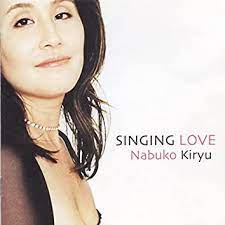
Nabuko Kiryu was born on May 18, 1968 in Tokyo, Japan and grew up in a musical family. Her mother and stepfather both are jazz pianists and a brother plays classical trumpet. The daughter of Toshiko Kiryu, a classically trained pianist who has performed at Carnegie Hall, she learned an appreciation for music early. However, her stepfather Kanji Ohta, was the one who inspired her movement toward jazz.
She started singing jazz in 1990 in Japan after graduating from Shobi Junior College of Music with a degree in composition. But her musical career began much earlier. Since her arrival in New York City in 1996, she has been performing in restaurants, cafes, and jazz clubs such as Blue Note, Lenox Lounge, and Showmans. She completed her B.A. in jazz vocal performance from City College of New York in 2001 and also graduated with her M.A. at Queens College in 2004.
Nabuko has performed with jazz giants such as Jimmy Heath, Grady Tate, Earl May, and Jimmy Lovelace, the last two of which appear on her latest What’s New Records release titled Singing Love. She studied with Sheila Jordan and has participated in the Barry Harris Jazz Vocal Ensemble.
Vocalist Nabuko Kiryu continues to perform and record as she explore the jazz idiom.
More Posts: bandleader,history,instrumental,jazz,music,vocal
Daily Dose Of Jazz…
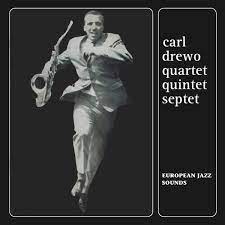
Karl Drewo was born May 17, 1929 in Vienna, Austria and as a child studied piano and accordion, but switched to tenor saxophone in his teens. In the late 1940s he worked with Charlie Gaudriot and Paul Reischman, followed by performing with Gert Steffens and Horst Winter in the early Fifties. He was a member of the Austrian All Stars in the mid-1950s and from 1956 to 1958 he worked with Fatty George.
He continued on by becoming a member of Kurt Edelhagen’s orchestra, where he played into the early 1970s. In the 1960s he recorded with Francy Boland, Kenny Clarke, Zoot Sims, and Jimmy Woode, among others.
After leaving Edelhagen’s group, he played with the Österreichischer Rundfunk band, and in the 1980s was a member of Peter Herbolzheimer’s ensemble. Later that decade he took a position as a lecturer at an arts school in Graz, Austria. In the Nineties he played with the Lungau Big Band, Rudolf Josel, and Rudi Wilfer.
Saxophonist Karl Drewo, often spelled Carl Drewo or Drevo, transitioned on May 10, 1995 in Wels, Austria.
More Posts: bandleader,history,instrumental,jazz,music,saxophone
Daily Dose Of Jazz…
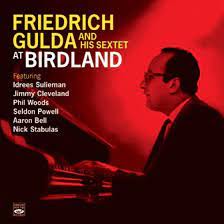
Friedrich Gulda was born on May 16, 1930 in Vienna, Austria and as the son of a teacher began learning to play the piano at age 7 with Felix Pazofsky at the Wiener Volkskonservatorium. In 1942, he entered the Vienna Music Academy, where he studied piano and musical theory under Bruno Seidlhofer and Joseph Marx.
During World War II as teenagers, Gulda and his friend Joe Zawinul were rebellious and would perform forbidden music, including jazz, in violation of the government’s prohibition of playing such music. Winning first prize at the Geneva International Music Competition in 1946, he began to play concerts worldwide, making his Carnegie Hall debut in 1950, and with Jörg Demus and Paul Badura-Skoda, formed what became known as the “Viennese troika”. Friedrich enjoyed a renowned classical career for years before his 1956 engagement at Birdland in New York City and at the Newport Jazz Festival.
In 1966 he organized the International Competition for Modern Jazz in 1966, and established the International Musikforum, a school in Ossiach, Austria two years later, for students who wanted to learn improvisation. From the 1950s on Gulda cultivated a professional interest in jazz, writing songs and free improvisation or open music improvisations. He also recorded as a vocalist under the pseudonym “Albert Golowin”, fooling music critics for years until it was realized that Gulda and Golowin were the same person.
In jazz, he found “the rhythmic drive, the risk, the absolute contrast to the pale, academic approach I had been taught. He also took up playing the baritone saxophone. His 1970 album, As You Like It, includes the standards Round Midnight and What Is This Thing Called Love?, as well as his own classic Blues For H.G. that is dedicated to Hans Georg Brunner-Schwer.
From the late 1960s through the 1980s he continued his straight-ahead swing and bop-based jazz often in European Jazz big bands, which he often organized yearly performances and recordings. He performed and recorded playing clavichord, percussion instruments, and a bass recorder wooden flute with musicians involved in free improvisation, including Cecil Taylor, Barre Phillips, Ursula Anders, John Surman, Albert Mangelsdorff, Stu Martin, and Fritz Pauer. He would go on to collaborate in the coming decades with Herbie Hancock, Joe Zawinul, and Chick Corea.
When the Vienna Music Academy awarded him its Beethoven Ring in recognition of his performances, he accepted it but then later reconsidered and returned it. To promote a concert in 1999, he announced his own death in a press release so that the concert at the Vienna Konzerthaus could serve as a resurrection party.
Pianist and composer Friedrich Gulda, who worked in both the classical and jazz fields, transitioned from heart failure at the age of 69 on January 27, 2000 at his home in Weissenbach, Austria.
More Posts: bandleader,composer,history,instrumental,jazz,music,piano,saxophone
Daily Dose Of Jazz…
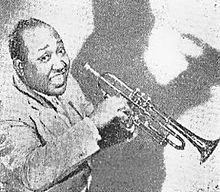
Bobby Martin was born on May 15, 1903. He played trumpet as a child with June Clark and Sonny Greer. By 1925 at the age of 22 he was in New York City playing and recording with Sam Wooding, as well as touring Europe through 1931.
From 1932 to 1936 he played abroad with Willie Lewis, and formed his own band after returning home in 1937. His quartet held an extended gig at the Palace in Greenwich VillageYork with pianist Richard Edwards, drummer Ural Dean, and guitarist Samuel Steede. This era of Martin’s life, as is much of his life, is poorly documented, however, because during a tour of The Netherlands at the Mephisto Club in Rotterdam, his entire book of arrangements was burned in a club fire.
Bobby continued to tour Europe into the early Forties, then held residencies in New York City and New Jersey. He opened his own club briefly in the decade as well.
He married vocalist Thelma Minor, but then left the music industry in 1944. Not much is known of him after this time, however, he never recorded as a leader and transitioned in March 1983.
More Posts: bandleader,history,instrumental,jazz,music,trumpet