

Daily Dose Of Jazz…
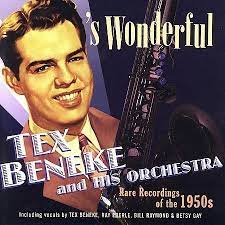
Tex Beneke was born Gordon Lee Beneke on February 12, 1914 in Fort Worth, Texas. He started playing saxophone when he was nine, going from soprano to alto and settling on the tenor saxophone. His first professional work was with bandleader Ben Young in 1935, but it was after a Gene Krupa recommendation when he joined the Glenn Miller Orchestra three years later that his career hit its stride.
Miller immediately made Beneke his primary tenor saxophone soloist and he played all but a few of the tenor solos on all of the records and personal appearances made by the Miller band until it disbanded in 1942. He appeared with Miller and his band in the films Sun Valley Serenade in 1941 and Orchestra Wives in 1942, and both film solos helped propel the singer/saxophonist to the top of the Metronome polls. He went on to perform with the 1941 Metronome All-Star Band led by Benny Goodman. In 1942, Glenn Miller’s orchestra won the first Gold Record ever awarded for Chattanooga Choo Choo.
With the orchestra disbanded due to Miller’s enlistment, Tex briefly joined Horace Heidt before joining the Navy himself, leading a Navy band in Oklahoma. He led two bands in the navy and kept in touch with Miller while they were both serving in the military. By 1945, he felt ready to lead his own orchestra. When Glenn went missing in 1944 he took over the band, shaping it as a ghost band per the desires of the Miller estate, however by 1950, he and the estate parted ways.
Post Miller, Beneke led his own groups but as swing faded from the mainstream so did opportunities. There was a small revival in the late Seventies but he was limited to small labels and competition from Miller alumni and other imitators. He would make the television circuit making appearances on The Tonight Show and Merv Griffin. 1990 saw him have a stroke which sidelined his saxophone playing but he continued to conduct and sing.
On May 30, 2000 saxophonist, vocalist and bandleader Tex Beneke, who received a star on the Hollywood Walk of Fame, transitioned from respiratory failure at a nursing home in Costa Mesa, California, aged 86. His saxophone is currently used by the Arizona Opry.

More Posts: bandleader,history,instrumental,jazz,music,saxophone,vocal
Daily Dose Of Jazz…
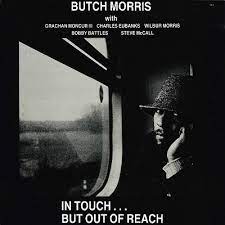
Butch Morris was born Lawrence Douglas Morris on February 10, 1947 in Long Beach, California. Before beginning his musical career, he served in the U.S. Army as a medic in Germany, Japan and Vietnam during the Vietnam War. He came to attention with saxophonist David Murray’s groups in the late 1970s and early 1980s.
>Morris led a group called Orchestra SLANG. The group features drummer Kenny Wollesen, alto saxophonist Jonathon Haffner, trumpeter Kirk Knuffke and others. He performed and presented regularly as part of the Festival of New Trumpet Music, held annually in New York City. He wrote most of the incidental music for the 1989 TV show, A Man Called Hawk, which starred Avery Brooks, with whom he co-wrote the theme music, along with Stanley Clarke. He also played with well-known artist and would-be drummer A.R. Penck in 1990.
The originator of Conduction (a term borrowed from physics), a type of structured free improvisation where Butch directs and conducts an improvising ensemble with a series of hand and baton gestures.
Cornetist, composer and conductor Butch Morris, known for pioneering his structural improvisation method Conduction, transitioned from lung cancer on January 29, 2013, at the age of 65 in New York City.
More Posts: bandleader,composer,conductor,cornet,history,instrumental,jazz,music
Daily Dose Of Jazz…
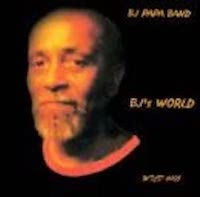
B.J. Papa was born on February 9, 1936 in Mobile, Alabama and as a child in the 1940s he was listening to all kinds of jazz and blues on the radio. Drafted into the Army in 1954 he became a medic and was stationed in San Francisco, California at Letterman Hospital in the Presidio. However, he ended up spending much of his service time playing on Army ball teams. By the time he turned 19 he found himself intrigued with the jazz bands booked into the Army noncommissioned officers clubs.
After his discharge from the service in 1956 Papa stayed in town and began saxophone lessons. He also made his first forays into the heart of the bustling Fillmore Street jazz community and would show up to listen and learn at the famous after-hours jams at Jimbo’s Bop City.
Over the course of his fifty year career Papa became a North Beach institution mentoring dozens of young cats making their transition from student to professional musician. He played with the biggest names in jazz to come through the city as well as passionate laymen sans pedigree.
Settling in at Jazz At Pearl’s, one of the few remaining jazz clubs that still possessed an air of authenticity before closing its doors, for thirteen years he shared the stage with an eclectic, enthusiastic audience nightly.
Pianist B.J. Papa, who always fed on and drew from the energy of the audience but has no recordings on line, transitioned on August 31, 2008.
More Posts: bandleader,history,instrumental,jazz,music,piano

Daily Dose Of Jazz…
William Crickett Smith was born on February 8, 1881 in Emporia, Kansas, the child of Tennessee Exodusters. His professional career began in childhood, performing in Nathaniel Clark Smith’s Picaninny Band before moving into minstrel troupes, vaudeville and cabaret.
In 1913-1914, he made several early recordings with James Reese Europe’s group, the Clef Club Society Orchestra. Between 1914 and 1919, he performed in the Ford Dabney Orchestra, the resident band at Florenz Ziegfeld’s Broadway cabaret, Midnight Frolics. Between 1917-1919, they produced several dozen phonographs.
By 1919 Smith had relocated to Paris, France playing with Louis Mitchell’s Jazz Kings until 1924. The group recorded for Pathe Records. He became the leader of Mitchell’s group in 1923. He went on to tour France, Spain and Russia with his own bands from 1925 to 1933. However, during the Depression, he spent nine years in Southeast Asia, working with Herb Flemming, Leon Abbey, and Teddy Weatherford, mostly in Bombay and Batavia. In 1936, he recorded with a group called the Symphonians.
Around 1943 cornetist and trumpeter Crickett Smith, who played jazz blues and ragtime, returned to New York City and the following year transitioned on August 30, 1944.
More Posts: bandleader,cornet,history,instrumental,jazz,music,trumpet
Daily Dose Of Jazz…
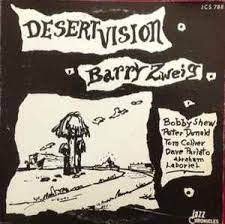
Barry Sweig was born on February 7, 1942 in Detroit, Michigan. His mother loved music and taught her son to clap on the 2 & 4 as a toddler. He received a ukulele for his fifth birthday, played violin from the age of eight until he was eighteen, but bought himself a guitar for ten dollars when he was 15. His first recording session was at age 17, at Capitol Records.
Drafted in the Army in 1964 Sweig was assigned to NORAD Band where he got the opportunity to study with guitarist Johnny Smith. After his discharge he joined Buddy Rich’s band and after recording an album with Sammy Davis Jr. that led to him joining the latter’s band. Touring with Davis ended fourteen months later and he settled in Los Angeles, California and broke into the music scene where he performed and recorded for a host of who’s who vocalists and musicians.
He played his final gig at The Lighthouse Cafe in Hermosa Beach. Guitarist Barry Sweig, who taught at UCLA, USC, and the University of Texas, El Paso, transitioned on March 15, 2020 of complications from Crohn’s disease.
More Posts: bandleader,educator,guitar,history,instrumental,jazz,music