

Daily Dose Of Jazz…
Conrad Joseph Gozzo was born in New Britain, Connecticut on February 6, 1922. His father played trumpet, and he began learning the instrument around the age of 5. He played in his junior and senior high school bands, but left school around the age of 16 at the recommendation of Isham Jones to join bandleader and clarinetist Tommy Reynolds in Boston, Massachusetts.
Quickly noted for his exceptional technical ability and style, Conrad played with Reynolds for nine months, then left to play with Red Norvo in 1939. Staying in the band for two years he went on to play with trumpeter Johnnie Davis, then performed and recorded with the Bob Chester Orchestra, and with Claude Thornhill’s band.
By 1942 he had a short stint with Benny Goodman before enlisting in the U.S. Navy, where clarinetist Artie Shaw had formed a band, the Rangers No. 501. Their first assignment was San Francisco, California and then Hawaii before touring in the South Pacific, the U.K. and the mainland States. After his discharge in 1945, Gozzo briefly rejoined Goodman along with fellow trumpet players from Shaw’s band.
By the Fifties Gozzo was sitting in the lead trumpeter chair on the Glen Gray, Stan Kenton, and Harry James “remakes”, and in Dan Terry’s 1954 Columbia sessions. He recorded extensively with arrangers Van Alexander, Nelson Riddle, Billy May, Ray Conniff, Jerry Fielding and Shorty Rogers, and also with performers Dean Martin and Frank Sinatra. He played first trumpet on all of the recordings of composer Henry Mancini.
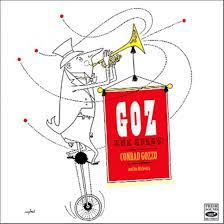
He performed on many major live television shows broadcast on the NBC network, including the Dinah Shore Show, and performed on motion picture soundtracks including The Glenn Miller Story, The Benny Goodman Story, Bye Bye Birdie, Call Me Madam, Ben-Hur and Cleopatra. He played on the two-record set on Verve, Ella Fitzgerald Sings the Harold Arlen Songbook. In 1955, Gozzo released his own album, Goz the Great!, signed with RCA Victor and played by “Conrad Gozzo and his Orchestra”, directed by Billy May. Three of the twelve tracks were written together by Gozzo and May.
Conrad Gozzo, whose nicknames were Goz and Gopher because of his resemblence to the animal when playing, transitioned on October 8, 1964 from liver disease in Burbank, California. Jazz composer Sammy Nestico dedicated Portrait of a Trumpet to Gozzo.

More Posts: bandleader,history,instrumental,jazz,music,trumpet
Daily Dose Of Jazz…
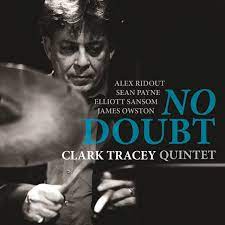
Clark Tracey was born February 5, 1961 in London, England and began his music journey playing piano and vibraphone before switching to drums at age 13, studying under Bryan Spring. He played in several ensembles with his father Stan Tracey including a quartet called Fathers and Sons with John and Alec Dankworth in the 1990s. In addition to his work with his father, which took him around the world, he has played with numerous visiting American musicians, notably Bud Shank, Johnny Griffin, Red Rodney, Sal Nistico, Conte Candoli, Barney Kessell, John Hicks and Pharoah Sanders throughout his career.
Through the 1980s Clark performed and recorded with Buddy DeFranco, Martin Taylor, Charlie Rouse, Alan Skidmore and Tommy Smith. The Nineties saw him with Claire Martin into the new century. During the decade and beyond he led his own ensembles with a host of recognized names like Django Bates, Nigel Hitchcock and Jamie Talbot. Concentrating on promoting the music of his late father, his final group under his own name included Mark Armstrong, Tom Ridout, James Wade Sired, Gareth Williams and James Owston.
Drummer, band leader, and composer Clark Tracey, has received several honors and was awarded the British Empire Medal (BEM) in the 2019 Birthday Honours for services to music and the promotion of jazz. He continues to pursue excellence in the genre.
More Posts: bandleader,composer,drums,history,instrumental,jazz,music
Daily Dose Of Jazz…
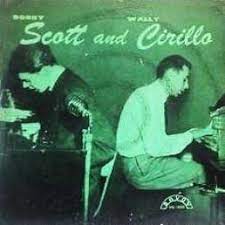
Wally Cirillo was born Wallace Joseph Cirillo on February 4, 1927 in Huntington, New York. He studied at the New York Conservatory of Modern Music and the Manhattan School of Music, and played with Chubby Jackson and Bill Harris in the early 1950s.
In 1954 he began working with John LaPorta, Teo Macero and Charles Mingus as part of the New York Jazz Composers Workshop. The following year, he led a session with Mingus, Macero, and Kenny Clarke, which was later reissued under Mingus’s name as Jazz Composers Workshop. The piece Transeason on this album was composed by Cirillo, makes use of serialism, one of the earliest manifestations of this compositional technique in jazz. He also recorded with LaPorta and with Johnny Mathis in the 1950s.
Cirillo relocated to Florida in 1961, where he led his own band and worked with Phil Napoleon, Flip Phillips, Ira Sullivan, and Joe Diorio. He recorded sparsely throughout his career.
Pianist and composer Wally Cirillo transitioned on May 5, 1977 in Boca Raton, Florida.
More Posts: bandleader,composer,history,instrumental,jazz,music,piano
Daily Dose Of Jazz…
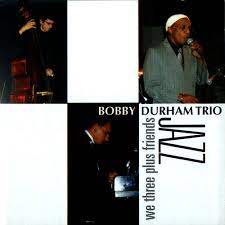
Bobby Durham was born on February 3, 1937 in Philadelphia, Pennsylvania and learned to play drums while a child. He played with The Orioles at age 16, and was in a military band between 1956 and 1959. After his discharge, he played with King James and Stan Hunter.
1960 saw Durham moving to New York City, where he played with Lloyd Price, Wild Bill Davis, Lionel Hampton, Count Basie, Slide Hampton, Grant Green, Sweets Edison, Tommy Flanagan, Jimmy Rowles, and the Duke Ellington Orchestra, in which he played for five months. While working with Basie, he met Al Grey, and was a member of several of Grey’s small ensembles.
He accompanied Ella Fitzgerald for more than a decade, and worked with Oscar Peterson in a trio setting. Bobby played in trios with organists such as Charles Earland and Shirley Scott, and there was a resurgence in interest in his work during the acid jazz upswing in the 1990s. Many of his projects, both as sideman and as leader, came about because of his association with producer Norman Granz, who used him in performances with Fitzgerald, Basie, Edison, Flanagan, and Joe Pass.
He led his own combos, is noted for scat singing along with his drum solos. He recorded with Monty Alexander, Shawn Monteiro, Red Holloway, Milt Jackson, Clifford Jordan, and Jay McShann. He also performed often with pop and soul musicians such as Frank Sinatra, James Brown, Ray Charles, and Marvin Gaye.
Drummer Bobby Durham, who recorded five albums as a leader and twenty~three as a sideman, transitioned from lung cancer in Genoa, Italy at 71 on July 6, 2008.
More Posts: bandleader,drums,history,instrumental,jazz,music
Daily Dose Of Jazz…
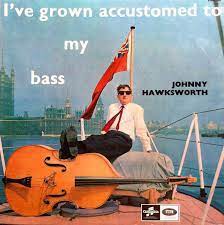
Johnny Hawksworth was born in London, England on February 2, 1924 and initially trained as a pianist, but also played double bass in the Ted Heath Orchestra during the early 1950s and through the 1960s. Becoming one of the most popular jazz bassists in the UK, he won numerous polls and was often featured as a soloist on Heath concerts and recordings.
As a composer Johnny wrote many television themes including Salute to Thames, Thank Your Lucky Stars, Roobarb, Man About the House and George and Mildred. He contributed some of the incidental music used in the 1967 Spider-Man cartoon, and his composition, Er Indoors, was frequently used in SpongeBob SquarePants. While working on films, he scored The Naked World of Harrison Marks, The Penthouse, and Zeta One.
Hawksworth has also written many pieces of stock music for the De Wolfe Music library. He also provided the hypnotic musical soundtrack to Geoffrey Jones’s classic British Transport Films Snow and has composed American-style blues-based material under the name Bunny J. Browne and classically-based material under the name John Steinway.
Bassist and composer Johnny Hawksworth transitioned on February 13, 2009 in Sydney, Australia at the age of 85.
More Posts: bandleader,bass,composer,history,instrumental,jazz,music