

Daily Dose Of Jazz…
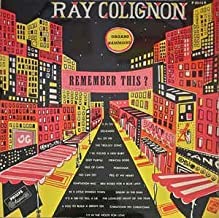
Raymond Colignon was born on February 7, 1907 in Liège, Belgium. He initially was active as an accompanist for silent films, then went on to tour Switzerland, France and Algeria. In the early 1930s, he joined the Lucien Hirsch and His Orchestra who made the first recordings for Columbia Records. Between 1931 and 1934 he worked in a nightclub in his native town. From 1935 to 1940 he played and wrote big band arrangements with Fud Candrix.
As a soloist, he recorded under his own name for the Brussels Jazz Club record label. In 1939 he recorded Honeysuckle Rose for Telefunken and Swinging Through the Style, accompanied by bassist Camille Marchand and drummer Armand Dralandts. The early Forties saw him playing in Brussels, Belgium with Jack Lowens and His Swing Quartet, in Berlin, Germany with Kurt Widmann and his dance orchestra, and in Adolf Steimel ‘s Organum dance orchestra.
In 1941/42 further recordings were made in Brussels under his own name, with trumpeter and singer Billy West recording I Hear A Rhapsody and with Tony Jongenelen Gute Nacht, Mutter (Good NIght , Mother) sung in German. In the post World War II period he worked mainly as an organist in the genre of dance and entertainment music, recording Surprise Party – Calling All Dancers or Come Dance with Me for Philips.
Pianist, organist and arranger Coco Colignon, who was involved in 53 jazz recording sessions between 1931 and 1961, transitioned on February 10, 1987 in Wavre, Belgium.

More Posts: arranger,bandleader,history,instrumental,jazz,music,organ,piano
Daily Dose Of Jazz…
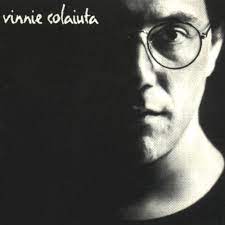
Vincent Peter Colaiuta was born on February 5, 1956 in Brownsville, Pennsylvania and was given his first drum kit when he was seven. He took to it naturally, with little instruction. By fourteen, the school band teacher gave him a book that taught him some of the basics and Buddy Rich was his favorite drummer until he heard the album Ego by Tony Williams, an event that changed his life. He started listening to organ groups, notably Jack McDuff, Jimmy McGriff and Don Patterson.
While matriculating through Berklee College of Music in Boston , Massachusetts at the time jazz fusion was on the rise, he listened to and admired Alphonse Mouzon and Billy Cobham. After leaving school, he played local gigs in Boston, joined a brief tour organized by Al Kooper, then worked in California on an album by Christopher Morris.
Returning to Boston, Colaiuta was drawn back to California by friends and took the bus from Boston to Los Angeles during the blizzard of 1978. After performing in jazz clubs, he won the audition to play drums for Frank Zappa, with whom he toured and appeared on the albums Joe’s Garage, Tinsel Town Rebellion, and Shut Up ‘n Play Yer Guitar.
In 1981, he left Zappa for the gig as a studio musician and recorded for the band Pages, Gino Vannelli, saxophonist Tom Scott, bassist Larry Klein, Joni Mitchell, touring with the latter. The late Eighties saw him as the house drummer for The Late Show Starring Joan Rivers. The band was led by Mark Hudson and was called the Party Boys and the Tramp.
By the end of the 1980s back as a studio musician he was recording albums, doing TV and film work during the day, and playing clubs at night. He worked with jazz musicians Herbie Hancock, Chick Corea, Buell Neidlinger, and the Buddy Rich Big Band. The 1990s he was with Sting, and released his debut solo album as well as two more as a leader.
He has won over fifteen Drummer of the Year awards from Modern Drummer magazine’s annual reader polls. These include ten awards in the “Best Overall” category. He was inducted into the Modern Drummer Hall of Fame in 1996 and the Classic Drummer Hall of Fame in 2014. Colaiuta has won one Grammy Award and has been nominated twice. Drummer Vinnie Colaiuta continues to perform, tour and record.
More Posts: bandleader,drums,history,instrumental,jazz,music

Review: Denise Donatelli | Whistling In The Dark
Whistling In The Dark is the latest offering from Grammy nominated vocalist Denise Donatelli. Paying tribute to Burt Bacharach is nothing less than amazing as she continuously illustrates her interpretive range. She masterfully weaves a story through nine songs that fill us with desire, love, heartbreak, separation and loneliness, which are trademarks of this composer.
For those of us who have long been fans and admirers of Denise Donatelli’s work, this is not her usual upbeat and fun engagement that has been her wheelhouse. Dark, as in the title track, is the cornerstone of this project, yet she moves through the doubts, fears, sadness and tears of love with an emotional acumen that delivers and raises our own memories of those moments we humans experience throughout our lives.
The orchestration is minimal, a juxtaposition from the composer’s earlier arrangements on Warwick’s recordings that were filled with lushness, accentuating the lyric for effect. Less is often more and the simplicity in the accompaniment allows her to artfully capture our imaginations.
Of the Bacharach/David songs executive producer Denise Donatelli and producer Larry Klien selected for this recording, five are immediately recognizable, on which Dionne put her indelible stamp during their Sixties reign. There is no comparison, however, in their individual delivery, and no doubt that Ms. Donatelli has set herself apart by raising a quieter, more subtle bar for those jazz vocalists to aspire to.
The title track was composed with Daniel Tashian and Mexican Divorce with Bob Hilliard, the latter was written for the Drifters and where Bacharach met backup singer Dionne Warwick. For those of us who haven’t followed Bacharach since his Sixties heyday, Klein and Donatelli also chose two refreshing Bacharach/Elvis Costello compositions, Toledo and In The Darkest Place from their 1998 collaborative album Painted From Memory.
Recorded during the height of Covid in late September 2020 over a five day period, there is a relevant sadness to the loneliness society often felt evidenced with a national shutdown, homebound, socially-distanced, eating and/or living alone. The cover photograph embodies that tangible space between shadow and light, a place in which each of us exists, emphasized with the softer interior photo of the artist. The lowercase lettering epitomizes her sense of familiarity with her audience, conveying a cordial invitation to listen.
As for me, I’ve whistled in the dark and found it to be pleasurable, just like this contribution to the jazz canon. Darkness always withdraws with the approaching twilight, heralding the dawn of the new. Endings are where beginnings launch the next chapter, and Denise Donatelli is already underway to create her next masterpiece. Meanwhile, enjoy this gem.
carl anthony | notorious jazz | february 1, 2022
Give A Gift Of Jazz ~ Share 
#preserving genius
More Posts: bandleader,history,instrumental,jazz,music,review,vocal
Daily Dose Of Jazz…
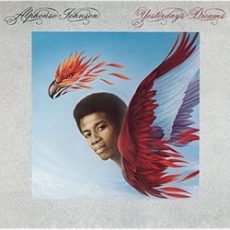
Alphonso Johnson was born on February 2, 1951 in Philadelphia, Pennsylvania and started off as an upright bass player, but switched to the electric bass in his late teens. He began his career in the early 1970s, and showing innovation and fluidity on the electric bass he sessioned with a few jazz musicians before landing a job with Weather Report, taking over for co-founding member Miroslav Vitous.
His debut with Weather Report was on the album Mysterious Traveller, followed by two more albums in the Seventies: Tale Spinnin’ and Black Market before he left the band to work with drummer Billy Cobham. During 1976-77 Alphonso recorded three solo albums as a bandleader, for the Epic label, in a fusion-funk vein.
One of the first musicians to introduce the Chapman Stick to the public, in 1977, his knowledge of the instrument offered him a rehearsal with Genesis, who were looking for a replacement for guitarist Steve Hackett but being more of a bassist than a guitarist, Johnson instead recommended his friend ex-Sweetbottom guitarist and fellow session musician Daryl Stuermer. However, he was one of two bass players on Phil Collins’s first solo album, Face Value, in 1981.
He would work with Bob Weir on a couple of projects – Bobby & The Midnites and The Other Ones; reunite with Cobham in the band Jazz Is Dead, and Steve Hackett’s Genesis Revisited album as well as with Santana, Steve Kimock and Chet Baker. He toured Europe and Japan with saxophonist Wayne Shorter, pianist James Beard, drummer Rodney Holmes, and guitarist David Gilmore.
Earning a Bachelor of Arts in Music Education degree from California State University in 2014, as an undergrad he was a member of the CSUN Wind Ensemble. With extensive experience as a bass teacher he has conducted bass seminars and clinics in Germany, England, France, Scotland, Ireland, Japan, Switzerland, Australia, Brazil and Argentina.
Bassist Alphonso Johnson continues to perform while serving as an adjunct instructor at the University of Southern California and the California Institute of the Arts.
More Posts: bandleader,bass,educator,history,instrumental,jazz,music
Daily Dose Of Jazz…
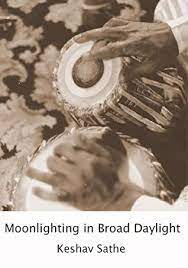
Keshav Sathe was born on January 31, 1928 in Bombay, India and began his professional career in 1951, working with a local Indian vocalist Kelkar. Moving to the United Kingdom in 1956 he joined the Asian Music Circle, a pool of London-based Indian musicians run by former political activist Ayana Deva Angadi. His first contact with jazz was in 1961 while working with Indian sitarist Bhaskar Chandavarkar and harmonica virtuoso Larry Adler.
In 1965 Sathe began his Indo Jazz Fusion performances and recordings with John Mayer and Joe Harriott, a musical relationship that lasted until 1970. In 1967 he was invited with his trio to join the trio of jazz pianist Irène Schweizer together with Barney Willen, Mani Neumeier, Uli Trepte and Manfred Schoof.
From 1970~73 he worked and toured with Julie Felix and Danny Thompson. Through Danny, in 1974, he joined the John Renbourn Group touring UK, Europe and the United States. They produced records, including A Maid in Bedlam, Enchanted Garden and Live in America.
In the 1980s, Sathe formed a group with Tony Roberts and dancer Shobhana Jeyasingh, touring the UK and Northern Ireland. With the singer Alisha Sufit and the group, he made the record Magic Carpet. From 1965 to 1993 he regularly accompanied the late singer/dancer Surya Kumari in recitals and teaching workshops. He appears on Suns of Arqa’s live album Musical Revue which was recorded in Manchester in 1982.
In addition, he has made numerous incidental recordings, worked for television, radio, and taught tabla until 2003. Tablaist Keshav Sathe, best known for his contributions to the Indo-jazz fusion genre, transitioned on January 18, 2012.

More Posts: bandleader,history,instrumental,jazz,music,tabla