

Daily Dose Of Jazz…
Zilner Trenton Randolph was born in Dermott, Arkansas on January 28, 1899 and matriculated at Biddle University, the Kreuger Conservatory, and the Wisconsin Conservatory of Music.
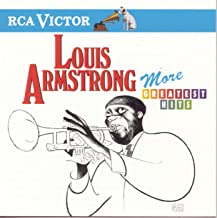
Randolph played in St. Louis, Missouri in the early 1920s, then in Bernie Young’s band in Milwaukee, Wisconsin from 1927 to 1930. A move to Chicago, Illinois in 1931 and was a trumpeter and arranger with Louis Armstrong until 1932 and again in 1933 and 1935.
He played trumpet on a number of Armstrong’s recordings and composed the tune Old Man Mose. In 1934 he played with Carroll Dickerson and Dave Peyton, and led his own Chicago band later in the decade. He arranged for bandleaders Earl Hines, Woody Herman, Fletcher Henderson, and Duke Ellington, and led a quartet in the 1940s.
From the 1940s Zilner devoted himself mainly to teaching, but recorded as a pianist in 1951. Trumpeter, arranger, composer and music educator Zilner Randolph, whose children Hattie and Lucious were part of Sun Ra’s band in the Fifties, transitioned on February 2, 1994.
More Posts: arranger,bandleader,composer,educator,history,instrumental,jazz,music,trumpet

Daily Dose Of Jazz…
Aki Takase (高瀬 アキ) was born January 26, 1948 in Osaka, Japan and started to play piano at age 3. Raised in Tokyo, she studied classical piano at Toho Gakuen School of Music. Starting in 1978, he began performing and recording in the United States.
She has collaborated with Lester Bowie, Sheila Jordan, David Liebman, and John Zorn. Her first European appearance was in 1981 at the Berlin Jazz Festival in Germany. For many years, she has worked with her husband Alexander von Schlippenbach, as well as with Eugene Chadbourne, Han Bennink, Evan Parker, Paul Lovens, Fred Frith and many others, and in duets with Maria João, Louis Sclavis, David Murray and Rudi Mahall.
Through her constant touring and appearances at international jazz festivals, Takase quickly became one of the most sought-after musicians for recording and collaboration. In various projects, Takase has dealt with the respective oeuvres of numerous famous jazz musicians, including the works of Duke Ellington, Thelonious Monk, Eric Dolphy, W.C. Handy, Fats Waller, and Ornette Coleman.
Pianist and composer Aki Takase, who lives in Berlin, Germany and fuses rap, jazz and improvisation, landing between contemporary and jazz, continues to push the boundaries of her music.
More Posts: bandleader,composer,history,instrumental,jazz,music,piano
Daily Dose Of Jazz…
David Black, born January 23, 1928 in Philadelphia, Pennsylvania, started out as the drummer in the house band at the Philadelphia Blue Note Jazz Club where he played with the likes of Charlie Parker, Buddy DeFranco and Zoot Sims.
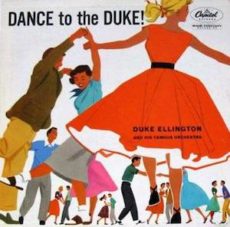
From 1953 to 1955 Black was a part of Duke Ellington’s Orchestra until he contracted polio, forcing him to leave the band. After recovering, he moved to the San Francisco Bay Area and partnered with Bob Scobey until the latter’s death in 1963.
Continuing to perform with Bay Area and various international jazz musicians, drummer Dave Black, most notable for his work with Duke Ellington, transitioned on December 4, 2006
More Posts: bandleader,drums,history,instrumental,jazz,music

Daily Dose Of Jazz…
Bob Whitlock was born on January 21, 1931 in Roosevelt, Utah and began playing bass as a teenager. After relocating to Los Angeles, California was active as a session musician from the early 1950s. He was heard working with Gerry Mulligan, Art Pepper, Chet Baker, Stan Getz, Buddy DeFranco, Joe Albany, Jack Sheldon, Warne Marsh, and numerous others.
Late in the Fifties decade Bob led his own small group while attending the University of California. He went on to work in France in the early 1960s, playing with Zoot Sims, Vi Redd, Curtis Amy, Peggy Lee and Victor Feldman. Towards the end of the Sixties he worked with Joe Pass and extensively with George Shearing. In the 1970s he worked with Albany once again.
Between 1957 and 1972 he recorded fourteen albums as a sideman, never as a leader. Double-bassist Bob Whitlock transitioned on June 20, 2015 in Long Beach, California
More Posts: bandleader,bass,history,instrumental,jazz,music
Daily Dose Of Jazz…
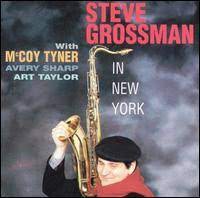
Steven Mark Grossman was born on January 18, 1951 in Brooklyn, New York to Rosalind, an amateur pianist, and Irving, an RCA salesman and later president of KLH Research and Development Corporation. At 18, he went on to replace Wayne Shorter in Miles Davis’ jazz-fusion band. Then, from 1971 to 1973, he was in Elvin Jones’ band.
In the late 1970s, he was part of the Stone Alliance trio with Don Alias and Gene Perla. The group released four albums during this period, including one featuring Brazilian trumpeter Márcio Montarroyos. The albums also feature an array of other musicians. They went on to release three live reunion albums during the 2000s.
Fusion and hard bop saxophonist Steve Grossman passed away of cardiac arrest in Glen Cove, New York, on August 13, 2020, at the age of 69.
More Posts: bandleader,history,instrumental,jazz,music,saxophone