

Daily Dose Of Jazz…
Dill Jones was born Dillwyn Owen Paton Jones on August 19, 1923 in Newcastle Emlyn, Carmarthenshire, Wales. He was brought up in New Quay on the Cardiganshire coast. Music was in the family, his mother a pianist and his aunt played organ at the Methodist Tabernacle. He was exposed to jazz as a 10-year-old by hearing records by Fats Waller and Bix Beiderbecke on the radio.
After leaving college, Jones followed his father into banking but was called up by the Royal Navy for wartime service in the Far East. When the war ended he enrolled at Trinity College of Music in London, England but did not complete the course, preferring the informality of late night jazz sessions.
Joining the Harry Parry Sextet and Vic Lewis’ Orchestra before plying his trade as ship’s pianist on the luxury liner, the Queen Mary, he sailed between New York City and Southampton. This gave Dill the chance to hang out in New York’s jazz clubs and hear Coleman Hawkins and Lennie Tristano, among others. After forming the Dill Jones Quartet in 1959, he emigrated to the United States in 1961, settling in New York City. He became an expert in the Harlem stride style. was soon in demand, earning his reputation playing with the likes of Gene Krupa, Jimmy McPartland and Yank Lawson.
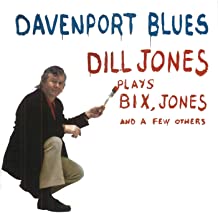
Between 1969–1973, Jones was a member of the JPJ Quartet with Budd Johnson, Oliver Jackson and Bill Pemberton. A double CD anthology of Dill Jones` work was released in 2004, entitled Davenport Blues – Dill Jones plays Bix, Jones and a Few Others.
Pianist Dill Jones, who was instrumental in bringing jazz to British television when he hosted the BBC Jazz Club, passed away from throat cancer in a New York hospital on June 22, 1984. He was 60

Daily Dose Of Jazz…
Rabih Abou-Khalil ربيع أبو خليل, was born August 17, 1957 in Beirut, Lebanon and studied the oud at the Beirut Conservatory with oudist Georges Farah. After moving to Munich, Germany at 21, he studied classical flute at the Academy of Music under Walther Theurer.
Combining elements of Arabic music with jazz, rock, or classical music, he has earned praise as a world musician years before the phrase became a label. Along with Tunisian oud virtuosos Anouar Brahem and Dhafer Youssef, he has helped establish the oud as an important instrument of Ethno jazz and world fusion.
Among other musicians, Abou-Khalil has worked with ARTE Quartett, Alexander Bălănescu, Luciano Biondini, Milton Cardona, Sonny Fortune, Michel Godard, Joachim Kühn, Howard Levy, Charlie Mariano, Ricardo Ribeiro, Steve Swallow, Kenny Wheeler. He has recorded for ECM, Enja, MMP, Granit, and World Village record labels.
Rabih has hosted the 13 part documentary television series Visions of Music, that explores the blending of jazz with different music styles of the world. The music of the TV-series was released on the album Visions of Music – World Jazz by Enja Records.
Oudist Rabih Abou~Khalil continues to be active in music, composing, recording and performing worldwide.
More Posts: bandleader,composer,instrumental,music,oud
Daily Dose Of Jazz…
Lennie Felix was born in Stamford Hill, London, England on August 16, 1920. He learned piano from the age of ten and his playing style reflected the influence of Fats Waller, Art Tatum and Earl Hines. His later influences drew from Keith Jarrett, Charlie Parker and Vladimir Horovitz.
From the 1960s, Lennie performed increasingly more as a solo pianist and appeared regularly at the PizzaExpress Jazz Club, where he also accompanied US visitors like Bud Freeman and Buddy Tate.
He worked in the bands of Nat Gonella, Harry Gold, and Sid Philips, and enjoyed a 20-year association with trumpeter Freddy Randall. Pianist Lennie Felix passed away on December 29, 1980 in a hospital after he was hit by a speeding car near to the 606 Club in Fulham, West London.
More Posts: bandleader,history,instrumental,jazz,music,piano
Daily Dose Of Jazz…
Michael Joseph Smith was born August 13, 1938 in Tiline, Kentucky. At the age of 6 years, he gave his first concert of original solo piano music in Nashville, Tennessee. After serving in the United States Navy, he studied electro-acoustic music, moving between Boston, Massachusetts and New York City. He became involved with the New England Conservatory of Music and the Juilliard School and developed a philosophy and notation form of his original music, titled Geomusic, and composed works with this method for various chamber groups, solo piano, and symphony orchestra.
Embarking on his first European concert tour in 1970, he completed his initial recordings in Italy and developed an interest in Jazz and improvisation. Moving to Paris, France in 1972 he had several concert tours and recordings in Western Europe and America with Steve Lacy, Anthony Braxton and others. In 1975 he began recording various albums in Europe and America and toured, mostly solo, Italy, Poland, East Germany, Hungary, Western Europe, South America and Scandinavia over the next year. 1977 saw Michael admitted to the Swedish Composers Society andtwo years later he became a member of the International Society for Contemporary Music.
A return to the United States landed a composer-in-residence in Atlanta, Georgia and completed three ballet projects, has been awarded numerous cultural prizes and stipends in Europe and Scandinavia, and has composed scores for films, television projects, and music for 10 major ballet works.
He has lectured in Atlanta, Boston, Massachusetts, Brunswick, Maine and in Beijing and Xian, China. He has founded three music corporations and has been inducted in the Royal Swedish Academy of Music’s Swedish Musical Heritage project as a “living musical heritage” of Sweden. Pianist and composer Michael Smith, who has released 55 recordings of original compositions in 17 countries and has three film portraits of his life, continues to remain active.
Daily Dose Of Jazz…
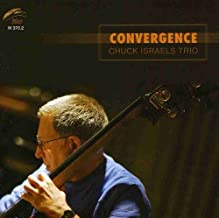
Chuck Israels was born Charles H. Israels on August 10, 1936 in New York City, New York. He was raised in a musical family which moved to Cleveland, Ohio when he was 10 and his stepfather Mordecai Bauman was a singer who performed extensively with composer Hanns Eisler. With music a part of normal daily activity, folks like Paul Robeson, Pete Seeger, and The Weavers were regular visitors. In 1948, the appearance of Louis Armstrong’s All Stars in a concert series produced by his parents gave him his first opportunity to meet and hear jazz musicians.
In college, Israels had the opportunity to perform with Billie Holiday. His first professional job after college was working with pianist Bud Powell in Paris, France. His first professional recording was Stereo Drive a.k.a. Coltrane Time with John Coltrane, Cecil Taylor, Kenny Dorham, and Louis Hayes.
>Israels is known for the Jazz Repertory as Director of the National Jazz Ensemble from 1973 to 1981. He made recordings with the Kronos Quartet and Rosemary Clooney in 1985. He was the Director of Jazz Studies at Western Washington University in Bellingham, Washington until 2010. In 2011, he created the Chuck Israels Jazz Orchestra and recorded Second Wind: A Tribute to the Music of Bill Evans in 2013.
He has worked with Billie Holiday, Benny Goodman, Coleman Hawkins, Stan Getz, Herbie Hancock, J. J. Johnson, John Coltrane, and Judy Collins. Bassist, composer, arranger and bandleader Chuck Israels, who is best known for his work with the Bill Evans Trio, continues to perform.
More Posts: arranger,bandleader,bass,composer,history,instrumental,music