

Daily Dose Of Jazz…
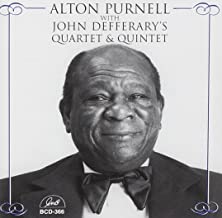
Alton Purnell was born in New Orleans, Louisiana on April 16, 1911. He sang before playing piano professionally, beginning to do so locally in New Orleans in 1928. He played in the 1930s with Isaiah Morgan, Alphonse Picou, Big Eye Louis Nelson, Sidney Desvigne, and Cousin Joe, and with Bunk Johnson in the middle of the 1940s.
Purnell joined George Lewis’s band after Johnson’s broke up in 1946, and remained there well into the 1950s, including for international tours. In 1957 Purnell relocated to Los Angeles. There he worked with Teddy Buckner, Young Men from New Orleans, Joe Darensbourg, Kid Ory, Barney Bigard, and Ben Pollack. He also recorded extensively as a leader, including for Warner Bros. Records, GHB, and Alligator Jazz. He toured internationally as a guest soloist from 1964.
He sang before playing piano professionally, beginning to do so locally in New Orleans in 1928. He played in the 1930s with Isaiah Morgan, Alphonse Picou, Big Eye Louis Nelson, Sidney Desvigne, and Cousin Joe, and with Bunk Johnson in the middle of the 1940s. Purnell joined George Lewis’s band after Johnson’s broke up in 1946, and remained there well into the 1950s, including for international tours.
Pianist Alton Purnell, who was a longtime Dixieland performer, passed away January 14, 1987 in Inglewood, California.
More Posts: bandleader,history,instrumental,jazz,music,piano
Daily Dose Of Jazz…
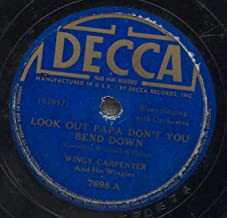
Theodore “Wingy” Carpenter was born on April 15, 1898 in St. Louis, Missour. Losing his left arm as the result of an accident during his early teens, the amputation was performed by a noted surgeon who was an uncle of jazz musician Doc Cheatham. Sometime later, he took up the trumpet and by 1920 he was working in traveling carnival shows. In 1921 he toured with Herbert’s Minstrel Band.
By 1926 he had settled in Cincinnati, Ohio, where he worked with Wes Helvey, Clarence Paige, Zack Whyte, and Speed Webb. In 1927, he played in Buffalo, New York, with Eugene Primus. Off and on from late 1926 through 1928, he was featured on the Whitman Sisters’ Show with pianist Troy Snapp’s band.
During the early 1930s, Wingy was featured with Smiling Boy Steward’s Celery City Serenaders and another Florida band led by Bill Lacey. In the mid-1930s, he began regular touring with bandleaders including Jack Ellis, Dick Bunch, and Jesse Stone. In the late 1930s, he settled in New York City, where he worked with Skeets Tolbert and Fitz Weston.
From 1939 on working as the leader of his own band, Carpenter had periods at well-known clubs such as The Black Cat, The New Capitol, Tony Pastor’s The Yeah Man, and other venues. He continued to lead his band through the 1960s, playing occasional dance dates. Several of his works are still accessible as MP3 downloads, including Look Out Papa Don’t You Bend Down, Preachin’ Trumpet Blues, Put Me Back in the Alley, Rhythm of The Dishes and Pans, and Team Up.
Trumpeter, vocalist and bandleader Wingy Carpenter, one of several one-armed trumpeters who worked in the music business, passed away on July 21, 1975, in New York City.
More Posts: bandleader,history,instrumental,jazz,music,trumpet,vocal
Daily Dose Of Jazz…
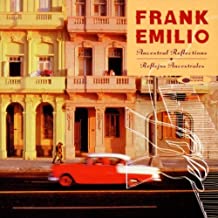
Frank Emilio was born Francisco Emilio Flynn Rodríguez on April 13, 1921 in Havana, Cuba to an American father and Cuban mother. Despite being blinded at birth due to damage to his eyes by the doctor’s forceps, unable to distinguish shapes as a child he became totally blind by his late teens. Orphaned at age five he was raised by his aunt and uncle. At 13 years old, he won an amateur music contest and shortly after began to play danzones by Antonio María Romeu. In 1938 he interrupted his career to complete his studies at a school run by Cuba’s National Association for the Blind.
During the 1940s, Flynn became part of the filin music scene which comprised jazz-influenced bolero composers. He accompanied singer Miguel de Gonzalo. In 1946 he founded the Loquibambia ensemble together with guitarist and composer José Antonio Méndez, and they started to work for the Mil Diez radio station. By 1949 they accompanied the famous Conjunto Casino in the recording of their song Átomo. Two years later he founded Los Modernistas, and played at Radio Cadena Habana, toured the island before disbanding. Flynn then joined a son ensemble, Alejandro y sus Muchachos, and in 1955 he recorded four songs with Arcaño y sus Maravillas.
By the late Fifties he would go on to pioneer small-ensemble Cuban jazz. After the Cuban Revolution, the members of the Quinteto Instrumental remained in Havana, playing and recording. In the late 1970s and 1980s, his band expanded and recorded their debut album. During the 1990s Flynn recorded several albums including Barbarísimo, Tribute to Ernesto Lecuona and A Tiempo de Danzón for Milan/RCA Records, and Ancestral Reflections for Blue Note. In 1998 he made his American debut, with Los Amigos, in a Jazz at Lincoln Center gig and the following year he reunited with his American relatives.
Between 2000 and 2001 he spent much of his time with his relatives in California, where he played live occasionally and gave lectures at California State University, Los Angeles. Pianist Frank Emilio, who played danzas, danzones, filin, descarga, and Afro-Cuban jazz, passed away on August 23, 2001 in Havana.
More Posts: bandleader,history,instrumental,jazz,music,piano
Daily Dose Of Jazz…
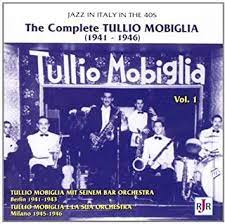
Tullio Mobiglia was born in Carezzano, Italy on April 12, 1911. Passionate about music, he graduated in violin at the Niccolò Paganini Conservatory in Genoa, Italy. In 1934 he began playing in orchestras on ships, often traveling to the United States where he was able to approach jazz, becoming friends with some musicians such as Coleman Hawkins.
He quickly emerged as the best Italian saxophonist of the period, and was called to play in the Mirador Orchestra. By 1940 Tullio was to Berlin, Germany achieving great success, to the point of being hired for a certain period in Heinz. Wehner Orchestra. 1941 saw him forming his first band of Italian musicians, with whom he published the first 78 rpm recordings.
During his career he had the opportunity to play with Django Reinhardt in another Berlin club, the Femina Bar. Due to the ban on playing American music he was only allowed to play European music, however, many pieces are written by Mobiglia himself.
Mobiglia returned to Italy in 1943 and two years later reformed his orchestra with other musicians, obtaining a contract with Columbia Records, where he recorded several 78s. In the following years he recorded with Telefunken, Cetra and Durium, resuming the playing of his first instrument, the violin. By 1967 he was teaching violin at the Jan Sibelius Conservatory of Helsinki, Finland to teach the violin, a position he held until the 1980s, while continuing to perform in the Finnish capital where he spent the last few years of his life. Saxophonist and bandleader Tullio Mobiglia passed away on July 24, 1991 at the age of 80 in Helsinki, Finland.
More Posts: bandleader,history,instrumental,jazz,music,saxophone
Daily Dose Of Jazz…
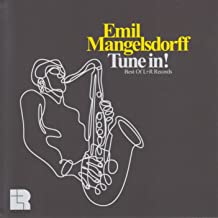
Emil Mangelsdorff was born April 11, 1925, in Frankfurt am Main, Germany. In 1942 and 1943, he studied clarinet at the Hoch Conservatory in Frankfurt, Germany.
As a member of the Frankfurt Hot Club, his performance of jazz with Hans Otto Jung among others, led to his being imprisoned by the Gestapo. He was forced into the German army and was a Russian prisoner of war for four years. In 1949 he returned to Frankfurt and decided to become a professional jazz musician. Emil played in the combos of Joe Klimm and Jutta Hipp, and was also a member of the Frankfurt All Stars and the Jazz-Ensemble des Hessischen Rundfunks from 1958.
Since the 1960s he has directed his own quartet. In 1964 Mangelsdorff wrote an instruction manual for jazz saxophone. In 2006 he was awarded the Goethe-Plakette des Landes Hessen and in 2008 he received the Bundesverdienstkreuz.
Alto saxophonist Emil Mangelsdorff, who also played soprano saxophone, clarinet and flute, has retired from music at 96.
More Posts: bandleader,clarinet,flute,history,instrumental,jazz,music,saxophone