


Daily Dose Of Jazz…
Patrick Mungo Smythe was born on May 2, 1923 in Edinburgh, Scotland, the son of a solicitor. Educated at Winchester College he went on to study law at Oxford University. When World War II interrupted his studies, he enlisted with the Royal Air Force, serving for five years as a night-fighter pilot. After the war, he resumed his legal studies, this time at the University of Edinburgh where he was also recognized as a talented classical and jazz pianist.
Upon graduation, he spent several years in his father’s law firm, before leaving Edinburgh for London in the late Fifties in search of a professional career in music. For a brief time, Pat worked with Jamaican trumpeter Dizzy Reece, and in 1960 he joined the quintet led by another Jamaican, alto saxophonist Joe Harriott, who was beginning playing his revolutionary brand of free jazz. Smythe’s pivotal role highlighted one of the principal differences between Harriott and his American counterpart Ornette Coleman, who viewed the harmonic qualities of the piano as incompatible with his own brand of free improvisation.
The Harriott quintet stayed together until 1965, recording three ground-breaking albums ~ Free Form, Abstract and Movement, while also holding a long-term residency at the Marquee Club in Soho. Smythe stayed with Harriott after the dissolution of the quintet, becoming a key member of the group Indo-Jazz Fusions, co-led by Harriott and the Indian composer and violinist John Mayer. This double quintet of five Indian and five jazz musicians aimed to fuse Indian raga structures with jazz improvisation, performing and recording extensively until Harriott’s departure ended the project in 1969. With his knowledge of Indian ragas, Smythe was considered by Mayer to be the bridge between the two camps.
Over a diverse career, he worked and recorded with many other great names in jazz when they passed through Britain, including Stan Getz, Paul Gonsalves, Ben Webster, Eddie Lockjaw Davis, Zoot Sims and Bob Brookmeyer. He worked mainly as an accompanist in the London clubs throughout the 1970s, helping bring Scottish jazz vocalist Carol Kidd to prominence.
After a long illness, pianist Pat Smythe passed away on May 6, 1983 in London, England. The Pat Smythe Memorial Trust was established two years later, as a registered charity to provide financial awards to young jazz musicians of outstanding talent. It was funded entirely from benefit concerts and gave awards to such musicians as Julian Arguelles and Jason Rebello. The trust is now defunct.

More Posts: bandleader,history,instrumental,jazz,music,piano
Daily Dose Of Jazz…
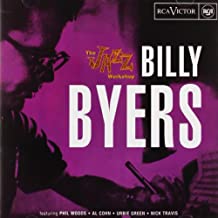
Billy Byers was born on William Mitchell Byers on May 1, 1927 in Los Angeles, California. He picked up the trombone and played with Karl Kiffle before serving in the Army in 1944–45. In the second half of the 1940s, he arranged and played trombone for Georgie Auld, Buddy Rich, Benny Goodman, Charlie Ventura, and Teddy Powell.
Following this period of playing, Byers composed for WMGM (AM) radio and television in New York City. During the mid-1950s, he was living and arranging in Paris, France where he also led a session as a leader, released as Jazz on the Left Bank, at this time. Later in the 1950s in Europe, he played with Harold Arlen (1959–1960) and with the Quincy Jones Orchestra. Becoming Quincy’s assistant at Mercury Records in the Sixties, he arranged for Count Basie albums.
He also led some recording sessions of Duke Ellington standards, toured Europe and Japan alongside Frank Sinatra in 1974, and had extensive credits arranging and conducting for film. Billy won the Drama Desk Award for Outstanding Orchestrations for the City of Angels.
He recorded with Count Basie, Bob Brookmeyer, Al Cohn, Billy Eckstine, Coleman Hawkins, J. J. Johnson, Lee Konitz, Jack McDuff, Gary McFarland, Hal McKusick, Carmen McRae, Joe Newman, Lalo Schifrin, Bud Shank, Charlie Shavers, Julius Watkins, Andy Williams, Cootie Williams, Kai Winding, and Frank Zappa. With four albums as a leader and another twenty-eight as a sideman, trombonist Billy Byers, passed away in Malibu, California, on May 1, 1996.
More Posts: arranger,bandleader,history,instrumental,jazz,music,trombone
Daily Dose Of Jazz…
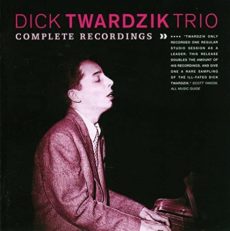
Dick Twardzik was born Richard Henryk Twardzik on April 30, 1931 in Danvers, Massachusetts. He trained in classical piano as a child and made his professional debut at the age of fourteen. He was taught by Margaret Chaloff, the mother of baritone saxophone player Serge Chaloff.
Twardzik recorded with Serge Chaloff and with Charlie Mariano. He worked with Charlie Parker on several occasions toward the end of Parker’s life. He played with Chet Baker and Lionel Hampton and recorded with Baker and Chaloff in 1954 and 1955.
It was during his teen years, that he became addicted to heroin. Bebop pianist Dick Twardzik who worked in Boston for most of his short career passed away from a heroin overdose while on tour with Chet Baker in Europe on October 21, 1955 in Paris, France. He was 24.

More Posts: bandleader,history,instrumental,jazz,music,piano
Daily Dose Of Jazz…
Errol Leslie Buddle was born on April 29, 1928 and raised in Adelaide, Australia. He first learned the banjo and mandolin and began learning jazz after listening to a Bobby Limb performance in 1944. He attended the Elder Conservatorium of Music as well as the Sydney Conservatorium of Music.
Influenced by the sound of the bassoon in Igor Stravinsky’s The Rite of Spring and The Firebird, he began playing the instrument. Over the course of his career, Buddle played fourteen reed instruments and several others. Moving to Melbourne in 1946 he began playing the radio circuit.
Relocating to Sydney by 1951 and performed weekly at the nightclub Chequers’. Another move to Windsor, Ontario in 1952 had him joining the Windsor Symphony Orchestra.
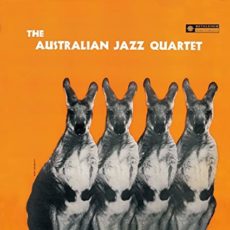
Often performing in Detroit, Michigan, he met and collaborated with Elvin Jones and Johnnie Davis. Errol performed at the jazz club Klein’s and eventually led what later became the Errol Buddle Quartet. He also founded The Australian Jazz Quartet with Jack Brokensha, Bryce Rohde and Dick Healey. The group served as the backing band to several musicians and later played throughout North America before touring Australia in 1958, then disbanded.
He also put together a quintet in various configurations with Bryce Rohde, piano; Dick Healy, flute and alto sax; Jack Brokensha, vibes; Jimmy Gannon, bass; and Frank Capp, drums. After 1958 he performed occasionally.
Bassoon and tenor saxophonist Errol Buddle, who over the course of his career played fourteen reed instruments and several others, passed away at his home in Potts Point, New South Wales on February 22, 2018, aged 89.
More Posts: bandleader,bassoon,history,instrumental,jazz,music,saxophone

Daily Dose Of Jazz…
Krzysztof Komeda was born Krzysztof Trzciński on April 27, 1931 in Poznań, Poland and grew up in Częstochowa and Ostrów Wielkopolski. He took music lessons from early childhood and became a member of the Poznań conservatorium at the age of eight, but World War II thwarted his plans. He explored the theory of music, and learned to play piano during this period.
While attending the Liceum for Boys, where he graduated from in 1950, he participated in the Music and Poetry Club. After high school he entered the Medical Academy in Poznań to study medicine. He finished his six-year-long studies and obtained a medical doctor diploma in 1956. He chose to specialize as a head and neck surgeon.
Komeda was interested in light and dance music and met Witold Kujawski, a graduate of the same school and already a well-known swinging bass player. He introduced him to jazz and took him to Kraków where the romantic period of Polish jazz, called the catacombs, was in the spotlight. Jam sessions with famous musicians as Matuszkiewicz, Borowiec, Walasek, and Kujawski took place in Witold’s legendary small apartment in Kraków.
Fascinated with be-bop performed by Andrzej Trzaskowski, his fascination with jazz and the friendship with famous musicians strengthened his connections with the music. He worked for some time with the first, postwar, pioneer Polish jazz band called Melomani. Later, he played with various pop groups, a Dixieland band before turning his attention to modern jazz and the creation of the Komeda Sextet.
Trzciński used the stage name ‘Komeda’ for the first time to protect his medical profession from the scutiny of those of Polish society who regarded jazz as a cheap suspicious music of night clubs. The sextet became the first Polish jazz group playing modern jazz, and its pioneering performances opened the way for jazz in Poland. He played jazz that related to European traditions and which was the synthesis of the two most popular groups at that time: The Modern Jazz Quartet and the Gerry Mulligan Quartet.
He would go on to tour Moscow, Grenoble, Paris, Copenhagen, Stockholm, Prague, Blend, Koenigsberg, Bulgaria and both West and East Germany. He was a part of a show called Jazz and Poetry, began scoring films and overall, Komeda composed more than 70 soundtracks. While staying in Los Angeles, California in 1968 he composed the film music for Roman Polanski’s Rosemary’s Baby and Kulik’s The Riot.
In 1968, in Los Angeles, while having a friendly rough-and-tumble with writer Marek Hłasko he was pushed over an escarpment and suffered a haematoma of the brain. Medical treatment in the US hospital did not save his life. After being transported home to Poland in a coma and in a terminal state. Pianst Krzysztof Komeda, who is credited with creating an original style, often described as the Polish school of jazz, hung on until passing away on April 23, 1969 at the age of 37.
More Posts: bandleader,composer,history,instrumental,jazz,music,piano