


Daily Dose Of Jazz…
Louis Landon was born on May 6, 1931 in Yonkers, New York and began studying piano at age five, playing classical compositions. Shortly afterward his parents got him piano lessons. In 1960 his family relocated to Studio City, California where his father, Leo De Lyon, is the voice actor best known as Brain and Spook in the popular television cartoon, Top Cat.
In the early 1970s, Landon transferred from Stony Brook University to Berklee College of Music in Boston, Massachusetts to pursue his studies in jazz. While playing in and around Boston, Landon met saxophonist, John Payne, and toured with the John Payne Band for three years from 1974 to1977. During that period they recorded four albums, to which he contributed his songwriting skills, and incorporate a jazz fusion style into their sound and opened for Weather Report, The Tony Williams Lifetime, John McLaughlin.
Leaving Boston for Manhattan, he formed a jazz fusion band called Nightfire, and did studio work and freelanced around New York City. During the late 1970s, Landon auditioned for and landed the position of the keyboardist in the John Hall band. Appearing on Hall’s Columbia Records LP, Power, he subsequently began touring with composer and pop singer Rupert Holmes. He toured extensively during the course of the next few years across the country with Hall and Holmes as well as Mikhail Baryshnikov and Pucho & His Latin Soul Brothers.
He has also performed with The Doobie Brothers, Bonnie Raitt, and John Hall at the 1979 No Nukes concert that produced a triple live album released in 1980 that Landon is credited on as a keyboard player.
Composer, solo pianist for peace, singer-songwriter, recording artist, and touring musician from New York City, Louis Landon currently resides in Sedona, Arizona.

More Posts: bandleader,history,instrumental,jazz,music,piano,singer,songwriter
Daily Dose Of Jazz…
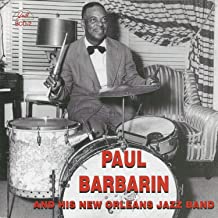
Paul Barbarin was born Adolphe Paul Barbarin on May 5, 1899 in New Orleans, Louisiana into a family of musicians, that included his father, three of his brothers, and his nephew Danny Barker. He was a member of the Silver Leaf Orchestra and the Young Olympia Band.
Moving to Chicago, Illinois in 1917 he worked with Freddie Keppard and Jimmie Noone. For two years beginning in 1925, Paul was a member of King Oliver’s band. The following year, he moved to New York City and played in Luis Russell’s band for about four years. Leaving Russell, he worked as a freelance musician, but he returned to Russell’s band when it backed Louis Armstrong.
For a brief time beginning in 1942, he worked for Red Allen’s sextet, with Sidney Bechet in 1944 and Art Hodes in 1953. Returning to New Orleans in 1955 Barbarin founded the Onward Brass Band where he spent the rest of his life as the leader of that band.
Drummer Paul Barbarin passed away on February 17, 1969, while playing snare drums during a Mardi Gras parade. Record producer Al Rose said that his funeral “attracted one of the great mobs in New Orleans funeral history”.
More Posts: bandleader,drums,history,instrumental,jazz,music
Daily Dose Of Jazz…
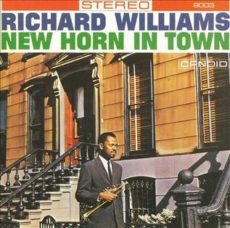
Richard Gene Williams was born in Galveston, Texas on May 4, 1931 and played tenor saxophone early in his life before picking up the trumpet as a teenager. While playing in local Texas bands, he attended Wiley College, majoring in music.
After serving in the Air Force from 1952–56, Williams toured Europe with Lionel Hampton. He returned to America and received a master’s degree at the Manhattan School of Music. In 1959, he played with Charles Mingus at the Newport Jazz Festival and recorded with MIngus that same year. The following year he recorded his only session as a leader, New Horn in Town on the Candid Records label featuring Reggie Workman, Leo Wright, Richard Wyands, and Bobby Thomas.
During the 1960s Richard was a sideman on numerous releases for Blue Note, Impulse!, New Jazz, Riverside, and Atlantic working with Oliver Nelson, Grant Green, Booker Ervin, Sam Jones, Rahsaan Roland Kirk, Les McCann, Lou Donaldson, Yusef Lateef, Gigi Gryce, Carmen McRae, Randy Weston, Charles Tolliver, Mose Allison, Eddie “Lockjaw” Davis, and Duke Jordan, among numerous others.
He also played with the big bands of Duke Ellington, Gil Evans, Thad Jones and Mel Lewis, Sam Rivers, and Clark Terry. Finding work on Broadway in pit orchestra productions of The Me Nobody Knows and The Wiz, and appeared on the original Broadway cast recordings of both musicals. Williams led his own bands in New York jazz clubs and in addition to jazz trumpet, he performed with classical orchestras, playing piccolo trumpet and flugelhorn. Trumpeter Richard Williams passed away on November 4, 1985 from kidney cancer in his Jamaica, New York home, at the age of 54.
More Posts: bandleader,history,instrumental,jazz,music,trumpet
Requisites
Hear Ye!!!! Hear Ye!!!! ~ The Red Mitchell-Harold Land Quintet | By Eddie Carter
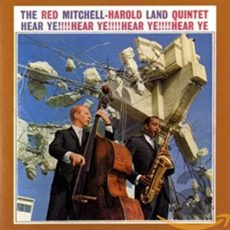
The simplest thing I can say about this morning’s choice from the library is it’s a first-rate West Coast Hard-Bop session. But rather than teasing you with a morsel or taste, I’ll attempt to deliver a full-balanced meal to nourish your jazz appetite. Hear Ye!!!! Hear Ye!!!! (Atlantic SD 1376) brings together two elite masters of this style; double-bassist, composer, lyricist, poet, Red Mitchell and composer, tenor saxophonist, Harold Land as co-leaders of a quintet consisting of Carmell Jones on trumpet; Frank Strazzeri on piano; and Leon Betties on drums. My copy used in this report is the original 1962 US Mono release (1376).
Side One starts with Triplin’ Awhile, a midtempo tune by Land allowing everyone solo opportunities. It opens as a two-instrument dialogue between Harold and Red on the introduction before the ensemble adds to the conversation for the theme. Land delivers the lead statement with a festive appeal perfectly suitable for dancing. The front line fills the gaps with a brief thematic interlude preceding Carmell’s response, a cheerfully bright performance with a good summer groove. Frank makes an intriguing examination next setting up a comfortable beat for Red who captures the soulful mood to perfection. Leon takes the final spot on a feisty solo moving fluently towards a short coda.
The tempo moves upward for Rosie’s Spirit, the first of two Mitchell creations opening with the quintet’s vivaciously spirited theme. Carmell leads off with an effervescent improvisation succeeded by Red’s sprightly statement of swift verses, then Harold seizes the opportunity for a short scorcher. Frank takes a furious flight on the next reading and Leon dives into a lively finale with a bristling passion ascending to a joyful climax.
The title tune, also by Mitchell, concludes the first side on a laid-back note beginning with an introduction by Harold and Red segueing into the quintet’s midtempo melody. Land opens with a bluesy, straightforward solo that’s neat and tidy, then Jones says plenty on the next performance with pinpoint accuracy. Strazzeri exhibits his strong chops on a frisky reading, and Mitchell makes a superb case as one of the best bassists in jazz on the closer.
Somara is from Carmell’s pen, opening Side Two on a brief introduction by the trio blossoming into a collective medium-fast melody. Land launches the lead solo with high-octane velocity, then Mitchell tackles the second turn radiantly. Carmell cooks with ravenous energy next, followed by Strazzeri who’s on fire on the fourth reading. Betties exchanges a concise reading of incandescent heat with both horns into the closing chorus.
Catacomb is the second Land original, slowing the speed to a moderate pace from the previous burner as evidenced on the ensemble’s melody. Harold excels on the opening solo, blowing free and easy against the trio’s sterling groundwork. Red is confidently assertive and direct on the second reading with impeccable intonation, then Carmell melds each note of the third interpretation into a powerful work of inspired creativity. Frank follows, painting an aural picture of melodic emotion with rich and mellow hues. Leon culminates with a brief presentation that holds together into the subtle climax.
The album wraps up with Frank Strazerri’s original, Pari Passu that fastens your seat belt and you take off on a thrill ride right from the start of a torrid introduction and theme in unison. Frank kicks off the first solo voraciously, then Carmell emits intense heat from his horn. Land comes in next with the ascending movement and violent fury of a twister or tornado. Red and Leon both have brief words with the front line for a few radiant riffs before the ensemble’s closing chorus rings the curtain down on this very entertaining album.
The sound on Hear Ye!!!! Hear Ye!!!! is outstanding, capturing the vibrant tone and transparency of each instrument vividly, emerging from your speakers with breathtaking clarity. The quintet only remained together a short time, but the meeting that collectively brought them to record this album is one of the most enjoyable jazz LP’s I’ve heard and would enthusiastically recommend anyone audition.
The All Music review by noted author and historian, Scott Yanow states that “this is a fine effort from a group that deserved greater recognition at the time”. I couldn’t agree with him more and will only add that the verification of his statement can be found within the cover of Hear Ye!!!! Hear Ye!!!! by The Red Mitchell-Harold Land Quintet!
~ Excerpt by Scott Yanow – Source: AllMusic.com ~ I’m Old Fashioned, The Way I Feel – Source: Discogs.com
>~ © 2020 by Edward Thomas Carter
Hear Ye!!!! Hear Ye!!!! is an album by the Red Mitchell-Harold Land Quintet recorded in San Francisco, California on October 14th (tracks 1, 3 & 4) and December 13th (tracks 2, 5 & 6), 1961 and released on the Atlantic label in 1962.
Tracks | 52:41
- Triplin’ Awhile (Harold Land) – 7:46
- Rosie’s Spirit (Red Mitchell) – 5:26
- Hear Ye! (Mitchell) – 6:54
- Somara (Carmell Jones) – 6:42
- Catacomb (Land) – 8:21
- Pari Passu (Frank Strazzeri) – 4:55
- Red Mitchell – bass
- Harold Land – tenor saxophone
- Carmell Jones – trumpet
- Frank Strazzeri – piano
- Leon Petties – drums

More Posts: bandleader,bass,history,instrumental,jazz,music,saxophone

Daily Dose Of Jazz…
Ralf Hübner was born on May 3, 1939 in Berlin, Germany where he attended the Hochschule für Musik from 1958-1962. During his tenure, he studied both double bass and drums and played with Benny Bailey and Nathan Davis.
Upon graduating he joined the Jazzensemble des Hessischen Rundfunks, an ensemble he would work with into the 1990s. He also began a decade-long association with Albert Mangelsdorff.
In the 1970s he worked with musicians and ensembles such as the Frankfurt Jazz Ensemble, Joki Freund, Volker Krieger, Itaru Oki, Michel Pilz, Manfred Schoof, and Eberhard Weber. In the 1980s and 1990s he worked with Christof Lauer among others. At eighty, drummer Ralf Hübner currently resides in Glashütten, Hessen, Germany.
More Posts: bandleader,bass,drums,history,instrumental,jazz,music