

Daily Dose Of Jazz…
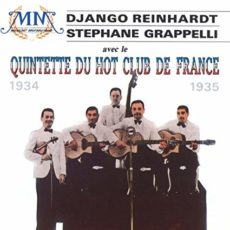
Charles Delaunay was born on January 18, 1911 in Vineuil-Saint-Firmin, Oise, the son of painters Robert Delaunay and Sonia Delaunay. As one of the founders of the Hot Club de France, together with Hugues Panassié, he initiated the Quintette du Hot Club de France with Django Reinhardt and Stephane Grappelli. He also organized concerts, for example with Benny Carter.
In 1935, again with Panassié, he founded Le Jazz Hot, one of the oldest jazz magazines. In 1937, he started Disques Swing, “Swing Records”, the first record label dedicated exclusively to jazz. During World War II Delaunay was a member of the Resistance while continuing to lead the Hot Club. 1948 was when he founded the record label Disques Vogue.
He authored the famous Hot Discography with five editions in England, France and the U.S., the first jazz discography and was also an artist. Author, jazz expert, co-founder and long-term leader of the Hot Club de France, Charles Delaunay passed away in Paris of Parkinson’s disease on February 16, 1988.

More Posts: artist,author,bandleader,history,instrumental,jazz,music,publisher
Daily Dose Of Jazz…
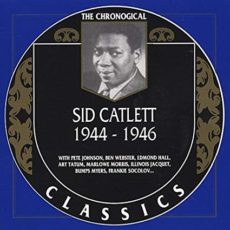
Sidney “Big Sid” Catlett, born January 17, 1910 in Evansville, Indiana, received at an early age instruction in the rudiments of piano and drums under the tutelage of a music teacher hired by his mother. When he and his family relocated to Chicago, Illinois he got his first drum kit, and immersed himself in the diverse styles and techniques of Zutty Singleton, Warren “Baby” Dodds, and Jimmy Bertrand, among others.
By 1928, Sid was playing with violinist and clarinet player Darnell Howard, before joining pianist Sammy Stewart’s Orchestra in New York City and performing at the Savoy Ballroom. After performing for several lesser established musical acts, he began recording and performing with multiple musicians including Benny Carter, McKinney’s Cotton Pickers, Fletcher Henderson, and Don Redman throughout the 1930s.
Between 1938 and 1942, he was Louis Armstrong’s drummer of choice as he was regularly featured in Armstrong’s big band, while also periodically joining Benny Goodman’s group. Following a brief stint in collaboration with Duke Ellington in 1945, Catlett led some of his own bands through the remainder of the 1940s while staying involved in Armstrong’s All-Stars between 1947 and 1949.
Catlett was one of the few drummers to successively transition into bebop, appearing on Dizzy Gillespie’s progressive recordings in 1945. In 1950 he performed with Hoagy Carmichael at the Copley Plaza Hotel. In early 1951, he began to suffer from pneumonia. On March 25, 1951 drummer Sid Catlett passed away at the age of 41 after suffering a heart attack while visiting friends backstage at a Hot Lips Page benefit concert in Chicago, Illinois. In 1996, he was inducted into the Big Band and Jazz Hall of Fame.
More Posts: bandleader,drums,history,instrumental,jazz,music
Daily Dose Of Jazz…
Spike Wells was born Michael Wells in Tunbridge Wells, Kent, Wells on the 16th of January 1946 and was a chorister at Canterbury Cathedral Choir School. He became interested in jazz after coming across a recording by Dizzy Gillespie, which he found very exciting. He took up playing drums in his early teens and later had lessons from former Miles Davis drummer Philly Joe Jones, who lived in London from 1967 to 1969 He was also very influenced by another of Davis’s drummers, Tony Williams. At Oxford University, Wells put together a quartet with tenor player Pat Crumly and pianist Brian Priestley that played with visitors including saxophonists Bobby Wellins, Tony Coe and Joe Harriott, and blues singer Jimmy Witherspoon.
In 1968 Wells began a Ph.D. course in philosophy at London University, living in a house that was also home to bass player Ron Mathewson, alto sax player Ray Warleigh, trombonist Chris Pyne and pianist Mick Pyne. Mathewson was then playing in the quartet of tenor player Tubby Hayes and asked Wells if he would be interested in joining the group. He arranged an audition with Hayes and guitarist Louis Stewart, at which time Tubby asked if they wanted the job. Wells abandoned his Ph.D. and became a professional musician.
As well as playing with Hayes, in both his quartet and his big band, until the saxophonist’s death in 1973, he spent a year in Humphrey Lyttelton’s band, and also worked with many visiting soloists at Ronnie Scott’s Jazz Club, including Stan Getz, Roland Kirk, Art Farmer, Johnny Griffin and James Moody.
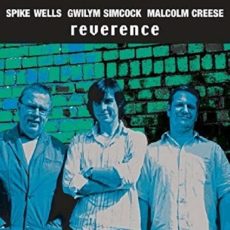
Qualifying as a solicitor, Wells then practiced law for 22 years, eventually working as an in-house legal adviser for Lloyds Bank. He became a deacon in the Church of England at 49, took early retirement from the bank, and took a stipend to curate at St Peter’s Church, Brighton. With music as well as ministry important to him, he went on to decline the stipend and now works as both a priest and a drummer. A selected discography has him recording fifteen albums with one as a leader titled Reverence in 2006.
More Posts: bandleader,drums,history,instrumental,jazz,music
Daily Dose Of Jazz…
Steve Jordan was born on January 15, 1919 in New York City and studied with Allan Reuss early in life while Reuss was Benny Goodman’s guitarist. He worked in the Will Bradley Orchestra from 1939 to 1941, then moved to Artie Shaw’s band until 1942. The same year he worked briefly with Teddy Powell before he enlisted in the U.S. Navy.
Following his discharge from the service he played with Bob Chester, Freddie Slack, Glen Gray and the Casa Loma Orchestra, Stan Kenton, Jimmy Dorsey, and Boyd Raeburn.
He became a studio musician for NBC and worked often as a freelance sideman after the big band era was over. He worked with Gene Krupa, Mel Powell, Vic Dickenson, Charles Thompson, Buck Clayton, Ruby Braff, Benny Goodman, Wild Bill Davison, Clancy Hayes, Buddy Tate, Helen Ward, and Ed Polcer. He held a regular gig in Washington, D.C. with Tommy Gwaltney from 1965 to 1972, and was offered the opportunity to succeed Freddie Green in the Count Basie Orchestra but turned it down.
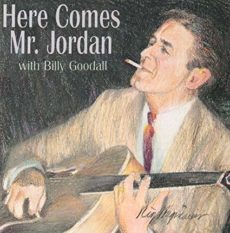
Jordan recorded two sessions as a leader, Here Comes Mr. Jordan and Fat Cat’s Jazz, the latter appearing to be out of print. He published a memoir titled Rhythm Man in 1991. Guitarist Steve Jordan passed away on September 13, 1993 at the age of 74 in Alexandria, Virginia.
More Posts: bandleader,guitar,history,instrumental,jazz,music
Daily Dose Of Jazz…
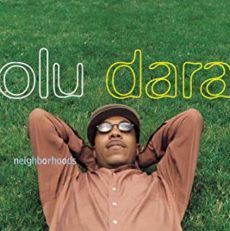
Olu Dara was born Charles Jones III on January 12, 1941 in Natchez, Mississippi. After moving to New York City In 1963, he changed his name to Olu Dara, which means “God Is Good” in the Yoruba language. In the Seventies and Eighties, he played alongside David Murray, Henry Threadgill, Hamiet Bluiett, Don Pullen, Charles Brackeen, James Blood Ulmer, and Cassandra Wilson. He formed two bands, the Okra Orchestra and the Natchezsippi Dance Band.
His first album, In the World: From Natchez to New York, released in 1998, revealed another aspect of his musical personality: the leader and singer of a band immersed in African-American tradition, playing an eclectic mix of blues, jazz, and storytelling, with tinges of funk, African popular music, and reggae. His second album Neighborhoods, with guest appearances by Dr. John and Cassandra Wilson, followed in a similar vein.
Dara played on the 1994 album Illmatic, on the song Dance, and he sang on the 2004 song Bridging the Gap, all by his son, rapper Nas. Besides recording two albums as a leader, cornetist, guitarist and singer Olu Dara has recorded fifty-four as a sideman with the likes of Doug Carn, Oliver Lake, Julius Hemphill, Nona Hendryx, The Be Good Tanyas, Rickie Lee Jones, Terumasa Hino, Jack McDuff, Dirty Dozen Brass Band, and James Newton, among others.
More Posts: bandleader,cornet,guitar,history,instrumental,jazz,music,vocal