


Daily Dose Of Jazz…
Joe Albany was born Joseph Albani on January 24, 1924 in Atlantic City, New Jersey, Albany studied piano as a child and by 1943 he was working on the West Coast in Benny Carter’s orchestra. In 1946 he played with Charlie Parker and then 20-year-old Miles Davis.
Continuing to play, in 1957 recorded an album for Riverside with an unusual trio line-up with saxophonist Warne Marsh and Bob Whitlock on bass. omitting a drummer. Despite that, most of the 1950s and 1960s saw him battling a heroin addiction, or living in seclusion in Europe. He returned to jazz in the Seventies and played on more than ten albums. Modern and bebop pianist Joe Albany passed away of respiratory failure and cardiac arrest in New York City at the age of 63 on January 12, 1988.
was the focus of a 1980 documentary titled, Joe Albany… A Jazz Life. His daughter Amy-Jo wrote a memoir about her father called Low Down: Junk, Jazz, and Other Fairy Tales from Childhood. The book was adapted for the screen and released in 2014 as the biopic Low Down.
<ahref=”http: notoriousjazz.com=”” wp-content=”” uploads=”” 2017=”” 08=”” bronze-lens.jpg”=””> </ahref=”http:>
More Posts: bandleader,history,instrumental,jazz,music,piano
Daily Dose Of Jazz…
Michel Maurice Armand Warlop came into the world in Douai, France on January 23, 1911. A child prodigy, he won every award and prize that existed for the violin in France before attaining the age of 18. he started his musical studies with his mother, a music professor, and entered the Conservatory of Douai, the second oldest in France, at age six.
There he studied with Victor Gallois who had won the Prize of Rome for composition in 1905. At age seven, he played his first public concert accompanied by his mother on the piano and by age eight in 1919 he played his first concert in Paris, to benefit victims of WW1. He transferred to the Conservatory of Lille around the age of 10 and started his studies on the university level at the Conservatory of Paris at age 13.
By mid-1939 Warlop began working permanently with the Raymond Legrand Orchestra, then got called up for military service in September 1939 and left Paris. Soon after hostilities started between Germany and France and he became a German prisoner of war but later released because of his tuberculosis. He returned to France late in February 1941.
Back in Paris, he took up his old chair in Legrand’s orchestra, recorded with the Jazz Dixit and his own string septet Septuor a Cordes from time to time. Both of these units were made up of other musicians in the Legrand organization. Warlop wrote and arranged almost all of the Septour’s music which was in a style that blended a classical string setting with Warlop’s jazz abilities. By 1942 he recorded his own Swing Concerto, however, Disques Swing did not issue it and it sat in the vaults until it was finally released on a CD in 1989.
After the war many French musicians, singers and film stars were accused of supporting the enemy for appearing on German-controlled radio, playing for German troops or touring in Germany. Many were banned from working for various periods of time. Warlop had to sit out for two months and Legrand for one year. He never played again in Paris or recorded after this incident in 1945.
His tuberculosis had finally caught up with him along with his heavy consumption of alcohol and cocaine and violinist Michel Warlop, who preferred to tour as a jazz soloist and in small groups in the south of France, passed away at 36 on March 6, 1947 in Bagnères-de-Luchon, France. His last engagement was with Jimmy Réna’s small group at the Grand Hotel Superbagnières above Luchon, France in the Pyrenees Mountains near the border with Spain.

More Posts: bandleader,history,instrumental,jazz,violin
Daily Dose Of Jazz…
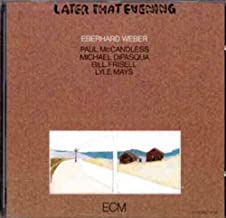
Eberhard Weber was born on January 22, 1940, in Stuttgart, Germany and began recording with several groups as a sideman in the early Sixties and released his first record under his own name The Colours of Chloë, in 1973.
From the early 1960s to the early 1970s, Weber’s closest musical association was with pianist Wolfgang Dauner. Their many mutual projects were diverse, from mainstream jazz to jazz-rock fusion to avant-garde sound experiments. During this period, Weber also played and recorded with pianists Hampton Hawes and Mal Waldron, guitarists Baden Powell de Aquino and Joe Pass, The Mike Gibbs Orchestra, violinist Stephane Grappelli, and many others.
Eberhard has released fourteen records under his own name, all under the ECM label. He has led collaborations with Gary Burton, Ralph Towner, Pat Metheny and Jan Garbarek. The mid-1970s saw Weber forming his own group, Colours, with Charlie Mariano, Rainer Brüninghaus and Jon Christensen. With John Marshall replacing Christensen they toured extensively and recorded two further records before disbanding.
Since the early 1980s, Weber has regularly collaborated with the British singer-songwriter Kate Bush, toured with Barbara Thompson’s jazz ensemble Paraphernalia, and by the Nineties touring slowed as did recording but he continued to perform until suffering a stroke in 2007, leaving him unable to play. Bassist Eberhard Weber was awarded the prestigious Albert Mangelsdorff-Preis in November 2009.
More Posts: bandleader,bass,history,instrumental,jazz,music
Daily Dose Of Jazz…
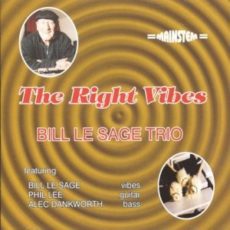
Bill Le Sage was born William A. Le Sage in London, England on January 20, 1927. His father and two uncles were musicians and he started playing the ukulele at the age of eight, drums at fifteen and taught himself to play the piano.
His career began in 1945 when he led his first sextet. He was then a member of army bands while serving with the Royal Signals. He played piano for the Johnny Dankworth Seven in 1950 but decided to switch to the vibraphone. Leaving in 1954 Bill joined the various small groups led by the drummer Tony Kinsey, until 1961 when he started playing with baritone saxophonist Ronnie Ross, with whom he co-led various line-ups until 1966. During this period, he also played with Kenny Baker’s Dozen and wrote music for television and films.
The 1960s gave Le Sage the opportunity to work with the Jack Parnell Orchestra, the Chris Barber Band, and led his group, Directions In Jazz. His composer credits included scores for the films The Tell-Tale Heart, Tarnished Heroes, The Silent Invasion, Strip Tease Murder and The Court Martial of Major Keller.
He accompanied numerous visiting American musicians, including guitarist Tal Farlow on an annual basis. In 1969, he formed the Bebop Preservation Society Quintet, which he continued for more than two decades and also worked with Barbara Thompson’s Jubiaba and others. Vibraphonist Bill Le Sage passed away in London on October 31, 2001.
More Posts: bandleader,composer,history,instrumental,jazz,music,piano,vibraphone
Daily Dose Of Jazz…
Abbie Brunies was born Albert Brunies on January 19, 1900 into a famous New Orleans, Louisiana family, which counted among its members George Brunies and Merritt Brunies.
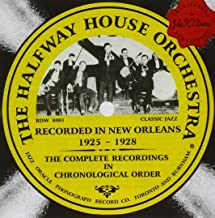
Brunies was the leader of the Halfway House Orchestra from 1919 to about 1927, playing at the Halfway House club in New Orleans. This ensemble recorded for Okeh Records in 1925. Among the musicians who played in this group were New Orleans Rhythm Kings members Charlie Cordella, Mickey Marcour, Leon Rappolo, Sidney Arodin, Bill Eastwood, Joe Loyacano and Leo Adde.
>He played in New Orleans into the mid-1940s, after which time he moved to Biloxi, Mississippi. There he played with Merritt in the Brunie Brothers Dixieland Jazz Band. This ensemble recorded sparsely. Cornetist Abbie Brunies passed away in Biloxi on October 2, 1978.
More Posts: bandleader,cornet,history,instrumental,jazz,music