

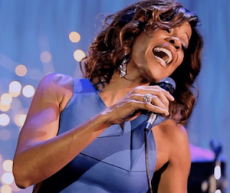
NICOLE HENRY
Since 2004, Nicole Henry’s versatile and emotionally driven performances have wowed audiences in 20 countries. She has established herself among the jazz world’s most acclaimed performers, possessing a potent combination of dynamic vocal abilities, impeccable phrasing, and powerful emotional resonance.
Heralded by The New York Times, Wall Street Journal, The Japan Times, El Pais, Jazz Times, Essence and more, Ms. Henry tells real stories through peerless interpretations of repertoire from the American Songbook, classic and contemporary jazz, popular standards, blues and originals.
Among her numerous accolades, Henry’s passionate, soulful voice and heartfelt charisma have earned her a Soul Train Award for “Best Traditional Jazz Performance,” “Best New Jazz Artist” by HMV Japan, “Best Solo Musician” by her hometown Miami New Times, and was hailed as “One of Eight Black Artists Making Waves in 2024” by Symphonic Distribution.
She has enjoyed four Top 10 CDs including her latest album “Time to Love Again” which reached #4 on the U.S. jazz radio chart, remaining in the Top 40 for 20 weeks. “Time to Love Again” also reached #6 on UK’s Sweet Rhythms chart and continues to enjoy worldwide play on both Sirius XM’s Real Jazz & Watercolors stations. These successes were supplemented by a 36-city national tour.
Band Members:
Vocals: Nicole Henry
Piano: Pete Wallace
Drums: TBD
Trumpet: Jean Caze
Bass: Jamese McCoy
Tickets: $60.50 ~ $65.50
More Posts: adventure,bandleader,club,genius,instrumental,jazz,music,preserving,travel,vocal

CINDY BLACKMAN SANTANA
Cindy Blackman Santana celebrates the release of her new album Coherence, a once-in-a-lifetime journey combining jazz, rock, fusion, & spirituality. As a virtuoso drummer, bandleader, musician, and the new face of NFL Monday Night Football, Cindy is a sound innovator with a passion for pushing creative boundaries and exploring movement and change. She is as known for the nuances and colors she brings to her beats and fills as she is for the sheer power of her soulful playing. “Some drummers act, some react. Some keep time, others create it. Cindy Blackman Santana is among the few who can,” writes Mike Zwerin of the International Herald Tribune.
Cindy has been creating magnificent musical time and space since the beginning of her career as a busking street performer in New York City in the ’80s through the present day, touring the globe and making albums at the top of her game—including the critically acclaimed Another Lifetime (2010). In addition to collaborating onstage and in-studio with her own group—also known as Another Lifetime—she has toured and recorded with artists including Pharoah Sanders, Cassandra Wilson, Bill Laswell, Joss Stone, Joe Henderson, Buckethead, Don Pullen, Hugh Masakela, and Angela Bofill.
From 1992 to 2007 and again in 2014 & 2015 she was the drummer in Lenny Kravitz’s band, performing through multiple world tours and hit albums. In 2010, she was part of the all-star line-up performing “Bitches Brew,” a tribute to Miles Davis’ seminal album staged at the San Francisco Jazz Festival and NYC Winter JazzFest.
The Band:
Cindy Blackman Santana ~ DrumsK
Aurelien Budynek ~ Guitar
Benny Rietveld ~ Bass
Zaccai Curtis ~ Keyboard
Special Guest Ravi Coltrane ~ Saxophone
Cover: $45.00 ~ $55.00 | $4.16 – $4.86 fees
Streaming: $15.00 + $2.05 fee
More Posts: adventure,bandleader,club,drums,genius,instrumental,jazz,music,preserving,travel
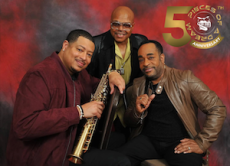
PIECES OF A DREAM
Celebrating their 50th anniversary this October, Pieces of a Dream has built an impressive legacy of innovation and eclecticism – talents that have kept them fresh and authentic in a jazz world that’s ever-changing. The story of Pieces Of A Dream, who has opened for such luminaries as Miles Davis, Count Basie and James Brown, is a tale of destiny and brotherhood. Dubbed a “tough act to follow” by the legendary Count Basie, the band will bring their trademark catchy riffs, infectious grooves and compelling vocals to Keystone Korner Baltimore!
The Band:
Curtis Harmon ~ drums
James Lloyd ~ keyboards
Tony Watson ~ saxophone
Elec Simon ~ percussion
Stacey Richardson ~ vocals
Carolyn Brewer ~ keyboards & vocals
John Hall ~ bass
Cover: $65.00 ~ $75.00 | $5.56 – $6.26 fees
Streaming: $15.00 + $2.05 fee
More Posts: adventure,bandleader,bass,club,drums,genius,instrumental,jazz,music,percussion,piano,preserving,saxophone,travel,vocal
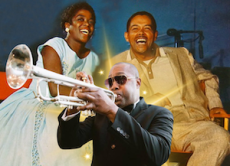
THAD WILSON JAZZ ORCHESTRA
The Thad Wilson Jazz Orchestra performs a special tribute to two of jazz’s most beloved vocal legends, Billy Eckstine and Sarah Vaughan. Led by acclaimed trumpeter, composer, and arranger Thad Wilson, the orchestra brings together some of the finest musicians in the DMV for an evening celebrating the elegance, swing, and sophistication of these iconic artists.
Featuring special guest vocalists Alison Crockett and Steve Washington—two of the region’s most respected and in-demand jazz performers—the concert will showcase classic standards, romantic ballads, and swinging favorites associated with Eckstine and Vaughan. With lush big band arrangements, inspired improvisation, and unforgettable vocal performances, this tribute honors the enduring legacy of two voices that helped shape the sound of jazz, while offering fresh interpretations for today’s audiences.
Cover: $45.00 ~ $55.00 | $4.16 – $4.86 Fees
More Posts: adventure,bandleader,club,genius,history,instrumental,jazz,music,preserving,travel,trumpet,vocal
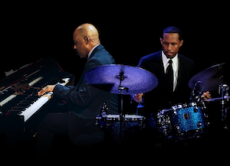
WILLIE JONES III QUARTET FEATURING ERIC REED
Willie Jones III is one of the world’s most celebrated drummers in modern jazz. As a band leader, Willie Jones III has sold out a series of sets at Dizzy’s Club in New York City, Club 1905 in Portland, the Kirk Douglas Theatre in Los Angeles, Club Bebop in Buenos Aires, and Bimhuis in Amsterdam. The Los Angeles-born musician performed in the Roy Hargrove Quintet from 1998-2006. He was also one of two drummers in Hargrove’s powerhouse group RH Factor.
Jones has been featured on performances and tours with the Jazz at Lincoln Center Orchestra with Wynton Marsalis and as a drummer of choice for legendary artists including Sonny Rollins, Ernestine Anderson, Bobby Hutcherson, Cedar Walton, Frank Wess, Bill Charlap, Michael Brecker, Herbie Hancock, and Hank Jones. He released his eighth album as a leader in 2025, a collection of a new composition by Jones as well as his jazz arrangements of timeless songs from the R&B and popular music canon including Earth Wind & Fire’s “Can’t Hide Love,” Debarge’s “All This Love,” and Fats Domino’s “I’m Walkin’.”
Eric Scott Reed has been a vital force in jazz for over 25 years, excelling as a leader, composer, producer, educator, and sideman with legends like Freddie Hubbard and Wynton Marsalis. His recordings, such as The Adventurous Monk and Groovewise, showcase his innovative approach to jazz standards and original compositions.
The Quartet:
Willie Jones III ~ Drums
Eric Reed ~ Piano
Danton Boller ~ Bass
Stacy Dillard ~ Saxophone
Tickets: $35.00 ~ $45.00 | $3.46 – $4.16 fee
Streaming: $15.00 + $2.05 fee
More Posts: adventure,bandleader,club,drums,genius,instrumental,jazz,music,piano,preserving,travel