

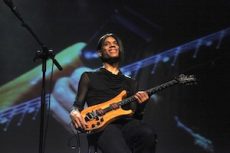
STANLEY JORDAN TRIO
In a career that took flight in 1985 with commercial and critical acclaim, guitar virtuoso and 4-time Grammy nominated Stanley Jordan has consistently displayed a chameleonic musical persona of openness, imagination, versatility and maverick daring.
Be it bold reinventions of classical masterpieces or soulful explorations through pop-rock hits, to blazing straight ahead jazz forays and ultramodern improvisational works-solo or with a group, Jordan can always be counted on to take listeners on breathless journeys into the unexpected.
Stanley has collaborated and share the stage with many greats including Art Blakey, Richie Cole, Stanley Clarke, Kenny Rogers, Kevin Eubanks, Sharon Isbin, Muriel Anderson, the Dave Matthews Band, the String Cheese Incident, Phil Lesh, Moe and Umphrey’s McGee.
The Trio:
Stanley Jordan ~ guitar
Kenwood Dennard ~ drums
Wes Wirth ~ bass
Cover: $45.00 ~ $55.00 | $4.16 ~ $4.86 fee
Streaming: $15.00 + $2.05 fee
More Posts: adventure,bandleader,bass,club,drums,genius,guitar,instrumental,jazz,music,preserving,travel
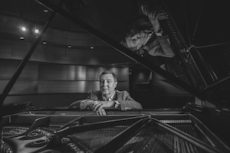
BENNY GREEN
An adept jazz pianist with a deep understanding of the acoustic bebop, hard bop, and post-bop traditions, Benny Green built upon his early years as a prodigy, maturing into a nuanced and sophisticated virtuoso. Green emerged in the late ’80s, garnering praise for his work with veterans like Better Carter, Eddie Henderson, Art Blakey, and Ray Brown. He has regularly led his own groups, playing with luminaries like Peter Washington, Kenny Washington, Carl Allen, and Christian McBride, and releasing a bevy of well-regarded albums, including 1993’s That’s Right!, 1999’s These Are Soulful Days, and 2011’s Source.
He recorded many albums as a sideman throughout the 1980s and ’90s, including a duet with Diana Krall on her Grammy Award winning album, “All For You.” He recorded two albums as a leader for the Telarc label in the early 1990s, as well as two duo albums for the label with Russell Malone. Oscar Peterson named Benny as his protégé in 1992, and chose Benny as the recipient of the Glenn Gould Award for excellence in Music and Communication, as well as inviting him to record a two-piano album with him, entitled “Oscar and Benny.”
Cover: $35.00 ~ $45.00 | $3.46 – $4.16 fee
Streaming: $15.00 + $2.05 fee
More Posts: bandleader,club,genius,jazz,music,piano,preserving,travel
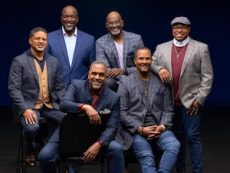
TAKE 6
Legendary a cappella group Take 6 brings their unmatched vocal artistry to the Frost stage, joined by the Henry Mancini Institute Orchestra for an unforgettable collaboration. Winner of 10 Grammy Awards and celebrated worldwide for their seamless integration of gospel, jazz, R&B and pop harmonies, Take 6 takes center stage in a program that fuses soaring orchestration and musical excellence.
Over their incredible career, they have collaborated with icons across genres, including Quincy Jones, Stevie Wonder, The Manhattan Transfer, Al Jarreau, Ray Charles, Whitney Houston, Jacob Collier, and many more.
Backed by the rich, cinematic sound of the Henry Mancini Institute Orchestra, this performance expands the vocal sextet’s iconic a cappella style into something even more dynamic with the layering lush orchestration with intricate vocal textures and inventive arrangements. The result is an evening that moves effortlessly across styles, revealing new dimensions of both ensembles.
Tickets: $40.00, $45.00, $50.00 & $65.00 VIP
More Posts: adventure,bandleader,genius,jazz,music,preserving,travel,vocal
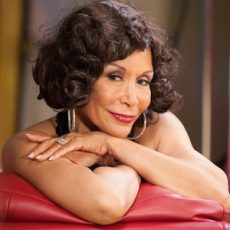
FREDA PAYNE
This lady will be paying tribute to the legendary voices of jazz: Nancy Wilson, Sarah Vaughn, Peggy Lee, Dinah Washington, GloriaLynne, Dakota Staton, Lena Horne, Eartha Kitt & Ella Fitzgearld.
As an artist with over 6 decades of performing & recording under her belt, Freda is so much more than the Pop/soul diva with million selling hits like: “Band of Gold” & “Bring Boys Home” She is a jazz chanteuse that can swing, scat, and bebop with the best of them. How can she not be? -, especially with musical interest at the early age of 13 by Motown founder, Berry Gordy and later by the legendary Quincy Jones, who produced her first jazz album: “After the lights go down and much more” in 1963”.
She has toured with Duke Ellington, Pearl Bailey & Lionel Hampton on the road didn’t hurt either. ennyIn addition to concerts all over the world, some of her Broadway credits include: “Jelly’s Last Jam”, “Sophisticated Ladies” & “Blues In The Night”. The evening will be hosted by R&B legend, Kenny Lattimore who will also perform a song with Freda.
Special Guest Vocalist Thomasina Gross Sings Eartha!.
The evening of music will be accompanied by a 5-piece band under the musical direction of maestro, Josh Nelson.
Cover: $62.15
More Posts: adventure,bandleader,club,genius,history,jazz,music,preserving,travel,vocal
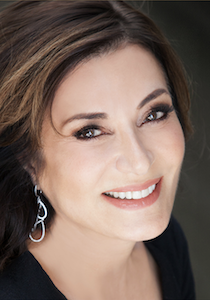
DENISE DONATELLI
Denise Donatelli is a 3 time Grammy-nominated jazz vocalist whose acclaimed albums were arranged and produced by Grammy winner Geoffrey Keezer.
Her latest release, Take My Breath Away, reunites her with Keezer and an all-star New York band. She was named Jazz Vocalist of the Year by the Los Angeles Jazz Society and regularly appears in DownBeat magazine’s Critics Poll.
The All-Star Band:
Geoffrey Keezer: Piano
Dean Parks: Guitar
Edwin Livingston: Bass
Bob Sheppard: Saxophone, Clarinet, Flute
Gary Novak: Drums
Cover: $46.70
More Posts: adventure,bandleader,club,genius,instrumental,jazz,music,preserving,travel,vocal