

Daily Dose Of Jazz…
Dick McPartland was born in Chicago, Illinois on May 18, 1905, the older brother of Jimmy McPartland. His father was a music teacher and a baseball player butt family problems caused the siblings to be partly raised in orphanages. He was an early member of the Austin High School Gang that helped establish Chicago-style jazz in the 1920s.
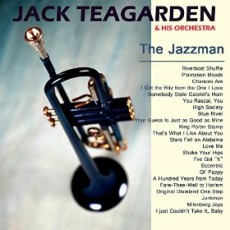
McPartland started out on the violin and then switched to the banjo and guitar. He played primarily in Chicago during the 1920s including with Red McKenzie, replacing Eddie Lang. He recorded with Irving Mills in 1928 and Jack Teagarden in ’29.
Dick’s rhythm guitar can be heard on sessions led by his brother Jimmy in 1936 and 1939. Unfortunately an early heart attack forced his retirement from full-time music by his early 30s. He later became a cab driver and only appeared at an occasional concert, including in 1955 when he played his final gig. He never led his own record date and on November 30, 1957, guitarist Dick McPartland passed away at the age of 52.

Dose A Day – Blues Away
Daily Dose Of Jazz…
Marc Ribot was born on May 21, 1954 in Newark, New Jersey and worked extensively as a session musician. His early sessions with Tom Waits helped define Waits new musical direction in 1985.
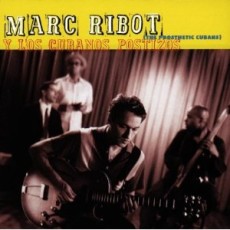
His own work has touched on many styles, including n wave, free jazz and Cuban music. Ribot’s first two albums featured The Rootless Cosmopolitans, followed by an album of works by Frantz Casseus and Arsenio Rodriguez. Further releases found him working in a variety of band and solo contexts including two albums with his self-described “dance band”, Marc Ribot y Los Cubanos Postizos.
His relatively limited technical facility is due to learning to play right-handed despite being left-handed. He currently performs and records with his group Marc Ribot’s Ceramic Dog. Marc’s studio work involves several tracks accompanying the legendary pianist McCoy Tyner’s “Guitars” project. He has performed and recorded with Jack McDuff, John Scofield, Wilson Pickett, Cibo Matto, Bela Fleck, Derek Trucks, Madeline Peyroux, Medeski Martin & Wood, Elton John and many others.
He has toured Europe with his band Sun Ship, had a biographical documentary film called the The Lost String and has also judged the 8th Annual Independent Music Awards to support indie careers in music. He has twenty-one albums as a leader, a filmography that includes five and a biographical documentary about him titled The Lost String. Guitarist Marc Ribot also plays banjo, trumpet, cornet and sings and continues to perform, record and tour.
Dose A Day-Blues Away
Daily Dose Of Jazz…
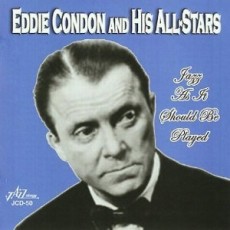
Albert Edwin Condon was born November 16, 1905 in Goodland, Indiana and started playing music on the ukulele before switching to guitar. By the time he was sixteen he was in Chicago playing professionally with Bix Beiderbecke, Jack Teagarden and Frank Teschmacher.
In 1928 Condon moved to New York City frequently arranging jazz sessions for various labels, sometimes playing with the artists he brought like Louis Armstrong and Fats Waller. He organized racially integrated recording sessions – when these were still rare – with Waller, Armstrong and Henry “Red” Allen. He played with the Red Nichols band, later forming a long association with Milt Gabler’s Commodore Records in 1938.
From the late 1930s on Eddie was a regular at Nick’s in Manhattan with Pee Wee Russell, Wild Bill Davison and Bobby Hackett. He went on to appear in a short film with Hackett, produced a series of jazz broadcasts from Town Hall during the last years of WWII that gave him national popularity.
From 1945 through 1967 he ran his own New York jazz club, Eddie Condon’s. In the 50s he recorded a sequence of classic albums for Columbia Records, toured Britain, Australia, Japan, the U. S. and performed at jazz festivals throughout the world until 1971. Two years later, Eddie Condon, jazz banjoist, guitarist, bandleader and arranger passed away on August 4, 1973 in New York City.
More Posts: arranger,bandleader,banjo,guitar