

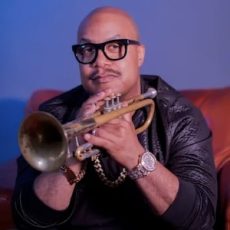
NICHOLAS PAYTON TRIO
Nicholas Payton – trumpet, piano & keyboards | Peter Washington – bass | Kenny Washington – drums
“Payton’s genius virtuosity captivated both faithful fans and anyone in the NPR crowd just discovering his music for the first time. – NPR
Multi-instrumentalist Nicholas Payton reunites the trio with bassist Peter Washington and drummer Kenny Washington that recorded his acclaimed Smoke live album Live Relaxin’ with Nick. A multi-instrumental virtuoso from New Orleans, Payton is a master trumpeter (and pianist) who brings insight, inspiration, and passion to a wide spectrum of Black American Music. Over the years, he has recorded and performed with Wynton Marsalis, Dr. Michael White, Christian McBride, Joshua Redman, Roy Hargrove, Doc Cheatham, and Joe Henderson, among many others, and is widely considered one of the most important artists of our time.
In a review, the Chicago Tribune states, “No descriptive label or category could be affixed to Payton’s solos, which were as brashly original as they were technically imposing.”
More Posts: adventure,bass,club,drums,genius,jazz,music,piano,preserving,restaurant,travel,trumpet
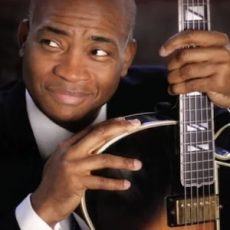
RUSSELL MALONE QUARTET
Russell Malone – guitar | Rick Germanson – piano | Vincent DuPont – drums | Neal Smith – drums
“Russell Malone has the storytelling skills of a great singer, perhaps a legacy of his many years with Harry Connick, Jr. and Diana Krall. – The Times (UK)
Guitar master Russell Malone leads his popular quartet with pianist Rick Germanson, bassist Vincent Dupont, and drummer Neal Smith. Malone is a musician deeply rooted in the blues and bebop, and his soulfully swinging approach is just one of many reasons why he is so popular. Chicago Tribune states, “Though he spikes his solos with occasional running lines, it’s gently rolled chords and lush sequences of harmonies that ultimately define his work,” and Jazz Times describes him as “an uncommonly sensitive interpreter of ballads.”
***PLEASE NOTE: All 7PM and 9PM shows at Smoke are Dinner Shows | Fees Apply To All Tickets
More Posts: adventure,bass,club,drums,genius,guitar,jazz,music,piano,preserving,restaurant,travel
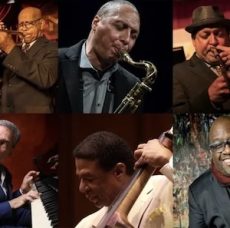
THE MUSIC OF BENNY GOLSON
Eddie Henderson – trumpet | Ralph Moore – tenor saxophone | Steve Davis – trombone | Mike LeDonne – piano | Buster Williams – bass | Carl Allen – drums
“Among jazz’s greatest living composers.” – The Washington Post The music of jazz legend Benny Golson is celebrated and performed by the New Jazztet featuring trumpeter Eddie Henderson, trombonist Steve Davis, pianist Mike LeDonne, bassist Buster Williams, and drummer Carl Allen with special guest Ralph Moore on tenor saxophone. This group recorded together under Golson’s leadership in 2008, which resulted in the acclaimed album, New Time, New ’Tet. Golson is one of the most important contributors to jazz history as a player and the jazz canon as composer writing such enduring classics as “Killer Joe,” “I Remember Clifford,” “Along Came Betty,” “Stablemates,” “Whisper Not,” “Blues March,” “Five Spot After Dark,” and “Are you Real?” among quite a few others. He also was a major influence on the tenor saxophone playing in the bands of Benny Goodman, Dizzy Gillespie, Lionel Hampton, Earl Bostic, and Art Blakey. The full impact of his career on American culture is hard to summarize but Downbeat called him “a defining voice of modern jazz.”
***PLEASE NOTE: All 7PM and 9PM shows at Smoke are Dinner Shows | Fees Apply To All Tickets
More Posts: adventure,bass,club,drums,genius,jazz,music,piano,preserving,restaurant,saxophone,travel,trombone,trumpet
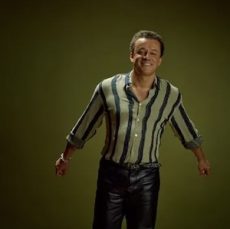
JACKY TERRASSON TRIO
Moving On ~ Record Release
Jacky Terrasson – piano | Kenny Davis – bass | Alvester Garnett – drums | Special Guest: Grégoire Maret – harmonica (Sat & Sun)
“Terrasson boasts a smooth-rolling conception and sophisticated touch that have long set him apart from the pack.” – Time Out New York Pianist Jacky Terrasson celebrates the release of his new album, “Moving On,” leading his American trio with bassist Kenny Davis and drummer Alvester Garnett with special guest Saturday and Sunday Grégoire Maret on harmonica. Since his arrival on the scene over 30 years ago, Terrasson has been one of the most groundbreaking and original pianists who has helped to reshape and redefine the sound of the classic trio. His inspired repertoire, bracing solos, and dramatic ensemble interplay are some of the hallmarks of his celebrated music. London Jazz News reports, “Terrasson has presence and theatricality, and his performance(s) brim with good ideas,” while JazzTimes reports, “There’s excitement and ingenuity embedded throughout (his) wholly original, shrewdly executed arrangements.”
***PLEASE NOTE: All 7PM and 9PM shows at Smoke are Dinner Shows | Fees Apply To All Tickets
More Posts: adventure,album,bass,club,drums,genius,jazz,music,piano,preserving,restaurant,travel
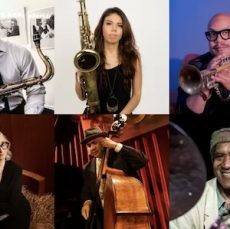
ODE FOR JOE: CELEBRATING THE MUSIC OF JOE HENDERSON
Nicholas Payton – trumpet | Walter Smith III – tenor saxophone (Wed – Fri, 4/17 – 4/19) | Melissa Aldana – tenor saxophone (Sat – Sun, 4/20 – 4/21) | Renee Rosnes – piano | Peter Washington – bass | Al Foster – drums
An all-star group performs the music of Joe Henderson, one of the most distinctive and admired artists in jazz history. Henderson was a prolific composer who wrote numerous jazz standards and was a transcendent soloist who left a discography of classic albums. The Guardian called him “a giant of the jazz saxophone.” The New York Times added, “Mr. Henderson was unmistakably modern,” and quoted the great Benny Golson, “Joe had one foot in the present, the other in the future, and he was just a step away from immortality.” Pianist Renee Rosnes and drummer Al Foster each spent significant parts of their careers working alongside Henderson. They celebrate Henderson’s April 24th birthday.
***PLEASE NOTE: All 7PM and 9PM shows at Smoke are Dinner Shows | Fees apply to all tickets
More Posts: adventure,bass,club,drums,genius,jazz,music,piano,preserving,restaurant,saxophone,travel,trumpet