

Daily Dose Of Jazz…
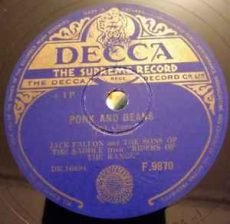
Jack Patrick Fallon was born on October 13, 1915 in London, Ontario, Canada and played violin and studied with London Symphony Orchestra founder Bruce Sharpe. In 1935 when he was 20 years old he made double bass his primary instrument.
During World War II he played in a dance band in the Royal Canadian Air Force, and settled in Britain after his discharge. Fallon joined Ted Heath’s band in 1946, and played bebop in London, England clubs in his spare time. In 1947 he played with Ronnie Scott and Tommy Whittle at the Melody Maker/Columbia Jazz Rally. Following this through the late Forties he worked with Jack Jackson, George Shearing, Duke Ellington, and Django Reinhardt.
He went on to play in a Count Basie ensemble which also included Malcolm Mitchell and Tony Crombie. Jack played with both of them after leaving Basie, working together with Hoagy Carmichael and Maxine Sullivan and touring in Sweden together with Reinhardt and Stéphane Grappelli.
Fallon worked in the 1950s as an accompanist to Mary Lou Williams, Sarah Vaughan, and Lena Horne. He served as a sideman in the ensembles of Humphrey Lyttelton, Kenny Baker, and Ralph Sharon and was the house bassist at Lansdowne Studios.
Outside of jazz he worked with blues musicians such as Big Bill Broonzy, Josh White and played with Johnny Duncan’s Blue Grass Boys. As the bass guitar became more popular, Jack became a champion of its use, and played both instruments in the latter part of his career.
Fallon was also involved in the industry as a booker/promoter, having established the booking agency Cana Variety in 1952. He booked primarily jazz artists in its early stages but expanded to rock acts in the 1960s, including The Beatles and The Rolling Stones. Because of this connection, Fallon was asked by the Beatles to play violin fiddle style on the song Don’t Pass Me By in 1968.
He continued to play jazz locally in London and in the studios into the 1990s but retired from performing in 1998 due to ill health. In 2002, he was awarded the Freedom of the City of London and published a memoir titled From the Top in 2005.
Double bassist Jack Fallon transitioned on May 22, 2006 at age 90. He was posthumously inducted into the London Music Hall of Fame in his hometown.
More Posts: bass,history,instrumental,jazz,music
CHRISTIAN MCBRIDE’S NEW JAWN
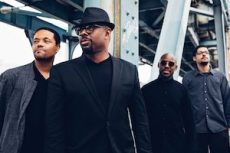
Eight-time Grammy Award-winning jazz bassist Christian McBride is a force of nature, fusing the fire and fury of a virtuoso with the depth and grounding of a seasoned journeyman. Powered by a relentless energy and a boundless love of swing, McBride’s path has described a continuous positive arc since his arrival on the scene. With a career now blazing into its third decade, the Philadelphia native has become one of the most requested, most recorded, and most respected figures in the music world today. Drawing from the lexicon of his hometown, Philadelphia, McBride calls his pianoless quartet The New Jawn.
More Posts: adventure,album,bass,club,festival,genius,jazz,museum,music,preserving,restaurant,travel
Daily Dose Of Jazz…
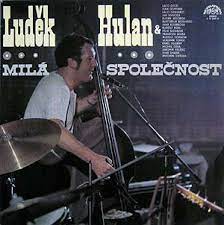
Luděk Hulan was born on October 11, 1929 in Prague, Czechoslovakia and started his career as a founder-member of the amateur Hootie Club ensemble in 1948. In the early Fifties he performed in various professional jazz ensembles and helped organize jam sessions in Prague. From 1953 to 1957 he moved to Brno and played double bass with the Gustav Brom Orchestra.
Upon his return to Prague he co-founded Studio 5, which later became a part of The Dance Orchestra of Czechoslovak Radio. Studio 5, one of the country’s most important modern jazz ensembles, disbanded in 1961. Then Hulan founded his next band, The Jazz Studio, which often performed his own short compositions. The late 1960s he still collaborated with the Jazz Orchestra of Czechoslovak Radio and actively participated in Czech musical life.
He was one of the pioneers of the Jazz and Poetry movement which focused on cross-connections between various spheres of the Arts. In his Jazz Studio, Luděk collaborated with many important jazz instrumentalists, among them tenor saxophonist Milan Ulrich and trumpeter Richard Kubernát.
Following the Soviet invasion of Czechoslovakia in 1968 he emigrated to Switzerland, but couldn’t find any work connected with music and soon returned while his wife and daughter remained abroad. Listed as politically undesirable he had to organize night-time jam sessions in the poetic wine bar Viola, founded a new band, Jazz Sanatorium with former colleagues from Jazz Studio, and helped its younger members in their careers.
He also found work – occasional at first – with the Linha Singers ensemble. In 1972 the Traditional Jazz Studio invited him to record with the New Orleans clarinetist Albert Nicholas. He also performed with the American clarinetist Tony Scott, and prepared a TV series, The Jazz Herbarium. He then organized the Jazz Quiz as part of his Jazz Sanatorium, using American films, recordings and literature.
Double bassist Luděk Hulan, an important exponent of Czech jazz in the second half of the 20th century, transitioned in Prague on February 22, 1979 under unhappy circumstances, breaking a rib in a stairway fall which pierced a lung. Unaware of the nature or extent of his injury, he went to bed as usual, not to awaken.
More Posts: bandleader,bass,history,instrumental,jazz,music
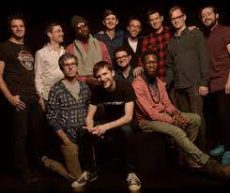
SNARKY PUPPY
Snarky Puppy is an American instrumental ensemble led by bassist Michael League. Founded in 2004, Snarky Puppy combines a variety of jazz idioms, rock, world music, and funk and has won four Grammy Awards. The once Texan, now New York-based quasi-collective Snarky Puppy has gone from the best-kept secret to one of the most respected names in instrumental music.
More Posts: adventure,album,bass,club,festival,genius,jazz,museum,music,preserving,restaurant,travel
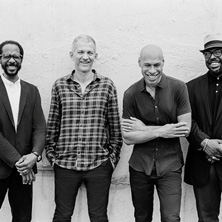
CHRISTIAN MCBRIDE QUARTET
Christian McBride is an American jazz bassist, composer and arranger. He has appeared on more than 300 recordings as a sideman, and is an eight-time Grammy Award winner. This group was the original Joshua Redman touring quartet of the 1990s.
Christian McBride ~ Double Bass
Joshua Redman ~ Saxophone
Brad Mehldau ~ Piano
Brian Blade ~ Drums
More Posts: adventure,album,bass,club,festival,genius,jazz,museum,music,preserving,restaurant,travel