

Daily Dose Of Jazz…
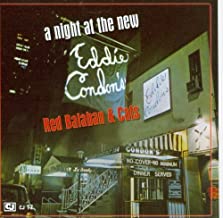
Red Balaban was born Leonard Balaban on December 22, 1929 in Chicago, Illinois. Moving the family to New York, he completed his early education at the Ethical Culture School. After graduating from Milford Academy in Connecticut, he graduated from Brown University.
Moving south to the panhandle, he raised breeding cattle on a farm in Bonifay, Florida and as a musician, he was a sideman, bandleader, and club owner. He played in regional ensembles from the 1950s, Red went on to hold a regular gig from 1966 at the Dixieland jazz club Your Father’s Mustache in New York City.
Balaban worked extensively as a sideman, for musicians such as Wild Bill Davison, Eddie Condon, Gene Krupa, Dick Wellstood, and Kenny Davern. He co-led Eddie Condon’s house band with Ed Polcer from 1975, and noted musicians in this outfit included Vic Dickenson, Warren Vache, and Connie Kay, before the club closed in the mid-1980s.
Tubist and sousaphonist Red Balaban, who also played banjo, stand-up bass, slide trombone, ukulele, and rhythm guitar, passed away after a brief illness seven days past his 84th birthday on December 29, 2013 in Milford, Connecticut.
More Posts: banjo,bass,guitar,history,instrumental,jazz,music,slide trombone,sousaphone,tuba,ukulele
Daily Dose Of Jazz…
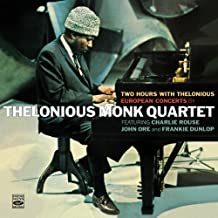
John Ore was born on December 17, 1933 in Philadelphia, Pennsylvania. Attending the New School of Music in Philadelphia from 1943 to 1946, he studied cello followed this with studies on bass at Juilliard.
In the 1950s he worked with Tiny Grimes, George Wallington, Lester Young, Ben Webster, Coleman Hawkins, Elmo Hope, Bud Powell and Freddie Redd. From 1960 to 1963 he played in Thelonious Monk’s quartet, and then with the Les Double Six of Paris in 1964.
Later in the 1960s he returned to Powell’s band, also recording with Teddy Wilson. In the 1970s he worked with Earl Hines and was with the Sun Ra Arkestra in 1982.
Following this he became less active, never recorded an album as a leader, however recorded fifty~one albums as a sideman with not only the above but with Hank Mobley, Cecil Payne, Bud Powell, Sun Ra, Charles Tyler, Lester Young, Eric Alexander, Billy Bang, Andrew Cyrille, Earl Hines, Marva Josie, Steve Lacy, Freddie Redd, and Hampton Hawes. Bassist John Ore passed away on August 22, 2014.
More Posts: bass,history,instrumental,jazz,music
Daily Dose Of Jazz…
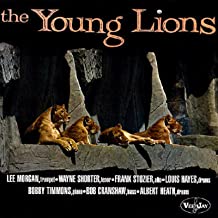
Bob Cranshaw was born Melbourne Robert Cranshaw on December 3, 1932 in Chicago, Illinois. His career spanned the heyday of Blue Note Records to his recent involvement with the Musicians Union. He is perhaps best known for his long association with Sonny Rollins. Cranshaw performed in Rollins’s working band on and off for over five decades, starting with a live appearance at the 1959 Playboy Jazz Festival in Chicago and on record with the 1962 album The Bridge.
He recorded on over 3000 sessions as a sideman with Mary Lou Williams, Pepper Adams, Nat Adderley, Eric Alexander, Hank Mobley, Mose Allison, Granchan Moncur III, Gene Ammons, Wes Montgomery, Kenny Barron, James Moody, George Benson, Shirley Scott, Wayne Shorter, Horace Silver, Walter Bishop Jr., Ella Fitzgerald, Lee Morgan, Oliver Nelson, Duke Pearson, Paul Bley, Jaki Byard, Johnny Coles, Donald Byrd, Hank Crawford, Sonny Criss, Houston Person, Frank Foster, and Sonny Red, and the list goes on and on.
Bassist Bob Cranshaw, who was a session bassist for the iconic PBS children’s programs Sesame Street and The Electric Company and played bass in the Saturday Night Live house band, passed away at the age of 83 on November 2, 2016 in Manhattan, New York from stage four cancer.
More Posts: bass,history,instrumental,jazz,music
Daily Dose Of Jazz…
John Lamb was born in Vero Beach, Florida on November 29, 1933 and grew up as a child who loved playing music, specializing in the tuba. He left high school to join the United States Air Force as a musician for their military band. Stationed in Texas and then Montana, the long winters left him with ample time to practice. He replaced the regular string bassist in 1951. He When the band’s usual string bass player was unavailable for a gig in 1951, the bandmaster asked Lamb if he could play the bass; Lamb immediately said yes, and before long became the band’s new string bassist.
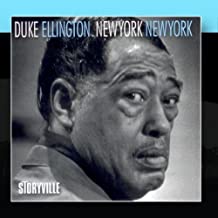
Lamb joined Duke Ellington’s orchestra in 1964, and toured with them for three years. Lamb was more of a fan of Miles Davis and Red Garland when he was with Ellington, In 1966 Lamb performed with Ellington and Sam Woodyard for artist Joan Miró at the Fondation Maeght in Saint-Paul-de-Vence.
A later move to St. Petersburg, Florida saw him teaching music in public schools as well as St. Petersburg College. John was awarded the Jazz Club of Sarasota’s Satchmo Award for his service to jazz. Double bassist John Lamb, who recorded with the Duke Ellington Orchestra until 1975, continues to perform.
Daily Dose Of Jazz…
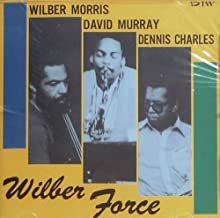
Wilber Morris was born on November 27, 1937 in Los Angeles, California and began playing drums as a child. Joining the Air Force in 1954, during his tour of duty of eight years switched to the bass. He would play around San Francisco, California in his off times with the likes of Pharoah Sanders and Sonny Simmons. After his discharge, he returned to Los Angeles and played with Arthur Blythe and Horace Tapscott.
Moving back to San Francisco in 1969 his jazz career didn’t really take off until he relocated to New York City nearly a decade later. By 1978 Wilber found work with violinist Billy Bang and saxophonist David Murray, the latter would become a long-standing association well into the ’90s. During the early Eighties, he formed his own trio, Wilber Force, with drummer Denis Charles and saxophonist Charles Tyler with whom he recorded.
He held various teaching positions in addition to recording and performing. He began to work outside Murray’s group and also founded the One World Ensemble. He recorded four albums as a leader and as a sideman another two dozen albums. Morris performed with such musicians as Pharoah Sanders, Sonny Simmons, Alan Silva, Joe McPhee, Horace Tapscott, Butch Morris, Arthur Blythe, Charles Gayle, William Parker, and Bob Ackerman, Charles Tyler, Dennis Charles, Roy Campbell, Avram Fefer, Alfred 23 Harth, Borah Bergman, Bobby Few, and Rashied Ali.
Double bassist and bandleader Wilber Morris, who performed mainly in the free jazz genre and was the brother of the cornetist, composer, and conductor Butch Morris, passed away on August 8, 2002 in New York City.
More Posts: bandleader,bass,history,instrumental,jazz,music