

Daily Dose Of Jazz…
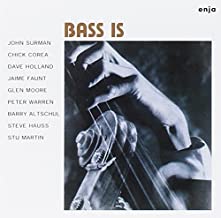
Peter Warren was born November 21, 1935 in Hempstead, New York and learned to play the cello as a child, studying the instrument formally, giving a recital at Carnegie Hall in 1953. After studying at Juilliard School, he went on to play with the Atlanta Symphony Orchestra before switching to double-bass and studying jazz under Chuck Israels.
From 1965, for two years Peter was Dionne Warwick’s touring bassist, and following this, he played with David Izenzon in the New York Bass Revolution. Working in Belgium in the early Seventies, he played with Chick Corea, John Surman, Rolf Kuhn, Joachim Kuhn, Jean-Luc Ponty, Don Cherry, Terumasa Hino, Masahiko Sato, Albert Mangelsdorff, John Tchicai, Anthony Braxton, and Tomasz Stańko.
Settling once again back in the United States in 1974, he played with Jack DeJohnette and Carla Bley, and in 1976 he received a National Endowment for the Arts grant in cello composition. The early Eighties saw him working with Mike Stern, Ken Vandermark, and again with DeJohnette. He recorded three albums as a leader Bass Is on Enja Records in 1970, Solidarity for JAPO Records, in 1981, and Bowed Metal Music in 2001. Cellist and bassist Peter Warren continues to perform.
More Posts: bandleader,bass,cello,history,instrumental,jazz,music
Daily Dose Of Jazz…
Victor Sproles was born on November 18, 1927 in Chicago, Illinois. During worked in the 1950s with Red Rodney and Ira Sullivan and appears on the Sun Ra recordings Super-Sonic Jazz, Sound of Joy and Deep Purple.
>As a session player he recorded with Stan Getz and Chet Baker on the 1957 Verve album Stan Meets Chet. In 1960 he joined Johnny Griffin’s Big Soul Band and the following year he played in Muhal Richard Abrams’ Experimental Band.
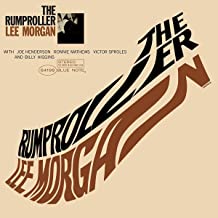
1964 saw him joining Art Blakey’s Jazz Messengers, recording the album ‘SMake It for Limelight, Lee Morgan and his old Sun Ra bandmate John Gilmore were in the group. He recorded two more albums with the Messengers after Gilmore left. This led to his subsequent appearance on Morgan’s Blue Note albums The Rumproller and The Sixth Sense.
In 1974 he played in Clark Terry’s big band and appeared on Buddy DeFranco’s album Free Fall. He recorded sixteen albums as a leader and another fifteen as a sideman. Bassist Victor Sproles passed away on May 13, 2005.
More Posts: bass,history,instrumental,jazz,music
Daily Dose Of Jazz…
Albert Bennington Lucas was born on November 16, 1912 in Brantford, Ontario, Canada and took piano lessons as a child from his mother, Francis Bradley Lucas, a concert pianist. By the age of twelve, he had switched to bass and tuba. After his move to New York City in 1933, he played with Kaiser Marshall before joining the Royal Sunset Orchestra, where he played until 1942.
During the 1940s Albert appeared on record with Hot Lips Page, Coleman Hawkins, Eddie Heywood, Duke Ellington, Mary Lou Williams, James P. Johnson, J.J. Johnson, Ben Webster, Erroll Garner, and Eddie South.
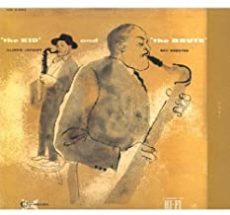
Throughout his career he toured and recorded with Illinois Jacquet from 1947–53, recording in Detroit with Jacquet’s all-star band which included Sonny Stitt, Leo Parker, Sir Charles Thompson, Maurice Simon and Shadow Wilson before returning to play with Heywood again from 1954–56. He also recorded in the 1950s with Ruby Braff, Charlie Byrd, Teddy Wilson, Bill Doggett, Dexter Gordon, Oliver Nelson.
Working primarily as a studio musician in his last two decades, backing up groups at Apollo Theater performances, he played jazz only occasionally. Double-bassist Albert Lucas passed away on June 19, 1983, in New York City.
Daily Dose Of Jazz…
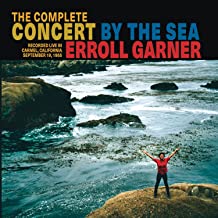
Eddie Calhoun was born November 13, 1921 in Clarksdale, Mississippi and raised in Chicago, Illinois. During the late Forties, he worked with Dick Davis and Ahmad Jamal in the early 1950s. Through the decade he played with Horace Henderson, Johnny Griffin, Roy Eldridge, Billie Holiday, and Miles Davis. He joined Erroll Garner in 1955 and played with him through 1966, recording extensively and touring worldwide.
After his time with Garner, Calhoun settled again in Chicago, where he played with vocalist and pianist Norvel Reed from 1967 to 1968. For two years from 1972 to 1974, he ran a nightclub called Cal’s in Chicago and led a sextet at the Fantasy Club from 1975 to 1980.
1980 to 1986 saw him accompanying pianist Lennie Capp before joining the Chicago All-Stars alongside Erwin Helfer for a tour of Europe. Never recorded as a leader, he recorded ten albums as a sideman during his career. Double bassist Eddie Calhoun passed away on January 27, 1993 in Paradise Lake, Mississippi.
More Posts: bass,history,instrumental,jazz,music
Daily Dose Of Jazz…
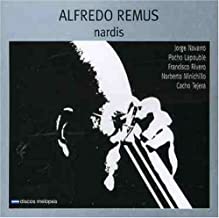
Alfredo Remus was born on November 9, 1938 in Argentina. He learned to play the double bass and by 1964 was part of the ensemble recording the historic album La Misa Criolla by Ariel Ramírez. He has performed and/or recorded with Paul Gonsalves, Vinícius de Moraes, Maria Bethânia, Enrique “Mono” Villegas, Gato Barbieri, Mercedes Sosa, Tony Bennett, Ariel Ramírez, Víctor Heredia, Alberto Cortez, Trio Los Panchos, Raphael, Cuarteto Zupay, Dyango, Leonardo Favio, Sandro, Susana Rinaldi, and Antonio Carlos Jobim, among others.
He was regularly participated in a series of improvisation and casual folk experimentation at the house of Eduardo Lagos, named humorously by Hugo Diaz as folkloréishons, the jazz jam sessions with Astor Piazzolla, Diaz, Oscar Cardozo Ocampo, Domingo Cura, and Oscar López Ruiz, to name a few. Double bassist Alfredo Remus, the interpreter of tango, jazz, Argentine folklore, and bossa nova, continues to perform.
More Posts: bandleader,bass,history,instrumental,jazz,music